
On Peter Gabriel's "Melt" and Steve Biko
Published on Feb 21, 2026
Be Sure to Wear Flowers in Your Hair
Published on Jan 19, 2026
WALK OUT TO WINTER: falling in love with—and to—Aztec Camera's High Land, Hard Rain
Published on Dec 26, 2025
First Anniversary
Published on Dec 17, 2025
More Liner Notes…
Featured Conversation: In Conversation: Owen Brazas and Author Marc Masters
Published on Aug 17, 2026
Owen: So, I’m going to start by saying, cassettes are not my favorite format. It’s just something I have never connected with.
Marc Masters: Sure.
Owen: Just to give you a small history about myself, I’m a giant music fan. We probably have about 2,000 LPs and a lot of 7 inches scattered throughout the house. I grew up pretty poor, and when CDs came out, God, I was in junior high school. And we couldn’t afford a CD player. But I was really into music, but the great thing that happened was everyone was trading in their LPs to get CDs.
Marc Masters: Right.
Owen: Antall of our used record stores and things in town, I could get 10 LPs for the cost of one CD. So I kind of put all my eggs in that basket. My experience with cassettes was mostly taping stuff off college radio and off the LP, so I could put them in my cassette.
What was your first experience with the cassette?
Marc Masters: Yeah, pretty similar. I’m trying to think of when exactly I first encountered them, They were pretty established by the time I started getting into music, like, in the early 80s, mostly, a little bit of late 70s. So, by then, already cassettes were making a pretty strong foothold, and CDs hadn’t happened yet. The Walkman was a big thing for me, I had a Walkman pretty early on. At first, they were pretty expensive, but the price dropped pretty quickly and then it was really pretty easy to get one. [The] car tape player was a big thing, too. We got one right about when I started to be able to drive, too, so that was probably when I really got more into cassettes. It was the only way to listen to the music you wanted to listen to in the car, other than the radio, so that’s probably when it really jump-started for me. And then, yeah, definitely taping records from friends, taping shows off the radio, taping songs off the radio, that was a big thing. I’d set the tape player next to my little clock radio and record the top 40 or whatever off of that.
So that’s the bulk of it. I have this real distinct memory of when I figured out how to connect one tape player to another. This was probably just before double tape decks came out, but they didn’t exist quite yet. And, the fact that I could do that was super exciting, because I was like, not only can I tape someone’s album, I can dub it.
For some reason, that hadn’t occurred to me when I first started…well, I can tape a record, but can I tape another tape?And then one day, I was just like, wait a second, there’s cables that go into the back of this tape deck, and there’s cables that go in the other two. Why don’t I try it? Yeah, that was awesome.
Owen: Were you an early adopter of the double tape deck? I remember when a guy at school had one, and we were all just kind of going over to his house - not use him for his equipment - but the four or five of us music fans were kind of like, oh man, Steve’s got a dual deck from his older brother, and now we can just pump out tapes.
Marc Masters: Yeah, totally. Yeah, I think I got one of those in college, probably. And that coincided with me getting into college radio, being a DJ, and having access to the full library. You could check out records and tape them, and bring them back to the station. And then also dubbing tapes for each other, dubbing mixtapes for people, back and forth. I think by the time I got a double tape, that concept had been around for maybe a couple years at that point, but yeah, I definitely jumped onto it as soon as I could afford it.
Owen: Right on.My first memory of actually taping something was, I used to go to my grandmother’s house, and she worked for the Chicago Tribune for a short period, and she had a little voice recorder. Probably, like, 81 or 82. We used to play newspaper, and I would record my voice and then I was like, can we record the TV, or like, you know, sounds? And she’s like, yeah! And that’s kind of how I first remember recording a cassette, like, literally just putting this voice memo-type cassette player by the radio. And then I also was really into recording movies. I would just get some of the dialogue. For a period when Ghostbusters came out,.I went into the movie theaters, and I just recorded a part of it.
Marc Masters: Wow, actually in the theaters
Owen: I was bootlegging at an early age. But then I could tell the bits to my friends whose parents wouldn’t let them see an R-rated movie or whatever. I was like, look, it’s here!
Marc Masters: That’s cool. That kind of dovetails with us talking about baseball, because this just triggered a memory, which I think I thought of a little bit when I was writing the book, but I didn’t put it in there, that there was a baseball game. Monday Night Baseball was the national game.
It was somebody at the Dodgers, and I remember thinking, you know, if I want to remember how this game went, I could put the cassette recorder in front of it. And so I taped half the game on a 60-minute cassette or a 30-minute. I remember playing it for my friends, and they were like, what? Why would you…We can’t see what’s going on. Why would you even care about that? But for some reason, I thought it was so cool because at that point, I don’t think we had a videotape player, so I wasn’t taping games off of TV, so that was the only way to sort of preserve anything about a game, you know?
Owen: Yeah, like, a really early personal archiving of memories.
Marc Masters: Totally.
Owen: Do you remember the life of the cassette? Like, you’ve, you’ve purchased a cassette.Again, just speaking from experience, again, I didn’t have a whole lot of money, I’d buy a cassette,that was a lot of money for me. I better like this. But the cassette was cool, because if I do not like this cassingle or this album, I could record over it.
Marc Masters: Yeah, I mean, there’s a guy that does, one of the guys who does the Tabs Out podcast, which is a cassette podcast about current cassette releases, when I interviewed him. One of the things he said, which I put in the front of the book, and I was thinking about, at one point, that this could be the whole book. He was like, if a record sucks, it sucks, but if a tape sucks, you can tape over it. That pretty much sums up what was so cool about tapes, for sure. And I’m not 100% sure if I have something I bought that I actually taped over, but I certainly if I would see tapes in the Goodwill or something that I wasn’t interested in. It was worth buying them just to be able to tape over them. You know, and also that crazy ghosty thing where you could still hear some of it in the background. I kind of like that.
Owen: cassettes always make me think of that Brian Eno quote – I’m going to butcher this fucking quote – but it was the limitations of the previous media is what the future generations will be trying to get.
Marc Masters: I mean, I still have this feeling, like, when I hear something like Daniel Johnson, or Sebadoh, or some of the groups who were recording directly to cassettes, and dubbing cassettes, and having that condenser mic being the main thing, I try not to let it, but it still feels, more authentic to me, weirdly. It feels more direct, There’s something about music that sounds like that, that feels more intimate even though, ironically, it’s less fidelity. It’s less of what you actually would have heard if you were sitting there than if you had a pristine recording, and yet somehow it seems more real.
Owen: Well, it’s weird, it’s like you’re removing, I don’t want to call it a recording engineer or producers or whatever, middlemen, but it’s like, you know you’re just literally the artist, a microphone into the tape.
Marc Masters: Absolutely.
Owen: Hard to get more direct than that.
Marc Masters: Totally, totally.
Owen: I was thinking about, as you mentioned, Daniel Johnson and Sebadoh, honestly, those are the two main artists I think of when I think of cassettes, Daniel Johnson selling them at his McDonald’s.
Marc Masters: Yeah.
Owen: When you think of a cassette artist, is that someone you think of, or are there other people?
Marc Masters: Definitely those two in terms of my history with it, and how I found out about lo-fi and cassette recording. And I feel like one of the things I really lucked upon in writing the book was when I interviewed Lou. I don’t know if he’d told this story before, but if he had, it wasn’t that well known, is that he was on tour, Dinosaur Jr. was touring with Sonic Youth, and they had Daniel Johnson cassettes, and he had never heard them before. They put them in, and they played them, and they’re cut up with weird bits of dialogue with his parents and stuff like that, and Lou had been doing the same thing. It blew his mind. He was like, I thought I was the only person.
Owen: I’m the only one doing sound collages in my songs.
Marc Masters: Yeah, and the two prime guys get to know each other run into each other that way, but yeah, those are definitely two of the first ones. Tere’s the kind of more avant-garde-ish kind of, you know, the mail art kind of aspect of tapes that I think of those guys and women as cassette artists, too. I don’t know if there’s any specific ones that I would think of first. There’s this guy, who goes by the name Zanstones, Zan Hoffman, who, in that scene, is known as the guy who made the most. Like, he has walls and walls of cassettes, and he’d ask people to collaborate with him all the time. He’d send them a cassette and say, add something to it, or use the other two tracks on a four-track and put something on it. It was like his palette, like a painter would be painting on canvas every day.
So I think of him a little bit in terms of that. I mean, he’s not that super well-known, obviously, but he is kind of one of the purest cassette artists I can think of. It wasn’t just that this is the easy way to do it, or that this is the cheapest way to do it, although those contributed to it, but he found something in it that’s like, this is gonna be my medium. You know, it was pretty odd.
Owen: Have you seen Sebadoh, Daniel Johnson, stuff like that, singer-songwriters, bedroom producer-type people. I feel like that’s how I first became aware of cassettes; In the DIY underground.
But now I feel that it has moved more towards what you’re speaking. When I go to shows, if I go to an avant-garde show, a noise show, they don’t have records, they have cassettes. Cassettes are the choice of medium that they are presenting their stuff with.
Besides maybe ease or price to have these artists make these physical pieces of their stuff to sell at merch tables, what do you think the cassette offers these artists?
Marc Masters: There’s the obvious thing, at least compared to vinyl, it’s so much cheaper and faster and easier, so that’s definitely part of it, but that applies to things like indie rock bands who sell tapes of their shows, too, which has become more frequent. I’m not sure how much it is happening now, but in the last 10 to 20 years, there were a lot more indie labels, especially with Bandcamp. It’s just so much easier to sell tapes on there as your physical media.
But beyond the sort of cheapness and ease of use, I think there’s the portability aspect to it, for sure. The ironic thing is in the early 90s, mid-90s, even into the 2000s, noise and experimental stuff was happening on CDR a ton.
That’s still just as cheap, and in a way, easier. You could buy, at this point, one of those 20 ZD duplicators for nothing now.
So, it can’t all just be the cheapness and the ease of use, because you could still be making CDRs. I think that, number one, probably people stop buying them as much, but number two, you still kind of, especially at this point, if you’re not like me, or you might have a CD, a dedicated CD player, a lot of people, the only way to play a CD is stick it in a computer. And the whole point of the physical media thing is to get away from computers, so tapes do that. Tapes don’t ever get to a computer. I mean, they can, but they’re not the kind of thing where you have to bring a computer into the equation to play them, or listen to them, or record them. I think that might be part of the appeal – the full-on physical analogness of tapes.
I love CDRs still, I have a ton of CDRs from Noise Bands, and still, every once in a while, buy one if that’s the only way the person’s making it. I have a CD player, which is helpful, but there is something that feels a little bit sort of like OfficeMax about CDRs.
Owen: Just from my experience in Chicago, I feel like CDs are starting to bounce back a little bit. I’ve seen a lot of bands with, either, you know, it’s kind of a cheap burning process, a step above a CDR, I should say. But there are CDRs as well. It’s just, again, seeing it like, you know. It’s all about tapes. tapes are vinyl. And now it’s starting to feel like tapes are now moving over to CDs again.
Marc Masters: I have a friend whose high school kid asked for a Discman for Christmas last year.
Owen: Cool!
Marc Masters: I couldn’t have even conceived of that not that long ago, you know?
Owen: Well, what I was saying earlier, like, you can get so many CDs for next to nothing nowadays.
Marc Masters: Absolutely.
Owen: Did you buy a decent CD player and some speakers? You could have an incredible music library for 25 bucks.
Marc Masters: Oh, yeah, I mean, so much stuff on Discogs, so cheap and so easy to get, and I still think CDs is the best box set format. You can really take advantage of a compilation, kind of like a four-CD set of one band or a scene melted down into four CDs and the booklets are still comparable to what you’d get in an LP, and I mean, there’s so many times when I’ll see something like a Neil Young four-record set from the mid-’70s. Vinyl, $150, CD, $35, you know? It’s really kind of crazy to not buy the CD in that case, and it gives you just as much information and just as much fidelity. I think there’s something good about every format. They all have their shortcomings, too.
But I don’t think there was ever, I mean, maybe 8 tracks, but there hasn’t really been a format that got any kind of popularity that didn’t have some kind of cool thing to it, and I want them to all survive. It would be awesome.
Owen: I mean, just more options for the artists to get their music out there, the better.
Marc Masters: That’s kind of why things cycle through, I think, a little bit, is that people realized tapes were cheaper, so they started doing that, as opposed to how expensive vinyl was getting. And now, like you say, people aren’t realizing how cheap it is to get CDs. I try not to buy too many of them, because I already have too many of everything.
Owen: We put all our eggs in the LP basket, and I’m stuck there, but, you know, when I go to a local show, and I like this band, and they only have a CD, or I only have a cassette. Oh, that’s what I want to buy, you know?
Marc Masters: Yeah, and I mean, vinyl’s still awesome, I love vinyl still, I think vinyl will go through some cycles, too, where I think eventually used vinyl’s gonna get more reasonable, a little back to where it used to be.
Owen: I’m excited when I find a record for $20 nowadays.
It’s kind of the curse and blessing of discogs, and I love that discogs exist so that if there’s a record I really want, I can find it somewhere around the world.
Marc Masters: But every used store uses it now, and so you almost never go in and say, oh my god, this should be priced at $20, and it’s at $10. Nobody does that anymore, you know?
Owen: Yeah, I have to keep myself off the site, or I’ll get in trouble. Just do the hunt, Owen. If you find it in the racks, you can take it. I’ve been hunting for This Heat’s Deceit.I had it in my hands when I was in Austin, Texas, visiting, and for whatever reason, like, I put it back, and it’s haunted me ever since.
Marc Masters: Oh, those haunting putbacks are the worst. I still have a handful of those that I think about all the time.
Owen: It’s that and The Wren’s Meadowlands. I had them both in my hands.
Marc Masters: Oh, that’s a great record, too. Yeah, those are both awesome records.
Owen: And then I see it on Discogs, and I’m like, Oh, I’m not gonna pay that much for it.
Marc Masters: Right. This Heat, every time one of them gets reissued or whatever, I think I should get it but I have the box set that came out in the 2000s on CD, and it’s great, every time I think of it, I think, I can just listen to that.
Owen: My buddy got that, and he put it on tape for me.
Marc Masters: Oh, nice.
Owen: That’s how I first heard them. CARP self-titled, that’s another one that’s impossible to find.
Marc Masters: Oh, wow. Yeah.
Marc Masters: Lately, I’ve been really into this jazz guy, Bobby Hutcherson, who played on Eric Dolphy Records and Archie Shepp Records, he’s a vibraphonist, and his stuff has all gotten reissued, but at outrageous prices, and that somehow has driven up the used prices, too. And we’re not talking about a super famous guy. He’s really well known in avant-garde jazz circles, but it’s like I go into these stores and I see an album of his either reissued for $45 or used for $25, and I’m like, this is gonna sit here?
Owen: Yeah, absolutely.
Marc Masters: But I also can’t blame the stores, I mean, they probably are barely making a margin on it when they sell them that way.
Owen: Yeah, I guess the niche market will either correct itself or, you know, the right sucker will walk in.
Marc Masters: Which is usually me.
Owen: Speaking of CDs and cassette and jazz, I always found, honestly, the first time I listened to jazz besides on the radio was on a cassette, and I sometimes find listening to jazz on cassette is just more pleasing, because there’s no flip over, and there’s something about the fidelity of the cassette. Like, Blue Note recordings or something like that, but maybe a little more avant-garde, or some niche saxophone player or whatnot. The cassette adds to that. Do you think that could be something that jazz artists lean into? Like, a cassette release.
Marc Masters: That would be interesting. For the jazz I follow, I haven’t noticed many contemporary artists putting stuff out on cassette. But I do think it’s a good idea if they should start doing that kind of thing, because I think jazz is such a hard sell right now that anything they can do to get their stuff out there more would be great. I also have always thought cassettes are just great for long form, like, avant-garde jazz that’s long form,I ’ll get a release from a jazz guy or a jazz band that’s, like, two 20-minute pieces, That’s perfect for a cassette. That should be on cassette, there’s something that makes more sense logically about listening to a long piece on a cassette that can play the whole piece even though you could still do that on a CD or a record, but I think it lends itself to that format pretty well, and I agree with you, especially live jazz on cassette. It’s super cool. It almost feels like, oh, somebody sat in front of them and recorded it, you know?
Owen: Yeah, it’s almost like a sneaky, I shouldn’t be hearing this kind of thing.
Marc Masters: Right, totally.
Owen: I think of early bootlegs, there’s that Rolling Stones bootleg, Live…
Marc Masters: Got Live, if you Want it.
Owen: Yeah, that’s it, that’s it. I hunted that down several years ago, because this is the best Rolling Stones boot. And that is the quality from some of the cassettes I listen to. It’s recorded through tape, and then it’s pressed to vinyl, but it still sounds like a cassette.
Marc Masters: It definitely is one of the things I associate with cassettes a lot from growing up. I wasn’t a big bootleg collector, but if I could get my hands on something, you know, it was passed around was easy to grab. I would try to get dubs of it, especially of bands that I was into then. In college, REM was touring constantly, and after each little tour they would do, somebody would have a cassette of at least one of the shows.
Owen: And they were always playing songs that were on the next record.
Marc Masters: Right. So then the next record would come out, and I’d know some of the songs, which always felt so cool, it felt insider-y, almost, like I was in their fan club or something, like, hey, I know that song, when nobody had heard it yet, or not nobody, but not the general crowd who wasn’t, like, hunting down cassette bootlegs.
Owen: I was obsessed with the period of bootlegs because a lot of the bands I liked were doing covers, and I loved the idea of, like, Rem would cover Mission of Burma. There’s this band called Harvey Milk and they did a whole set of REM covers.
Marc Masters: Wow.
Owen: Chunklet just released it, actually.
Marc Masters: Oh, that’s right, I do remember Henry put that out, yeah, yeah, that’s cool.
Owen: And, that was like a white whale for me. I would get a track or two of it on some bootleg site or whatever. But that wouldn’t exist without tape trading.
Marc Masters: Right.
Owen: And, one of my favorite shows of all time is Mystery Science Theater 3000, and they survived by, at the end of it, circulating the tapes.
Tapes are important for small artists and things, getting it out there.
Marc Masters: Yeah, yeah, I mean, they do harken back to a time when there’s a kind of a community, a national or even international community of people interested in certain niche-y things who are trading it with each other, passing it around. I mean, that was one of the cool things I found with writing the book, is whenever I would go to another scene to talk about who used cassettes a lot, it would always be these guys and women, who had been trading tapes in the mail, or through the heavy metal zines. People would put ads in the back and say, I love Iron Maiden, I’ll send you some Iron Maiden if you send me some of this, or whatever, you know, and it definitely, I think, made people bigger music fans, especially of whatever genre they were into, or whatever band they were into, because you could be more of feel a weird completist, like an unofficial completist.
Having stuff that the general public just can’t go and buy somewhere. You had to dig around for it, and you got to know people by digging around for it, and t just fostered a lot more relationships, communications, friendships, all that kind of thing.
Owen: When I think of tape training, my brain always goes to, like, the jam bands, like the dead, like, you know.
Marc Masters: Yeah, sure.
Owen: Like, you know, they’re probably the farthest thing from a punk rock band. Oh, maybe not. Maybe aesthetically, just that idea of your fans taping all your shows, sharing them, hearing stuff that is not released, no alternative lyrics. Oh, you gotta really hear this take.
Marc Masters: Yeah, I mean, the Dead had a hiatus in the 70s where they actually got more fans by the time they came back, because so many people were hearing all the shows that they wanted to go see them in.
Owen: Absolutely. And then, like, you know, there’s so many live shows that weren’t, or live albums that probably weren’t officially going to be live albums, but the bootleg’s so big, you can’t turn away. I think that Motorhead one was kind of like that? Live at Hammer.
Marc Masters: Oh, yeah.
Owen: And obviously, the Iron Maiden. I think that one was planned, but what a great live record.
Marc Masters: Yeah, well, you know the Velvet Underground, the Max’s Kansas City record, is just someone standing, like a Warhol associate standing in the crowd because you can hear them saying I gotta order a drink or whatever, and like, It must have been passed around a lot before they put it out officially. I’m sure that had to do with part of the reason they put it out, because most of the time, you would think a label, especially that came out on a major, I think, would not look at that and be like, oh yeah, this is quality enough. But I mean, it’s so cool that it is out. I mean, you get much more of a sense of what they were like from that than from something that had been recorded on 24 tracks in a club or something, you know?
Owen: It’s amazing how much of the Velvet Underground stuff has actually eventually come out. In the 90s, when they first started reissuing stuff…I hate telling stories about myself, but my uncle was an early adopter of the Velvet Underground in the 60s and saw them in England. I have a first press of the first record from him that he bought from Lou Reed.
Marc Masters: Wow.
Owen: So it’s like the prize record in my collection. It’s beat to hell. But like you’re saying those bootlegs and stuff these, like songs that not everyone knows, like “The Ocean,” it’s not all just “Heroin.” You know… Doug Yule years.
Marc Masters: Right. Yeah, it’s amazing how many bootlegs of theirs have come out. I mean for a while, I was trying to collect a decent bit of them just to hear them, Not necessarily to flip them or anything like that. Sure. During the CD era, there were a lot of really cool ones that weren’t that hard to find and weren’t that expensive. And a lot of those have now come out on vinyl again, but it is kind of like, especially for a band that had this kind of mysterious reputation of, like, oh, no one ever saw them, or whatever, it turns out there’s about a million shows of theirs that got recorded at some point. I mean, it’s very rare that you hear a new bootleg and think, oh, I knew that already.
Owen: What an interesting band.
Marc Masters: Totally.
Owen: Did you see them on the reunion thing they did in the 90s?
Marc Masters: No, unfortunately, I didn’t. I don’t know if that actually happened here, I think it was only in Europe.They put out a record from that tour, and, it’s cool to hear it, but Lou was in his, like in his rapper period, almost, at that point, and it just… I’m not a big fan of his vocals during that time period, but I mean, it’s cool that it happened.
Owen: Yeah, absolutely.
Marc Masters: You know, it’s sort of incredible that it managed to happen. I mean, that’s one of the kind of legendary pissed-off-at-each-other bands, so the fact that they could tolerate each other again for even a little while is pretty amazing.
Owen: Well, I never thought the Pixies would get back together, and here we are.
Marc Masters: Yeah, exactly.
Owen: Or Dinosaur Jr, for that matter.
Marc Masters: Totally. And now they’ve been together longer than we were the first time around.
Owen: Honestly, that’s one of my favorite reunions. Like, their new stuff is so good.
Marc Masters: Oh, I think it’s awesome. I like all of it, but the first couple, when Lou comes back and they are just as good as their early stuff, I think. I mean, J.’s such an incredible songwriter, he’s just got songs pouring out of him all the time, you know?
Marc Masters: So, do you have a decent amount of cassettes?
Owen: I don’t have a huge collection, I would say I probably have more than 25 or so.
Marc Masters: Do you have any, like, mixed ones or dubbed ones that you’ve hung onto for a long time?
Owen: That’s kind of what I mostly have hung on to.
Marc Masters: Cool.
Owen: High school band demo tapes from, like, my friend’s bands, like that, one of the first things, like, I ever did, and then I have a handful of stuff, I lived about 40 miles from Chicago growing up and I would occasionally be able to catch the college radio stations on a clear night. So I’d stay up, and I’d, like, oh, that’s cool. Or sometimes, it’s the oldies station, getting the Ronettes, or The Shaggs, or whatever.
Marc Masters: Oh, nice.
Owen: Yeah, we had a weird disc jockey. it was 104.3, and he would play some really weird stuff from the 50s and 60s. So sometimes I would just listen to them, have the cassette ready to go.
.
Marc Masters: That’s amazing. I mean, that’s a great way to find out about music. I definitely miss those days where, even though it’s nice to have so much more access to so many things, and so many more ways to find out about them, it was fun to have a, like, a weird, I don’t know if you call it a gatekeeper, just a filter, or, you know, somebody who knew a lot about something you had no idea about. And you hear a couple things and you like them, you’re like, well, I’m gonna trust this person.
Owen: Yeah, I sometimes miss having a curator. There’s so much stuff out there, and I love hearing stuff, but I need something to kind of filter stuff through to me.
Marc Masters: Yeah, totally. And the whole thing about radio was it felt like, you know, something that was happening right then, like, that other people were hearing, it just had a relevance to it.
A playlist just doesn’t… the on-demandness of it is great, but it also means, to me, that’s kind of why I’m still into sports, is that it’s one of the few things that I feel like, oh, this is kind of still a communal experience. There are people around the country watching this game while I’m watching it. You know, we’re not bingeing it, or not saving it for tomorrow, I miss that about radio, and the cassette.My dubs of radio shows still have that feeling.
Owen: There was a big deal in Chicago when Siamese Dream was released. I was 15, 14. But I remember they played the record on WXRT. Front side, backside.You showed up and you had your tape ready, you know? My memory might be a little cloudy, but I feel like they played it, like, maybe a week before the actual release, so we got a sneak preview of it, so it felt, again, kind of like insider baseball, like, oh, I’m a… I’m a real fan, I’m better than you.
Marc Masters: Yeah, yeah, because, I mean, how many people are fans enough of a band that they’re keeping up enough that they know that something like that’s happening? It’s, you know, you have to be more motivated toward something to find those kinds of things out, unless you just kind of randomly, luckily, hear on the radio one day that it’s happening, but, you know. When I was growing up, a lot of the stations, especially the classic rockier stations or the more pop stations would hav syndicated live shows which I used to tape those a lot. Those were always fun. There was this thing called the King Biscuit Flower Hour. It would just be a full concert from a band. And a lot of them were, like, a little bit more classic rock than I was into, but I was really into that band, Big Country. I don’t know if you knew about them. They were, like, a new wave band, sort of came up with U2 and, The Alarm and some of those bands in the 80s.
Marc Masters: And I remember the local station, the DC station, actually, played a whole show of theirs, and I was like, I feel like I’m the only person who knows who this band is, and they’re playing everything, you know? So it was pretty cool to have stuff like that.
Owen: When you started to write your book, what were some of the main sources you started with and maybe ended up at?
Marc Masters: I mean, I decided to sort of attack the tech part of it first, because it was what I knew the least of, and I didn’t know how long that was gonna take. So I went through as much history kind of stuff in old issues of Billboard, and books about technological history, and audio history, and library-ish type of sources, academic journals, and things like that, just to kind of get a grasp because I’m not a tech guy, hardly at all.
And I try not to be too much. I like writing about stuff I don’t understand, you know? But in this one, I felt like I had to steer away from tech as much as I could in the book, but I felt like it would be kind of false advertising to say “history of cassette tape,” and not have something on how it developed as a technology, so that’s when I kind of started, and everything else was stuff that I kind of had an idea already that I knew I wanted, that I knew stuff about a little bit, at least.
Like, the chapter about genres like hip-hop and metal and indie rock and lo-fi and all the things that use cassette so much. Those were things I dipped my toes into enough, but this book gave me an opportunity to learn a lot more about them, which was really fun.
It was like, I’m gonna try to track down at least one person who knows a lot about this, and that usually would lead me to the other people who I could talk to about it, or the source… they could latch me onto some sources I could find, and things like that, and mostly I tried to do the historical stuff first, because the chapters on current cassette scenes, or recent cassette scenes, or recent developments, those were all kinds of things that, from from my writing over the years, I knew enough people that I could just be like, hey, you want to jump on the phone and talk about this a little bit? But tracking down people who knew hip-hop, that was harder, because it’s older, and it’s less of my wheelhouse.
Owen: Did you find folks like that, welcoming and helpful to you?
Marc Masters: Yeah, yeah, luckily I did.I did worry sometimes, especially with the stuff that was about scenes, that they’d be like, I’m an interloper, or am I gonna exploit this, or whatever. But most people, I think partially because there’s just the distance of time. I think most people have settled into, like, anyone interested in this now is interested in it because it’s interesting, not because they think they can cash in on it. It’s a little too late to do that kind of stuff.
But, I was pleasantly surprised by how welcoming people often were about the scenes that I’m not as noted, not as, versed in. I mean, the metal scene, I was a little worried about that, too, because people can be kind of hardcore about metal, and be like, you know, you’re never gonna get it, kind of thing. I think the great thing about writing this book was, like everybody has some interesting, fond memories about cassettes. Even if they don’t like them, they have memories about how much they hate them, you know, or whatever, or memories about how their parents played them, or memories about how they found some and didn’t know what they were. Honing in on that aspect, rather than saying, I’m gonna be depicting your scene or what you did. It’s more like, I’d really love to hear your stories about tapes. People really love to talk about that.
Owen: I was thinking about how, cassettes used to be, such a keystone in performers or bands getting their foot in the door anywhere, for just being, even getting their earliest shows, trying to get onto a small label, like, you can’t get a club date unless you have, your promo kit of your glossy picture, you have your cassette.
Marc Masters: And then you have your little bio written out.
Owen: Totally. And how much the cassette is a key to getting you into the door of whatever scene or club you want to be part of. It’s like, you made a cassette. Like, that’s a real thing. It’s not a file. It still feels old-fashioned, too. Like, it’s very mechanical.
Marc Masters: You can understand it just by looking at it, and CDs and vinyl to a lesser extent – both of those have a little bit of mystery to them – but the cassette’s, like, it’s working right in front of you, you’re watching it happen, it’s kind of…
Owen: Yeah, absolutely. That’s cool.
Marc Masters: I think the interesting thing about demos, too, is that it set up this sort of dichotomy where on the higher levels of music, cassettes were considered the demo format, so, like, I made my demo on here. If you sign me, I’ll re-record these songs in a studio, better versions, but this is a little bit of a sketch. And then other artists were like, no, this is it. This is what I made,
Owen: That’s how I wanted to sound.
Marc Masters: Yeah, exactly. And, you know, there’s that relatively famous story where Springsteen made Nebraska on a cassette, and he kept trying to recreate it in the studio. He was like, no, the cassette sounds better than what I could have, you know? I love that about what he did with that, but also, it’s such a relatable story.
So many people who have made something on cassette and been like, I just don’t like it sounding better than this. It sounds… this is the way I want it to sound, you know?
Owen: The entire black metal scene.
Marc Masters: Totally.
Owen: We love it sounding bad.
Marc Masters: And it’s great because it helps you redefine the whole concept of good and bad, especially on a technical level. It’s like, recording is just like an instrument, it’s a tool. If I want it to sound a certain way, I can get it to sound a certain way with a certain kind of recording. It doesn’t mean good in terms of fidelity has a definition, but good in terms of production is just what you want it to be.
Owen: It’s absolutely subjective and people are now fighting to make that black metal sound. Like, I want to sound all high-endy and screechy and people pay money for that now.
Marc Masters: Yeah, I always wonder if we’ve gotten to the limits of fidelity on a personal computer level, or will there be a next advance that makes, like, GarageBand recordings sound kind of old and quaint?
Owen: I know people that are doing stuff like that, and they have plugins that give it, like, a tape hiss. It’s all clear, and then they’re like, okay, let’s give it some warble. I think that’s incredible.
Marc Masters: Yeah, that’s funny. More power to them if it makes it sound more like what they want it to sound. As it’s not AI, I’m not into AI, but other things, I think, are totally valid as ways to make your music sound different.
Owen: Yes. No AI whatsoever.
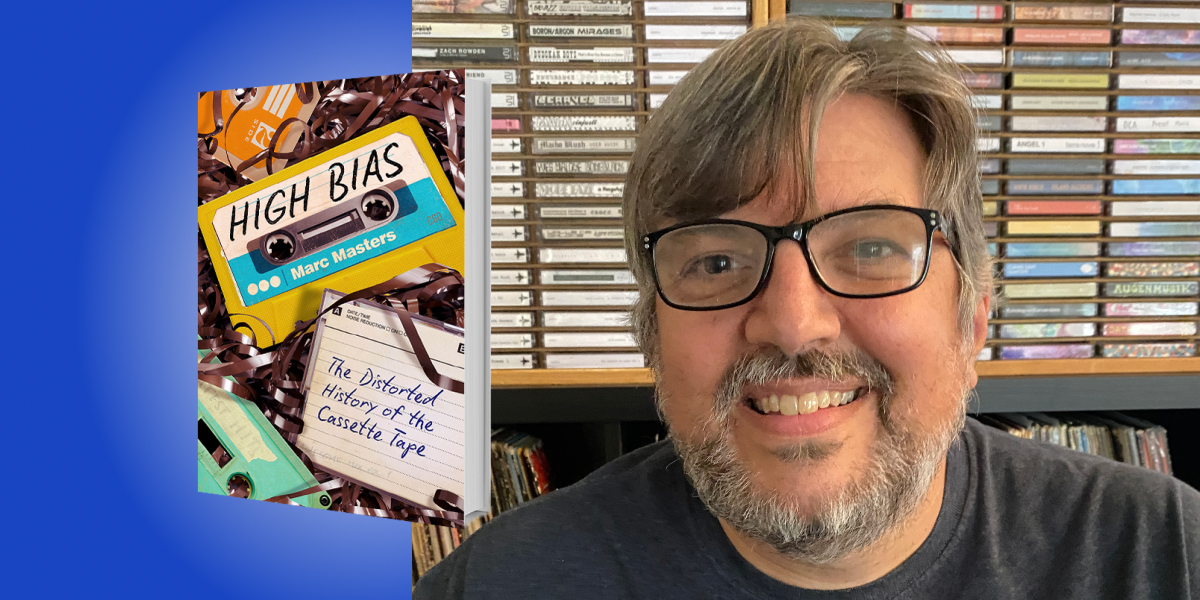
Marc Masters is the author of the books High Bias: The Distorted History of the Cassette Tape (2023) and No Wave (2008). He hosts the Music Book Podcast (themusicbookpodcast.buzzsprout.com/) and writes about music at goodexperimentalmusic.com.