

On Peter Gabriel's "Melt" and Steve Biko
Published on Feb 21, 2026
Be Sure to Wear Flowers in Your Hair
Published on Jan 19, 2026
WALK OUT TO WINTER: falling in love with—and to—Aztec Camera's High Land, Hard Rain
Published on Dec 26, 2025
First Anniversary
Published on Dec 17, 2025
More Liner Notes…
Featured Conversation: Talking with Jay Darlington of Kula Shaker, Part 2
Published on Dec 19, 2025
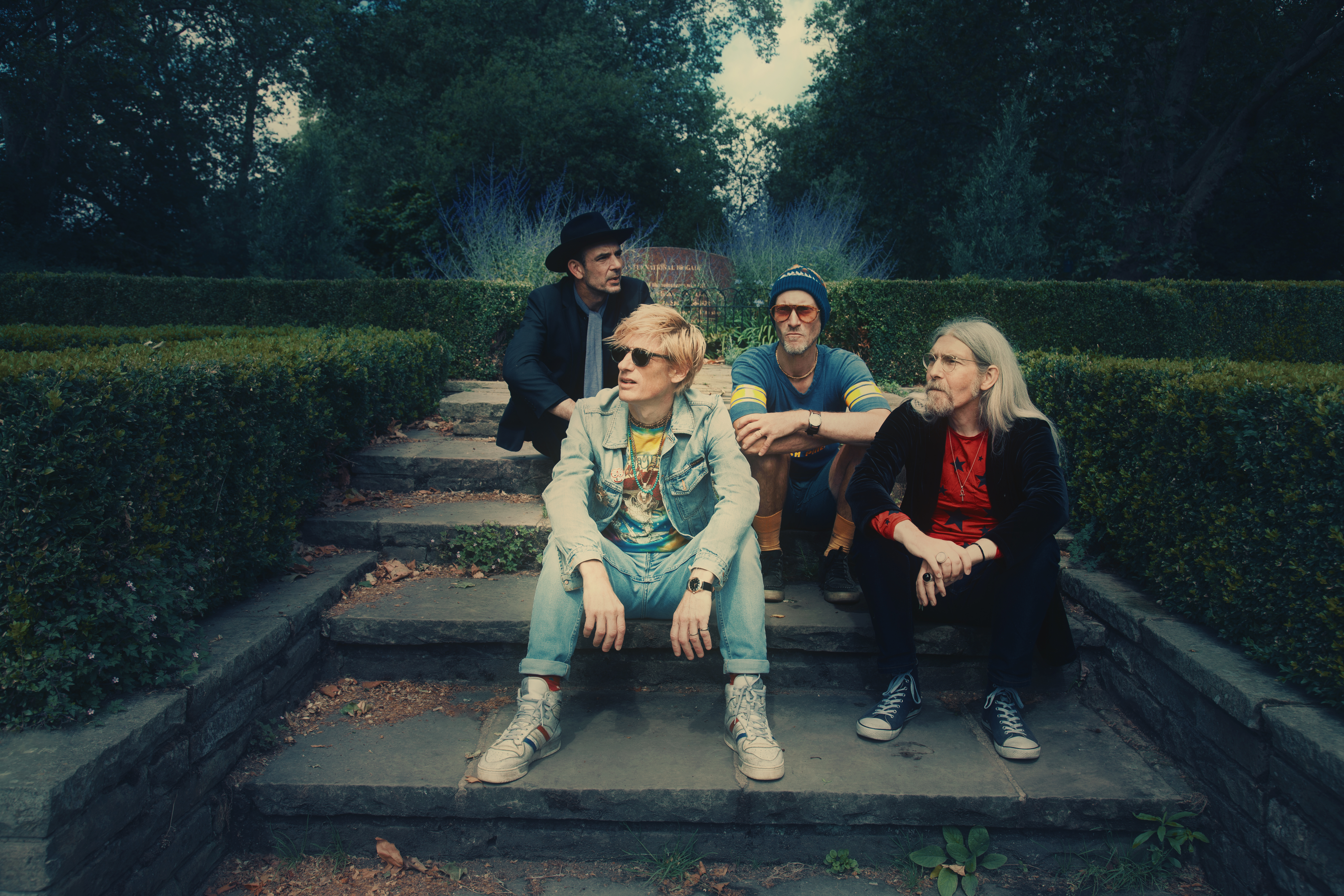
IHTOV correspondent Owen Brazas spoke at length with Jay Darlington of Kula Shaker. This is a part 2. Part 1 is here, and Part 3 will be published tomorrow.
IHTOV: You got these reissue companies that actually care about the music. They’re like cleaning up the master tapes. They’re presenting it how it should sound. It’s balanced.
JD: It was awful. Those Pebbles records when they came out. The guy recorded those from an old dance set record player with, you know, the old tape. I don’t even remember tape players, tape recorders, sure you could have, like, a little tape recorder on your desk, and you literally press buttons for record and play, and it always came with a little crappy mic. And they’re really for, like, dictating into. He recorded all those singles onto that. So the trashiness was because of the way he recorded. It. And I’ve heard some of the original singles, and they sound like they were recorded yesterday. Yeah, they don’t sound scratchy. They’re kind of a big boom. You’re like, Motown magnets.
IHTOV: Yeah, they were professional sounding. You know, recorded records.
JD: He made it because it was garage punk. He brought out the punkness of it? He was scratching, you know, gnarly. Like a wasp in a jar being shaken up and down in it.
IHTOV: And it’s funny here, like, some of the early punk records that were actually recorded really good. Like New Rose. Those guys sound professional.
JD: Some of the scratchier ones sound nasty.
IHTOV: Drop those tapes in the sewer for a minute.
JD: Yeah, drag them behind the car, leave them in the sun.
IHTOV: Fake those tapes.
JD: My daughter’s in her 20s now, and she came to visit me earlier in the year, and I’ve got loads of CDs that I bought in the 90s, boxes and boxes of them. And so I just got a couple of random boxes. And I was like, we’re DJing with them like you would vinyl. Even that felt great. It’s like, oh, let’s put this one on. You have to get out of a box into a player that might work or not, and blow the dust off. And we were having a great time, we’re playing all kinds of whatever came out of the box. So, yeah, it was garage, and then it was sort of tropicalia, or, you know, some 50s jazz or whatever. And so we were just having a right time of it. And then I had all these CDs on the bin online. Do you want them? She looked at me like I was mad. She said, why would I want these, I have them on my phone. Oh, yeah, of course. So yeah, I’m sort of slightly in the last century, still, as far as that goes.
JD: The wife and I have, unfortunately, put all of our eggs in the vinyl basket. That’s when I was growing up. Records were cheap. CDs were coming out. Like, you could buy 10 records for $1.00 Now, it’s kind of the other way around, but yeah, that’s where my whole collection is. Unfortunately.
IHTOV: You’ll be able to buy a library soon, like a hard drive full of stuff, they’ll just send you your dongle, and you just put it in, and it’s got, probably everything on it. A bit of revelation for me, being a Tory musician, was when iPods came out. There are other iPods available. They came out, and they were like bricks when they first came out. I’m talking like, very early 2000s I was in New York when they came out and started. I love them and managing to fit pretty much my whole record collection onto one of them. And they were expensive. I’d save up my pocket money to get one, but I’ve still got it, and that was a godsend. Because before that, if you went on tour for a few months, you had, well, in the early days, it was like you took a bunch of cassettes in a carrier bag. It’s like everyone brought a cassette. If you’re in the van, everyone brought a cassette. And you certainly knew all those songs. Then it’s time to do another tape. And you had to really think about it. You had to do the best. It’s like, you’ve only got so much music on these things. When CDs came out, that was like, oh, you can put those in a wallet. And you try carrying 100 CDs around with you in a suitcase. They’re pretty heavy. Yes? So when the iPods came out? Yeah, that was amazing, literally having like, every genre of music on a small device like that. Maybe it was the beginning of the end, I don’t know,
IHTOV: I wish it wouldn’t have went too much further.
JD: But you start to do some work. Let’s put your CD into the computer and kind of listen to it while it was happening, and be like, oh yeah. It was almost like an excuse to listen to it all again.
IHTOV: Yeah. I’m an awful person that loves the process of doing things. Like, yeah, dedicating my time..
JD: Absolutely, yeah. And certainly, with vinyl, you might put side one on and go, right, we’ll have a break. I’ll go and make a cup of tea and roll a number or something, absolutely, And then you come back and drink your tea and put side B on. Then it was like, you choose how much music you’re having, and the fact you have to be really careful with it as well. It’s like, so delicate and precious.
IHTOV: It’s a physical thing right there.
JD: Don’t touch my vinyl. No one touches my vinyl. I. And your other people need to, just leave it be at parties.
IHTOV: Just stacks of records, not in the sleeve or anything.
JD: No genre, let alone alphabetically. Remember doing that with CDs? I haven’t a huge collection of those. And then, like, you know, country, blues, that just that all goes out the window in the end.
IHTOV: Well, let’s switch over to talking about your return to Kula Shaker. So how did it feel to get back in the room with these guys you’ve known since like 1994 and be like, All right, let’s do this thing. Muscle memory kicks in and it feels good or terrible.
JD: Yeah, what am I doing? I must be mental, done this once already. No, it’s just circumstance, and me moving back not too far from London. I’d been in Devon for years. I was in a band called Magic Bus before I came back here. And then before that, I was touring for Oasis. So I was away doing that for part of a decade. And then I totally forgot about Kula Shaker, I suppose, and kind of didn’t even think about if they were even still playing. They were, and they were making lots of records.
IHTOV: Quick aside, did you feel weird coming from a touring musician, almost being a hired gun for Oasis, to coming into more of a creative role in Kula Shaker.
JD: It’s just music. They’re very different roles, I guess. Yeah, not really thought about that, I had done other bands where I was very much part of the writing and all that stuff after the Oasis thing. So I don’t know. It’s just circumstance, and probably years ago, I wouldn’t have done it. I’m not very good at going back to things generally once I’ve broken them. So I just broke my golden rule. Why not? I met everyone, and it was just like we never stopped seeing each other. Really. It was very strange. And there was a point, I think was the first rehearsal I did with them a couple of years ago where they had their one of the original techs with them as well, the guitar tech and he was playing tambourine. There was a point where I looked up and it was like time had stood still, and we were in the middle of a tapper, and I was like, how can I, how can I even remember this? There’s a lot of water going under the bridge since. I’m not surprised for them, because they’ve been doing ever since. But for me, it was a bit like it was, Oh, this is an old pair of shoes that I’ve found and put back on again or something.
IHTOV: Music is just the most amazing thing. Where it’s like you said, it can stop time. You know how you can smell something and it makes you think of your childhood immediately? But if you’re in a room with some friends and we’re all hitting the open a chord, and we’re starting to get into the groove, and it’s just like, Oh, I’m 23 again.
JD: Exactly. Well, I don’t really have a diary. I keep journals and things, but I don’t keep a normal diary. And, like you say, if I put a tune on, I can remember where I was, when I bought that record, or what was going on in my life. And yeah, you say, it’s smells. I’m not particularly nostalgic, either, believe it or not. Which is another weird thing. Rejoining the band as well, because I’m not really like that. I don’t really go, oh the good old days. It’s like, I’m pretty much kind of keep, keep playing forwards.
IHTOV: That’s a good perspective, because the last couple records sound like Kula Shaker, but it’s still, you guys are like a shark. You’re still moving forward. You’re not scared of a melody, but you’re stretching out. And there’s new textures and tones. And it’s like, why would you want to rehash K over and over and over again?
JD: Like, well, that’s it. Well, it’s funny you should say that, though, because we’ve just, we’ve just done a reimagining of K. Like, oh, cool. Wouldn’t it be funny to like, how would we do this? That’s not, that’s not asking our 20 year old selves too many questions. That’s just because obviously we’ve all played in other bands, and all done other musical things, and other things, you know, children and all the, all the trimmings of life since. So, yeah, it’s quite quiet, it was quite an interesting project, and not really good, sort of, personally, I didn’t really study the old record. Like, what did? I was just like, No, off you go, 123, off you go. So, yeah, so it was quite, quite good, and we did retain this sort of live energy. It was all done live, very few overdubs. But, yeah, it was a band in a room, and we also did it in an old school studio on tape. So we had all the benefits and downsides of that process. It was really fun, yeah, really fun. So hopefully that will come out next year. We did two records this year, probably two records. So busy.
IHTOV: Yeah, that’s amazing.
JD: Then we did tours and we’re over in the States. Earlier this year, we did tour in September with the Dandy Warhols. That was another load of old 90s, you know, still shredding the boards. Yeah, they’re still going for it.
IHTOV: Still feel special coming over to the states, or is it like ho hum?
JD: Yeah, I like it. I mean, we really did go back to those roots. I mean, because it’s really hard to tour anywhere now where it’s safe. Hate to be a bore, but it’s, it’s like, the logistics of it are just ridiculous. So we literally did it in a, like, a split of the band, and it took us two days to get out of Texas. Put it that way, yes, so I treated it as a road trip slash adventure. But I could see how some people go a bit mad. Absolutely. It seems I’m mad already to the other lot, but it was great. And it’s like being in a movie for us when we can go to the States, especially if you get out of New York, or the ones that everybody knows, if you start going through the real kind of Outback, So what an amazing country.
IHTOV: It can be.
JD: I really enjoyed it. It was good when we stopped off in the desert. We did the whole Jim Morrison thing, took our clothes off and ran around.
IHTOV: They put that coyote down.
JD: Yeah, that was great. And to get an idea of the scale, you can see how all that great rocker art music, country music, you know, you can imagine driving you were driving along, how that would, that landscape would influence your music as well.
IHTOV: Yeah, all the great records always seem to be influenced by the environment that the artists are coming out of.
JD: I find it harder now that you’re saying that music’s not tribal anymore, so there are no movements. You’re not going to have another mod. You’re not going to have another R&B, you know, things get recycled, obviously. It really feels like we certainly… what’s that phrase, post modernism? Where, if you copy something, like the photocopy principle, if you get a photocopy of something and you copy the photo, the twelfth time you do it, it’s unrecognizable from another substance. So, yeah, it’s good and strange times. I think.
IHTOV: it’s weird things. I’ve talked to artists that are young, they’re 18, 19, just kind of getting going. They’re so interested about national like there’s no regional scene. Like, we’re going to break in New York and then expand. It’s everywhere, all at once. And I’ve been in little bands since the 80s. And, I miss the kind of flavor of, oh, this band is from the northwest, so they’re going to kind of sound like this or the northeast, but this, yeah, now it’s kind of homogenized.
JD: Guess that’s the downside and the upside of the whole internet explosion, isn’t it? There’s like, you say there’s no regional thing anymore, That’s good also, because you can be anywhere and listen to anything from anywhere.
IHTOV: The music can sneak out.
JD. Yeah out of the cracks.
IHTOV: Let’s talk about Worm Slayer. So this was produced with John Harvey. How did the production of Worm Slayer feel versus doing Natural Magic with Kev Nixon?
JD: Rubbish. Well, rubbish, same thing. Yeah, it’s good. I mean, we used a lot of old techs as well on this. I guess you always go for that. We’re a bit romantic like that and so, and that’s what we’re used to doing. So, yeah, putting a band in a room, putting some mics in front of them, and then playing some music down the mics. We find that’s a good formula.
IHTOV: Yeah, playing together?
JD: We play at the same time sometimes as well. Yeah, not necessarily the same song, though.
IHTOV: Well that’s interesting. Like, I listen to Ornette Coleman.
JD I was watching some Sun Ra stuff the other day. Keep going through like that.
IHTOV: You could have a whole record store dedicated to Sun Ra and Sun Ra offshoots.
JD: yeah, yeah. All that stuff’s got a name now, isn’t it, like, what’s it called? Now? Like, astral?
IHTOV: Yeah, jazz, astral, cosmic jazz.
JD: It’s amazing what you can find if you go on kind of a wormhole.
Part 3 will be published tomorrow