
On Peter Gabriel's "Melt" and Steve Biko
Published on Feb 21, 2026
Be Sure to Wear Flowers in Your Hair
Published on Jan 19, 2026
WALK OUT TO WINTER: falling in love with—and to—Aztec Camera's High Land, Hard Rain
Published on Dec 26, 2025
First Anniversary
Published on Dec 17, 2025
More Liner Notes…
Featured Essay: Aaliyah’s Groundbreaking “One In a Million” Turns 30
by Chase Harrison
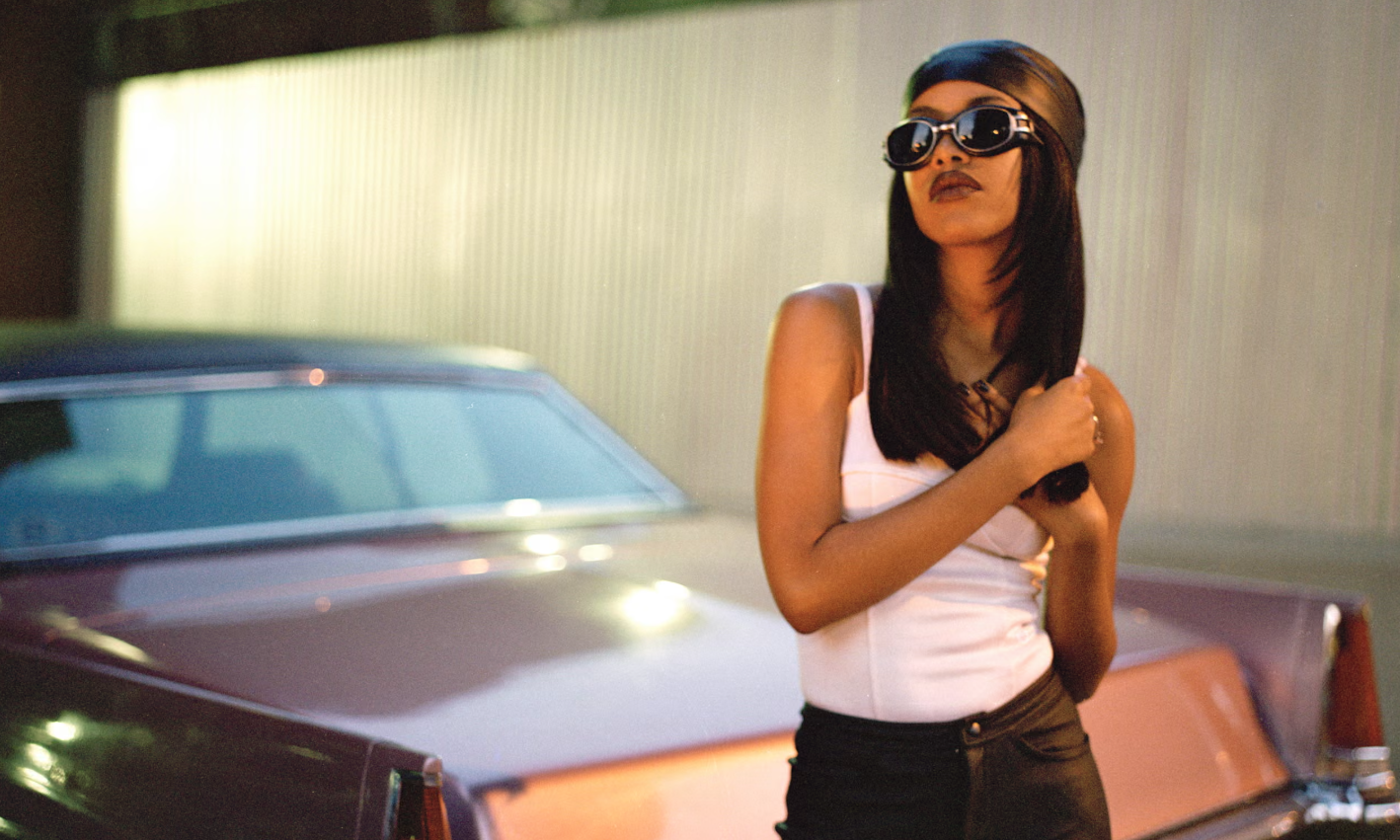
The first album I ever purchased was TLC’s CrazySexyCool on cassette in what became a core memory. It was at The Wall, one of those physical chain music stores found in malls scattered across the country in the 90s. CrazySexyCool was released in 1994, but I must have bought it a few years later. Largely because of this, 90s R&B became one of my first loves musically and, naturally, the discoveries of Brandy, Mya, and, of course, Aaliyah, followed.
I didn’t know it at the time, but the lush, complex studio production that served as the backbone of many of these albums would begin a lifelong love of producers using the studio as an instrument, from Gamble & Huff with Philly Soul to Brian Wilson and Phil Spector’s Wall of Sound to the 90s and 00s dreamy, guitar-focused auteurs like Kevin Shields of My Bloody Valentine and Jason Pierce of Spiritualized. TLC’s “Waterfalls” production was handled by Organized Noize, who’d later become well known as Outkast’s beatmakers of choice, crafting the instrumentals “Return of the G,” “So Fresh, So Clean,” and many others. If you haven’t listened to “Waterfalls” with good headphones lately, I highly recommend it. It is a densely layered, gorgeous piece of production. The same can be said for all of Aaliyah’s One In a Million.
Timbaland handled production on 9 of the album’s 17 tracks and Missy Elliott was a major contributor. Much like the music of the aforementioned “studio-as-an-instrument” producers, Aaliyah’s music sounded like the future and somehow still does. Missy’s since been canonized as a tastemaker and despite Timbo’s questionable recent takes and use of AI in music, he was undoubtedly ahead of the curve in the 90s and early 00s, with a genre since dubbed as “soul futurism” in retrospectives. Proof comes in the form of the countless hip-hop and R&B artists that are still heavily inspired by this sound including Rihanna, Tinashe, Jai Paul, SZA, Ciara, The XX, Drake, Jazmine Sullivan, and even Aaliyah’s contemporary, Brandy. Aaliyah’s music has also had a major impact on the electronic music boom in the mid-2000s, including Burial, Jacques Greene, Jessy Lanza, Sango, Salem, and Shlohmo. While moody, nocturnal, sensual production was nothing new (see: Sade), Timbaland helped make synthesizers and computer-generated sounds feel alive and human. The snare hits don’t sound artificial, even as the intro to the album heavily features computer beeps, ushering in a newer, cooler, understated era of R&B.
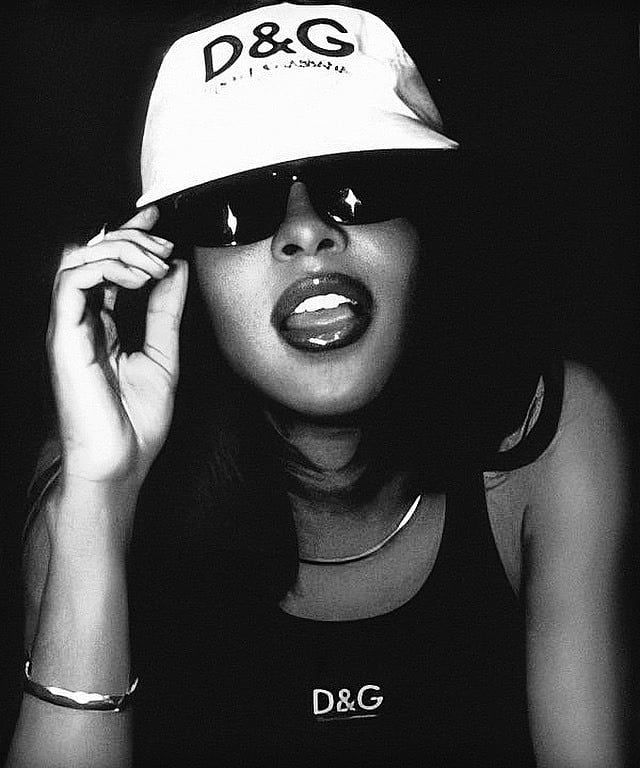
A lot has been made over the years of the effortless cool that Aaliyah conveyed. The cover art of One In a Million encapsulates this in an image. Her voice sounds velvety, especially on tracks like “Girl Like You” as she perfectly counter-balances Treach shouting the hook. The bassline bounces with a liveliness that belies what was used to create it. Treach’s part is one of the few remnants from the New Jack Swing era of 90s R&B. However, like Missy, Aaliyiah was a tastemaker, ahead of her time, with beat selection, tracklist curation, vocal tics, fashion, and music video direction and she propels the track forward. While clearly inspired by Sade – they even shared a birthday – this was an entirely new sound, all her own. She was on record calling industrial heavyweights Nine Inch Nails one of her favorites, comparing their electronic instrumentals to her own music. When Pitchfork named the album the 15th best of the 90s, they wrote, “her breathy but assured alto gave her an aura of mystique, and she possessed a kind of reticence and remove even while singing about her own desire.”
We have witnessed multiple waves of sonic trends in both R&B and electronic music but this woozy, sexy, minimalist sound is as omnipresent as ever. Tracing the influence over the years makes it even more astounding. Beyonce’s Dangerously In Love arrived in 2003, Ciara’s Goodies dropped in 2004, Cassie’s self-titled came in 2006, Burial’s Untrue was released in 2007, The Weeknd’s House of Balloons in 2011, Tinashe’s Aquarius and Banks’ Goddess in 2014, Jorja Smith’s Lost & Found in 2018, SZA’s SOS in 2022, and Syd’s most recent, Beard, was released just a few weeks ago in 2026. With the benefit of hindsight, there’s a strong argument to be made that One In a Million has been the most influential album of the 90s. Biographer and author of Baby Girl, Kathy Iandoli says, “That sound is still the blueprint for all of R&B and pop music today.”
The title track “One In a Million” sets the tone and mood for the rest of the record. As Brad Nelson wrote for Pitchfork, “it’s like time mutates, lurching forward and then snapping back on itself like a rubbery cartoon character. In this case it mirrors the song’s subject: falling in love with someone so hard that you feel the continual pull of their gravity.” It’s easy to forget that this sound wasn’t always a blueprint given that it’s served as such a template for hip-hop and R&B for three decades now.
The bold lead single, “If Your Girl Only Knew” is one of the best 90s R&B songs. The bassline snakes and weaves between Aaliyah’s vocals and a vox. It’s impossible not to move and bounce to the minimal track that heavily incorporates handclapping. The track goes in unpredictable directions. Much of the backing track drops out midway through the song before an extended outro keeps the groove present to finish out a song that seemingly slithers from bridge to bridge without losing the attention of the listener.
“Choosey Lover (Old School / New School” immediately recalls Purple Rain-era Prince with its drum machine and throwback guitar solo. “4 Page Letter” updates the formula of a slow jam quiet storm era with a slick sheen and stacked vocal harmonies. The track has since been sampled by Kendrick Lamar (“Blow My High”), Drake (“Messages from You”), Jeremih (“Wake Up”), Knxwledge (“Toffbrushn”) and even house producer Sweely (“Yes He Is”). Many of the remaining tracks explicitly reference heartbreak (“Heartbroken”), reconciliation (“I Gotcha Back”), defiance (“Never Comin’ Back”), and sentimentality (“The One I Gave My Heart To”). Timbaland’s not the only producer who pushes boundaries as evidenced by songs like Rodney Jerkins’ upbeat, knee-tapping “Everything’s Gonna Be Alright” fit in seamlessly.
While current R&B songstresses Rochelle Jordan and Kelela are clearly inspired by Aaliyah’s vocals, they’ve taken the electronic dance production even further, experimenting with a variety of underground club sounds including UK garage, jungle, and deep house. Kelela’s even explored shoegaze textures on her latest album, a thought that would’ve been unthinkable when the genre was cresting in the UK in ‘96, both parallel in time but distinct in scene, from UK garage. Without Aaliyah, these disparate genres may have never collided.
The sound Aaliyah, Timbaland, Missy Elliott, and the other producers created together is still inescapable and R&B has only just recently started to crawl out of the massive shadow left by Aaliyah’s untimely death in 2001 at the age of 22. It’s a testament to the timelessness of One in a Million that after thirty years, R&B in a similar vein has no signs of going away.
Born in Durham, NC and raised outside of Baltimore, MD, Chase has spent the last 18 years in Philadelphia, PA and Brooklyn, NY. He holds a Master of Advanced Studies in American Media & Popular Culture and currently works as a Content Manager with past experience in the film, food, and beverage spaces. Under the name Cult Posture, he has a monthly residency on CAMP RADIO,. You can also find him on Instagram or Letterboxd.