
On Peter Gabriel's "Melt" and Steve Biko
Published on Feb 21, 2026
Be Sure to Wear Flowers in Your Hair
Published on Jan 19, 2026
WALK OUT TO WINTER: falling in love with—and to—Aztec Camera's High Land, Hard Rain
Published on Dec 26, 2025
First Anniversary
Published on Dec 17, 2025
More Liner Notes…
Featured Essay: Bob Weir: The God of Gaps
by Cooper Lund
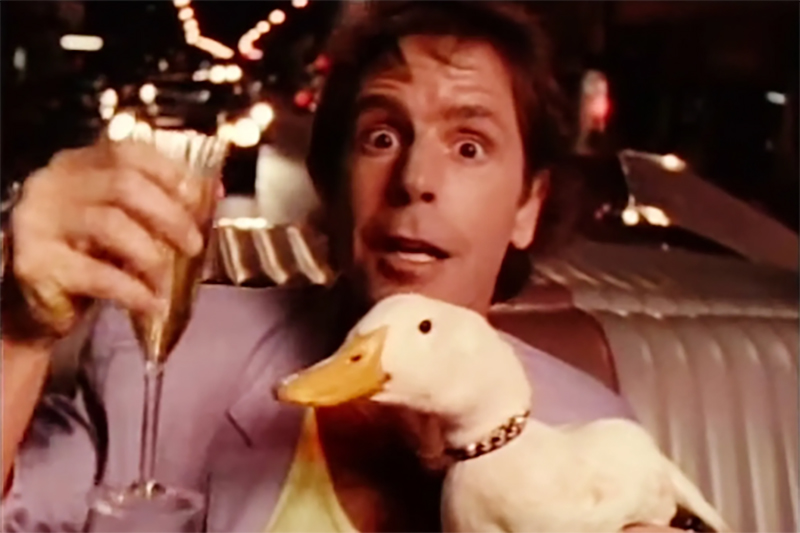
Bob Weir was born dyslexic, something he didn’t know until much later in life, but you can hear it in the way he plays. It’s unlike anyone else. If you’ve never listened closely to him play, there’s a whole show on YouTube that is just his isolated guitar that is worth spending some time with. Bobby learned how to play on stage in a band whose two drummers, keys, two guitars, and the employ of the world’s least conventional bassist could feel bloated to outsiders on a good night and deadheads on a bad night, but he figured out a way to find holes and fill them with his playing. I’ve always thought that getting kicked out of the band briefly in 1968 scared him into stepping up, and taught him that he needed to find the gaps and fill them.
That’s what I’ve always admired about him – in a band that was not afraid of taking chances on stage, he was the guy who was willing to take the swings that the other guys weren’t. and was willing to be a polarizing figure among deadheads because of it. Keyboardist Tom Constanten left the band in 1970, and you can actively hear him stepping into those gaps on Dick’s Picks 4.
In the early days of the band, Ron “Pigpen” McKernan was the showman, and Bobby was his foil on stage (My favorite Lovelight from 9/19/70 is a great example of this). When Pigpen passed in 1973, Bobby was the one to step into that role, to fill that gap. It was something he had to do, given that Jerry Garcia is rock and roll’s most visible hermit, and his desire to do Big Bobby Endings and knee drops was something the fans mocked him for, but he was the guy pulling the band from just being a sad 60’s nostalgia act in the time between their relevance and Touch of Grey. Nobody’s going to write a song like Picasso Moon again. Nobody would be willing to take that kind of risk
When Jerry passed, it was Bobby who ended up picking up the yoke of the Grateful Dead in the most impactful way. If you asked me in the 2000s who the main guy was post-Jerry, I would have told you Phil, and I have always been a Phil guy, but after 2015 Phil’s health kept him from being able to fill that role, and Bobby went out on the road with Dead and Company, turning on a new generation of new fans. He became the leader because he had to, he filled the gap. I have tremendous respect for that.
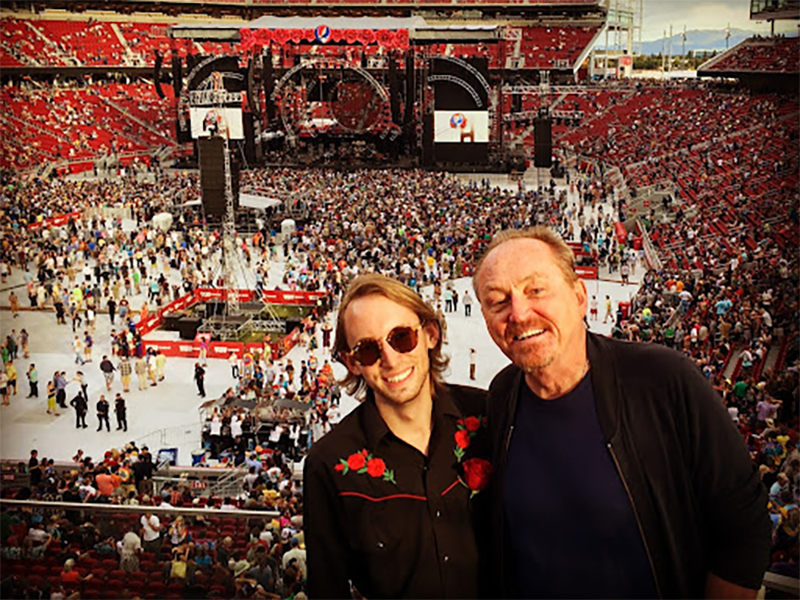
It’s hard for me to separate Bobby from my dad, who heard me listening to Counting Crows do Friend of the Devil in my room when I was thirteen and handed me American Beauty. I have his vinyl copy of that record sitting on my shelf right now. We went and saw the Dead 50 shows in the Bay Area for my dad’s 65th birthday, and he said that he wanted me to have two things as his son - baseball and the Grateful Dead. The loss of Bobby, a man I’ve watched swing around an exercise mace on Instagram for years, hits harder knowing that he was just a couple years older than him.
There’s nothing that will bring back Bobby, he’s gone, and with the loss I’m left with a profound uncertainty about what the future of the Grateful Dead as a cultural phenomenon is. The Dead come from the American musical traditions of jazz and bluegrass and leave behind a considerable songbook that stands with those traditions. I know that Bobby was quite vocal about his desire for the music to never stop, and for new voices to carry the traditions on, and now that the only surviving members are the drummers, we’re going to find out who steps up to fill the gaps now that the guy who filled the gaps is gone.
There’s never going to be anyone like him, he was a true American. A man who lived his life onstage in a way that you can only really see in guys like Willie Nelson and Bob Dylan. Bobby found his own way through life, doing what he needed to do, and is a singular player and person. We will all feel his absence.
Cooper Lund is an IT worker and writer who lives in Brooklyn, New York and has seen the no-longer surviving members of the Grateful Dead more times than he can count. You can read his writing at cooperlund.online and reach him on Bluesky at @cooperlund.online
Previously by Cooper Lund: Separation Sunday at 20