On Peter Gabriel's "Melt" and Steve Biko
Published on Feb 21, 2026
Be Sure to Wear Flowers in Your Hair
Published on Jan 19, 2026
WALK OUT TO WINTER: falling in love with—and to—Aztec Camera's High Land, Hard Rain
Published on Dec 26, 2025
First Anniversary
Published on Dec 17, 2025
More Liner Notes…
Featured Essay: Eric Dolphy’s Out To Lunch & The Abstract Truth
by Laton Carter
It was 1987, I’d had my driver’s license for six months, and my father had just won at auction a weathered Renault Le Car for $500. It became my first car. I could now drive to the public library where there was a vinyl section. Yes, a person, with the help of their library card, could check out a physical slab of wax—the cardboard jacket encased in thick mylar—to take home with them. There was no limit on the number of records you could check out. It was like shopping in a free candy store.
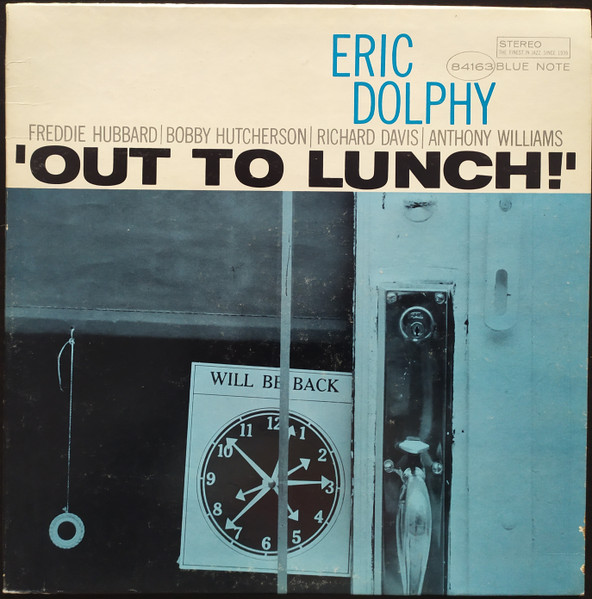
I didn’t want to go overboard with how many records I’d check out. As a result, I remember clearly the first four records I brought home: The Best of John Coltrane on Atlantic Records, The Best of Ornette Coleman, also on Atlantic, Archie Shepp’s Live In San Francisco, and Eric Dolphy’s monumental Out To Lunch. At the time, this fourth record wasn’t monumental at all. I’d never heard of it. No one, not even my saxophone teacher, had told me to seek it out. (My saxophone teacher was a Sonny Rollins devotee.) I simply thought it had a cool cover. When I flipped the record over, I saw that Mr. Dolphy played two other instruments in addition to alto saxophone: bass clarinet and flute. That was enough for me to give it a try. I tucked the four records, each entombed in the thickest, yellowing polyester protective sleeve you can imagine, under my armpit and headed to the checkout. Inconvenient? YouTube didn’t exist. Streaming and downloads didn’t exist. Compact discs barely existed. For a 16 year-old with a job at Wendy’s, there was little disposable income to actually buy a record. And what if you did, and didn’t like it? It was much easier to browse what the library had and take your chances.
I had no idea the record would essentially change my life. That sounds like exaggeration, and maybe it is, but the moment I played Side 1—Freddie Hubbard on trumpet, Dolphy on bass clarinet, Richard Davis walking a jagged and beautiful bass line, Bobby Hutcherson’s vibes ringing out like well-tempered doorbells across the neighborhood, and Tony Williams’ precise and gymnastic snare and cymbals marching out an insistent cadence—I was hooked. Really hooked when Dolphy’s bass clarinet solos exploded into my bedroom. Music could be like this. It could doodle, screech, split notes, squawk, and vocalize all in one coherent sentence. This wasn’t simply instrumental music, it was human yearning translated into sound. It was something to play over and over, not for an attachment to lyrics (there weren’t any), but for the consistent surprise in hearing five musicians coming together and improvising. Improvising in this case didn’t mean unabridged blowing, but rather the use of a forward-looking sonic vocabulary within the framework of a determined structure. It was the opposite of chaos, and yet it sounded unleashed. Free.
My parents did not give me grief for playing this record—which I should add was comically warped—over and over. I had one friend in high school, and this friend had recently acquired a girlfriend. I was unattached, so it was natural that I would attach myself to something I could rely on: five short stories inside the grooves of this publicly shared record. My friend was busy making out with his new girlfriend, my parents had their jobs, and I closed my door. It felt like I was inside a laboratory of possibilities. It felt like, as a person, I was changing at the micro level, the synapses firing inside my brain rewriting themselves to accommodate such wooly and fine-tuned music.
A note about the Reid Miles-designed cover (which I’m sure many readers are already familiar with): the photograph, by the one-man Blue Note photography team of Frank Wolff, shows a closed door with a “Will Be Back” sign in the window, sporting a paper analog clock with…seven hands. Well, that’s no way to tell time. Back when? Doesn’t matter. Push aside your distractions (no smartphones yet) and listen. No, don’t listen. Absorb. That’s what I did without thinking. Without being told how or what to listen for. Note: I wasn’t hip, or even trying to be hip, for knowing this record. I certainly wasn’t cool. I was a high school student. An introvert, lonely, sometimes overly sensitive, and wanting to hear something that would give me a new way to hear, and therefore see, the world. I’d lucked into just that record.
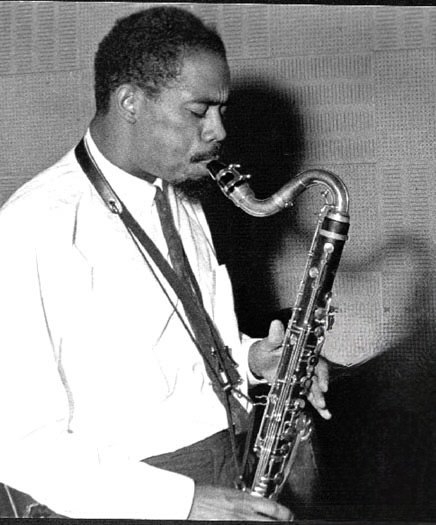
One standout moment: on the track “Something Sweet, Something Tender,” there is a written-out duo sequence with Dolphy on bass clarinet and Richard Davis on arco bass. The other members of the session sit out. Listening to Richard Davis, a classically trained bassist, bow in unison with Dolphy’s bass clarinet, in the same register, is near magical. Descriptions like simpatico partners
or linked minds are apt here. Everyone, especially people who claim to hate jazz, should listen to this short moment in musical history. Stravinsky would likely have given a thumbs-up. Bartok might have smirked and kept listening. Roberta Flack would grin and slowly nod.
Decades have passed, and I still listen to Out To Lunch. I still marvel at how the music hasn’t aged. Eric Dolphy’s soundworld is still available for younger ears, and still as exciting. I’ve owned the record in multiple editions and in different media, but the music itself resists collector fetishism. It’s simply waiting for the next lonely, or un-lonely, person to come along and try out its grooves.
Laton Carter is a writer and educator based in Western Oregon.