
On Peter Gabriel's "Melt" and Steve Biko
Published on Feb 21, 2026
Be Sure to Wear Flowers in Your Hair
Published on Jan 19, 2026
WALK OUT TO WINTER: falling in love with—and to—Aztec Camera's High Land, Hard Rain
Published on Dec 26, 2025
First Anniversary
Published on Dec 17, 2025
More Liner Notes…
Featured Essay: From Pub to Producer: Reviving my dad’s Mod days
by Georgia May
Hey you! Don’t watch that, read this!
“And then we were walking home from the pub, right, where we’d gone for ‘just one’, and all I remember thinking was why does the ground keep coming up to my face like that? It never occurred to me that I was the one falling to it until the next morning…”
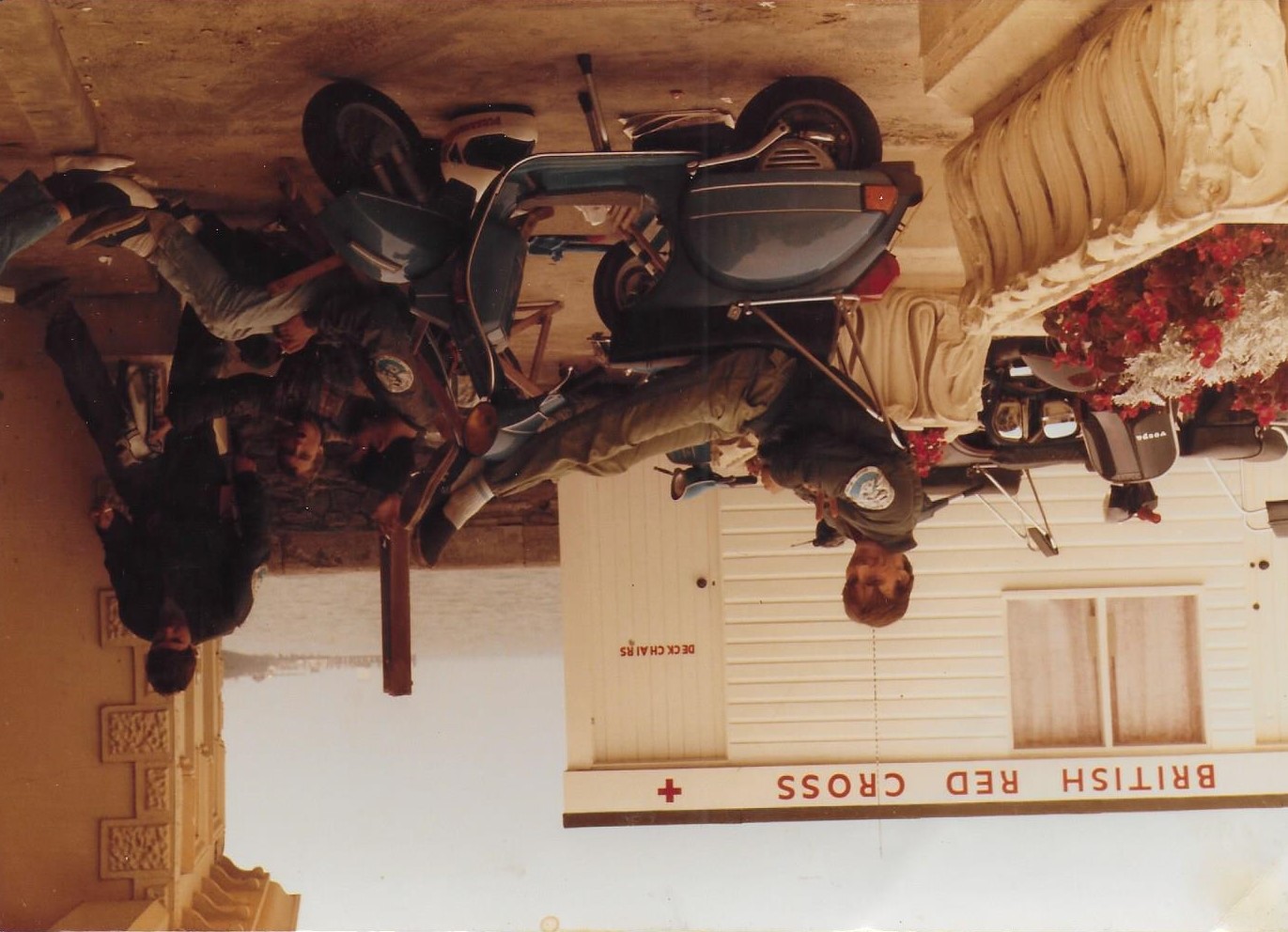
This is just one of the many anecdotes I heard down the local, my dad raising an eyebrow to say “cheeky pint?” on the way home from wherever we’d been. The music venue where I once bartended used to throw Hipshaker club nights in the 90s, throwing it back to The Easybeats instead of Jay-Z. When they revive it for one night in 2023, everybody loves it. My parents, my sister—our mates who haven’t a clue who The Kingsmen are but guzzle enough Jäger to slide along the sticky floor to “Louie Louie” —my dad drunk giggling like a schoolgirl over a man’s glittery shoes. He instructs us to dance like Mods, meaning “just look like you’re falling over.” He used to strut two-tone back in the day and still wears paisley shirts to dinner. Hipshaker is his time capsule, his homesick reverie, and that’s what this whole thing’s about: revival.
I’ve always been an old soul. D-Block Europe and Eminem gym playlist aside, I’m the only young girl to be found at The Jam tribute gigs, blues bars, and independent cinemas where all the old biddies go to watch Richard Burton films on a Tuesday afternoon. Hell, I’m a Capricorn, what can I say? When settling into hazy IPAs that would send blue collar 80s grandads huffing into eternity with their pints of London Pride, my dad would tell me the stories of his Wi-Fi-free days: mischievous, tediously dull, and textured by the sound of vinyl scratching, typewriters clacking, and radio signals catching.
“Being a Mod was like a religion. We would eat, sleep and talk Mod—the music, the fashion, the scooters. You were in your own world, not following orders, with enough of you to be something.” That’s what I quoted my dad in the pitch deck of Revival. It wasn’t enough to chew the rag about old times, I had to do something with it—with these vignettes of hilarious mishaps playing out in my head. Sacral chakra ablaze. Writers run in the family—ink is in my bloodline, cinema my perfume, and it was only a matter of time before I stole my father’s adolescence and fashioned it into a script. Sprinkled in a subplot on Pride and made a playlist top heavy with Small Faces to match.
Revival opens to British working-class suburbia, 1982. A time when people came-of-age in real life, not digital ones, and petty crime was easier to get away with. Donny is ten— uptight, moody (inspired by Shaun from This is England), and trying to sleep when someone starts talking through the walls. They’re echoey and demanding, jolting Donny into wide-eyed alertness when a muffled voice calls “Hey you!” Truly, it does feel like Chas Smash is speaking to Donny, wearing the shoes of some omnipresent music god on Mount Olympus. Donny tiptoes into his brother Mickey’s room, who dances to the ska track with his best friend, pausing only to puff clandestine cigarettes from the chilly single glazed window. As “One Step Beyond” drives into that famous Madness frenzy, Donny falls to his knees in awe. An—admittedly melodramatic—fictional reimagining of my dad’s “musical awakening”, so he calls it, after seeing the band on TV, knowing nothing but classic rock until this electric reggae sound started vibrating his eye sockets.
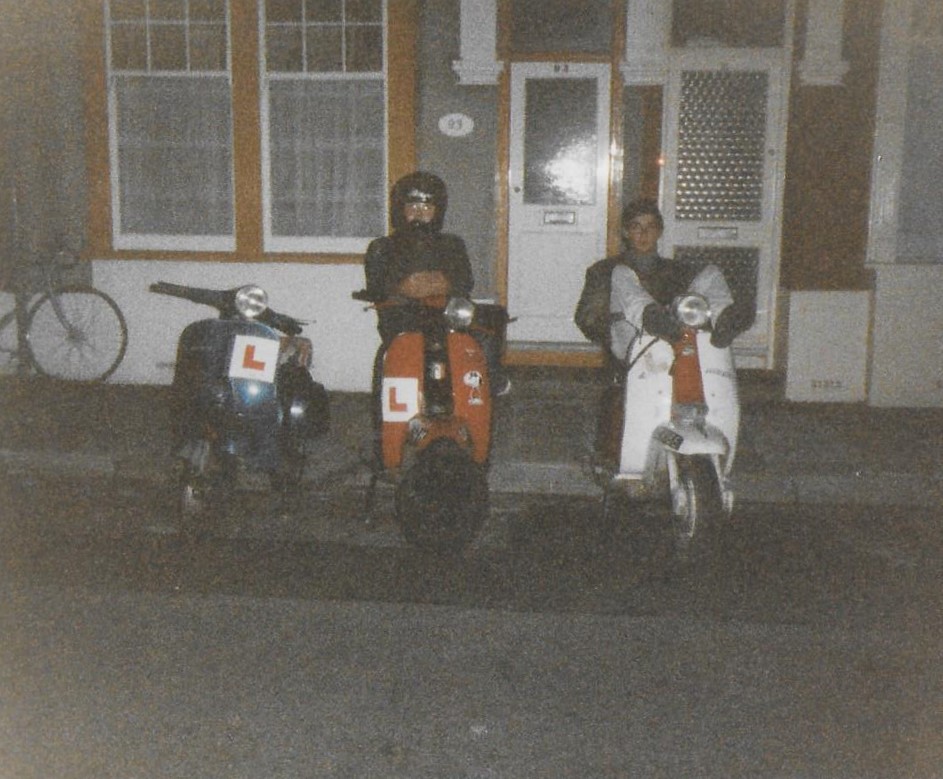
Revival lunges forward from this scene, a record skipping across a scratch, until it’s 1987. Donny’s a diehard Teddy Boy who hangs out with Mickey’s older mates. Scrapping, smoking up, scooter rallies, running from police, attending “do’s”, and trying to pull at parties. Sweet nothings that adults soon grow out of, but for Donny, it’s all an exciting yet-to-come.
Revival is a story of latch key kids, filled with observations on plastic Faces—“they got the records, the brogues, the Lambrettas. The full monty. But where’s the heart?”—whoopsie babies, Guy Ritchie gangsters, booze, betrayal, winks to Quadrophenia (looking at you, Brighton) and a little sexual identity crisis. Grounded in authenticity—whether personal, from my dad, or contextually (“A woman rang the BBC and said she heard that there was a hurricane on the way. Don’t worry—there isn’t.”)—Revival is an Inception of resurrection. My dad a 2.0 Mod bringing the 60s to the 80s, and me plucking it from the ether of memory and putting it onto page in 2025. Immortalised, one could say, if only I were Scorsese enough for a production budget.
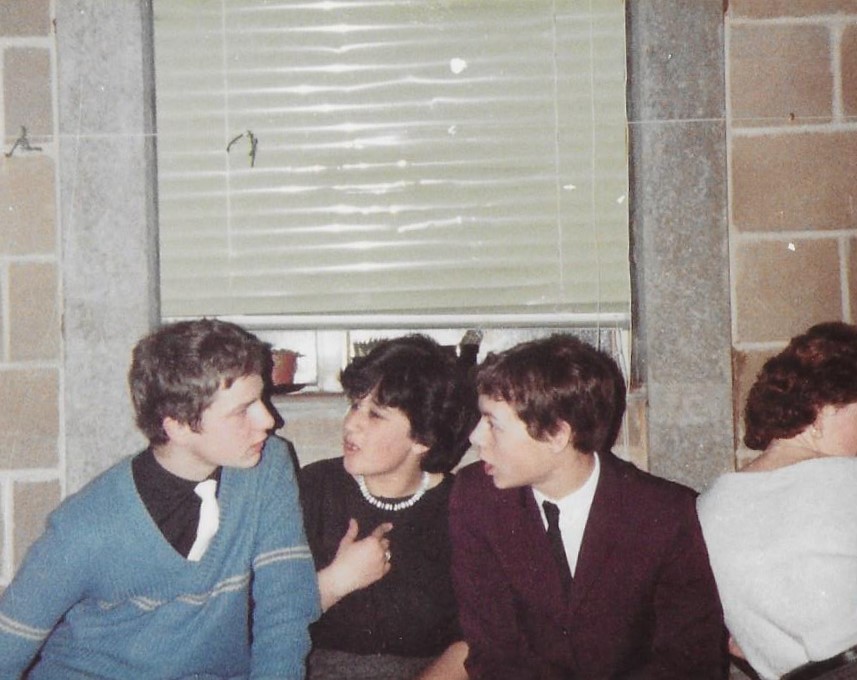
I’ll stop here before this turns into an elevator pitch, but I hope to one day see this throwback on the big screen, where every middling Fred Perry-wearer will be seated and, hopefully, warm in the chest from recognising times past. I managed to get a co-producer from Northern Soul (2014) to help me with the pitch deck, and maybe with enough festival laurels, crippling networking sessions (come on now, we all hate them), and film school, I can get it into a cinema near you.
As you can probably guess from the fact I wrote a literal movie about it, I have a middle-aged man’s taste in music. I love all the J’s: Jimi Hendrix, Janis Joplin, Jefferson Airplane, John Mayall, Jim Morrison. Blues is my family heirloom, and it’s no surprise I followed in the footsteps of my sister and wound up working at a music venue after uni. She was all Doc Martens, red lipstick, and Amber Leaf in college, pulling pints beside that grotty and beloved local stage, a wall of peeling punk posters behind her. Awkward little tweenbop me couldn’t imagine being that cool, but somewhere down the line I got baptised in menthol cigarettes and nose piercings and was unlocking the till from the safe out back. Although books and films are my passion, music is my home—my dad’s psychedelic tracks carrying down the staircase, my mum humming in the kitchen, the first job I ever enjoyed selling shots to metalheads and flirting with guitarists. Tired of the late shifts, I got a job in a rehearsal studio café. Above the optics hang Motorhead and ACDC tapestries like the sails of pirate ships screaming skulls and crossbones, wafting in the draft as if on the belly of a stormy sea.
They say it’s not what you know, it’s who you know, and since all I know are sound techs and bass players, I decided to make use of them. I’d made a short film about my mate’s band in college, influenced by Bob Dylan’s Don’t Look Back (1967), hoping they’d get famous and take me with them, but alas, they split. Now I’d had a backseat view to Portsmouth’s blossoming underground music scene for a few years now, and while chuffing a hungover cigarette on a chilly October beach, I was struck with the idea of telling their story. I was a film buff in a musician’s world, and seeing its network spread like tree roots from South Parade Pier (where Ryan Gosling was randomly stood in a yellow raincoat that same October day, bringing a glimpse of Hollywood to a Navy dive town no one’s ever heard of outside England, except briefly when researching Charles Dickens for a school paper) to Hilsea Lines (where The Who’s 1975 music opera Tommy was partially filmed), I decided to capture it. Dust off my second-hand Canon and pretend to know what “aperture” means.
Never having produced a film, or interviewed a subject, or even turned on a microphone before, I applied for some funding to make up what my savings lacked and directed a B-movie documentary on the local grassroots scene. I, somehow, got a small bursary from the arts council and took “winging it” to the max. Despite a few mishaps—interview no-shows, faulty tech, mansplaining videographers, being a one-woman film crew with no car—I channelled my inherited love of garage rock into a feature.
God Save The Music is still in post-production, logo font informed by Sex Pistols, low-res and rough around the edges. A proper DIY debut to match the janky, down-to-earth, for-the-passion-not-the-money community it’s centred on. I shot one of the talking heads in Portsmouth’s musical heritage exhibition, chair in the eye of a floor-sized target, the curator puffing his chest proudly to say he was an original 60s Mod. All because one wannabe rude boy watched Madness on Top of the Pops at age eleven and signed the cross to the music gods. And even though he’s told me the story before, and I’ve played the very same record on my own turn table many times, his ears will still perk up at the sound of Madness and say, as if telling me something I don’t already know, “I have that on vinyl.”
Bio: Georgia May is a UK-based writer, filmmaker, and journalist from the South East. Several of her poems and short stories have been published online, and she’s been both judge and selectee of film festivals around the globe. Mostly for her feature scripts, experimental shorts, and music documentaries.