
On Peter Gabriel's "Melt" and Steve Biko
Published on Feb 21, 2026
Be Sure to Wear Flowers in Your Hair
Published on Jan 19, 2026
WALK OUT TO WINTER: falling in love with—and to—Aztec Camera's High Land, Hard Rain
Published on Dec 26, 2025
First Anniversary
Published on Dec 17, 2025
More Liner Notes…
Featured Essay: How Kendrick Lamar’s “To Pimp a Butterfly” Shaped a Generation
by Jesse Illanes
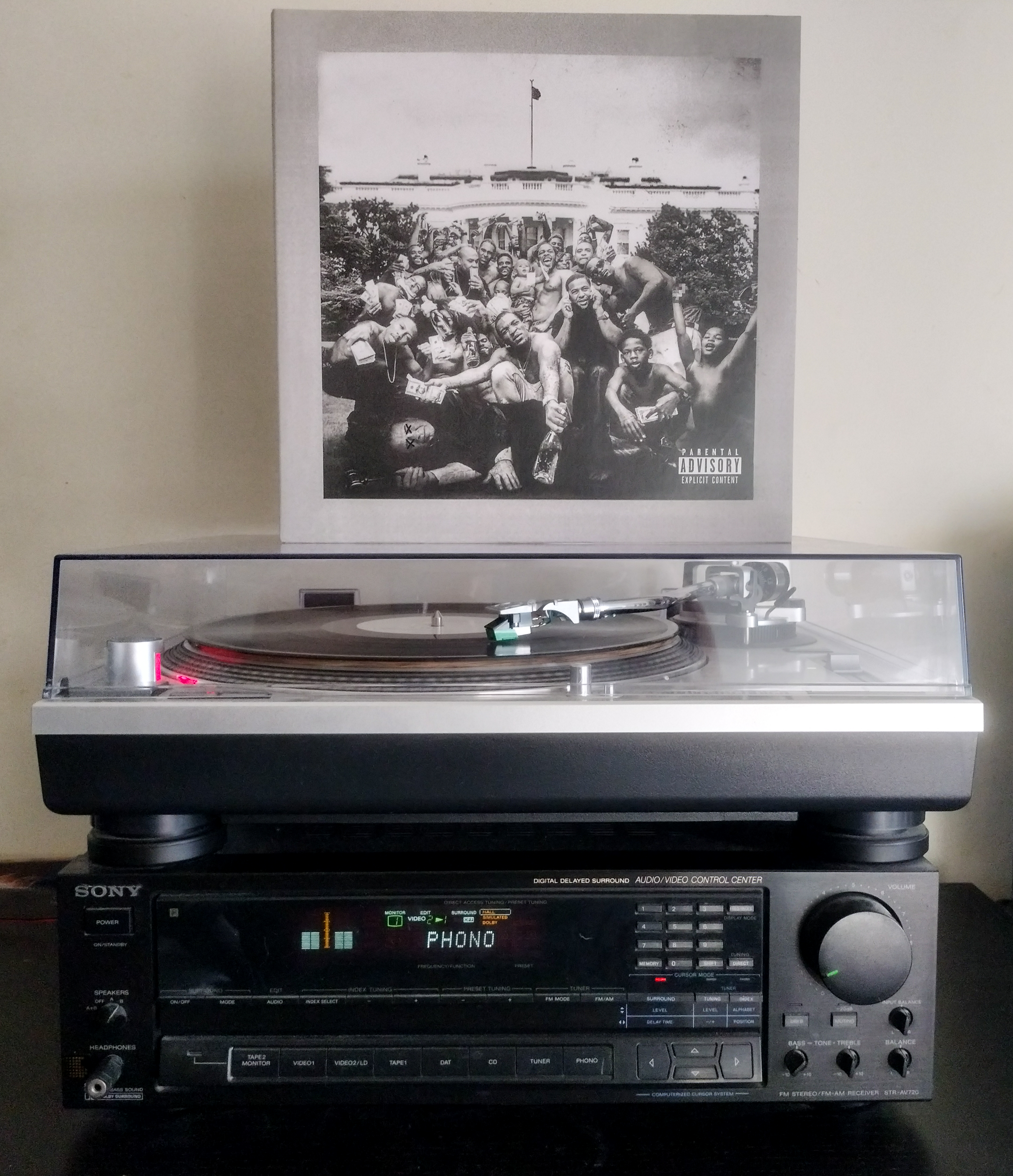
Kendrick Lamar’s To Pimp a Butterfly became a seminal album in the hip-hop space, especially in 2015 when the album was released. From musical influences of jazz and funk blended with Kendrick’s lyricism of political consciousness and overall Black culture in the U.S., the album was universally acclaimed and remains one of the best modern hip-hop albums.
As the 11th year anniversary approaches, TPAB personally represents a breakthrough in my love for modern hip-hop. TPAB connected with me through several paths: such as my love for 90s hip-hop before the album’s release, getting into vinyl records around that time and ultimately, listening to TPAB for the first time and realizing the power of its message.
Some details are a little hazy, considering I was also a kid in high school in 2015. This is where my vinyl record collecting journey started. Collecting physical media was something I was interested in since then, but was more prevalent back then too. It was tough juggling interests like gaming and film because I had to be picky on what I was going to spend my spare money on. At this point, money usually came from birthdays and Christmas, like most kids, or the occasional odd item I’d sell on eBay. But, I was dead-set on getting a record player, because of my love of music with artists like The Beatles, Outkast and a plethora of other groups and genres. Being in the high school band also added to my further appreciation of music.
This led to my extensive research, scouring through YouTube videos, subreddits, the occasional audiophile forum and other spaces. Considering my financial situation at that point, I wanted to make sure I got my money’s worth. All of this research boiled down to getting either an older, used record player from a certain group of makes and models, or buying a new record player from a trusted manufacturer, making sure it wasn’t a briefcase-styled “Crosley” record player (which was practically the number one rule from sources on buying a record player).
Being impatient on finding a good deal, I ended up buying a few records here and there from local stores and also Fry’s Electronics of all places, as I was subscribed to their newsletter that gave countless promo discounts and coupons.
The first album I bought was at Fry’s, and it was Illmatic by Nas. This was around the time I tried to branch out my music tastes as I was getting sick and tired of the same 200–300 songs I had under my Google Play Music account, and Illmatic was recommended by music forums as a great album in 90s hip-hop. Part of my intrigue of vinyl records was the album art being blown up into a 12-inch sleeve, plus the extras like lyric sheets or even posters that would come with records as a bonus.
I checked my Fry’s newsletter one day and saw the Audio Technica AT-LP120-USB on sale with a promo code for $199 and immediately went out and bought it, playing Illmatic on the record player as my first listen. Practically having a ritual when playing a record was something I didn’t really think about before I got my player, and I always look forward to it as setting a record on the turntable and dropping the needle is a commitment that is absent when listening to music through streaming services. When it came to my taste in music at this moment, 90s hip-hop was my go-to, as I started appreciating the mixing of samples from acts like De La Soul, to the lyricism and story telling of acts like Outkast.
However, because of this vinyl resurgence of the 2010s, not only did many all-time great albums get reprinted, but new releases in music were also getting released on vinyl, sometime on or shortly after their release on streaming services. In seeking out more music, an artist echoed in the conversations I was hearing about hip-hop. It was a new artist who garnered praise either in my conversations with friends or on music forums at the time—it was Kendrick Lamar.
After the release of good kid, m.A.A.d city, I knew that Kendrick Lamar was seen as the leading artist carrying the torch of West Coast hip-hop, as Dr. Dre was involved with his songs and spoke highly of Kendrick. “Swimming Pools (Drank)” was an inescapable hit too because it was being played all the time on the radio and at parties.
I wasn’t there day one on TPAB, but listening to all the praise the album got and listening to “Alright” in passing a few times, I kept telling myself, “listen to the full album!”
It seemed like every time I listened to “Alright” I was itching for more. Sure, I was having a blast with my deep dive in 90s hip-hop, but Kendrick’s work was always waiting to be discovered, was always looming in my mind. I finally gave in when rumors of Kendrick’s next studio album was coming up, which led me to listen to good kid, m.A.A.d city and TPAB. I thought good kid, m.A.A.d city was pretty solid and seemed in line with the continuation of West Coast hip-hop from the 90s and early 2000s, but TPAB was genuinely a love at first listen.
TPAB is a beautifully crafted soliloquy discussing racial inequality, Black culture in America, and one’s mental standing under all these pressures of society. The grand entrance of the album was “Wesley’s Theory,” with Kendrick’s commentary on Black artists and their poor spending decisions being complimented by George Clinton and Thundercat’s funky vocals and instrumentals.
This revelation instantly made me believe that TPAB is a fusion of conscious rap with jazz from the East Coast, being mixed with Kendrick’s West Coast upbringing and hip-hop style, creating a new era of hip-hop.
The album is a reflection of these topics, rather than a solution, which better helps the audience formulate their conclusions with what Kendrick is going through in these songs. This leads to the pinnacle of the album, “Alright.”
I listened to the song before the album because it was a hit single, but listening to it in context of the album made me realize its importance. It seems as if the stars aligned for this song to be produced the way it was. Pharrell Williams and Sounwave’s production is second to none as the uplifting beat is paired with Kendrick’s message of escaping reality for just a second, even in the face of police brutality… “we gon’ be alright.”
The cherry on top of this album is the persistent spoken word at either the beginning or end of songs, where new phrases are introduced as the album progresses, making this album feel poetic and cinematic. The album ending with the full poem in “Mortal Man” is the perfect finale to the album’s experience. The poem contemplates personal struggle and dealing with how Black Americans treat each other during strife.
In 2015-2016, it seemed like more people were catching wind that Kendrick stood out from the crowd. TPAB didn’t just encourage me to listen to more modern artists, it pushed me into also seeking the vinyl record releases of these artists. Going back to my days in high school, my main thing to do after school on the weekends was to collect vinyl records with friends and occasionally buying online. The experience of going to a record store with friends always beats online shopping, and it was clear that this was the preferred way for the few of us who collected records. I saw mutual friends during our lunch break at school, trading Amoeba Music bags of records, which led me to having a discussion with them, finding out that they were also big into hip-hop.
To me, the greatest indicator that Kendrick Lamar was something special was when our music teacher talked about him. If you’ve ever tried to learn an instrument, one of the fundamental things to do when learning, is to listen to music featuring your instrument. The main purpose of this is to analyze what the performer is doing to achieve their sound and to also obtain inspiration. Our teacher was telling this to someone in our class, and as the student responded with “I only listen to rap and hip-hop,” our teacher said something to the effect of “well listen to Kendrick Lamar because he uses jazz in his music, plus he has great lyrics.” He never really discussed music other than music adjacent to what we were learning, so that was surprising leading us to have a brief discussion on Kendrick after class.
Getting TPAB on vinyl enhanced the experience, as listening to the album in an uninterrupted and focused state of mind made me realize all the little things that make the album great, such as the production and callbacks to earlier songs in the album with the poem. The album made me a definitive fan of Kendrick Lamar, which has led me to meeting new friends who also love his work, which culminated with the Kendrick and Drake beef of 2025. That’s a whole can of worms I won’t open, but during that time, it just made me reminisce of the excitement I had with TPAB, making me feel validated for being a Kendrick fan for all these years.
Even if you’re not the biggest hip-hop fan, if you are ever out and about at a local record store, and you see To Pimp a Butterfly, do yourself a favor and get the album.
Jesse Illanes is currently a graduate student in Mass Communication and has a Bachelor’s degree majoring in Creative Writing and minoring in Journalism. He was an editor in Northridge Review, The Daily Sundial, The Scarlet Review and CSUN SCENE Magazine. Beyond the bylines, he highlights communities in arts & entertainment that deserve a brighter spotlight. While his recent work focuses on writing articles, his creative work consists of poems and short stories featuring the genres of horror, comedy and drama. When he isn’t writing, Jesse is probably immersed in a game, a movie, or a favorite album