
On Peter Gabriel's "Melt" and Steve Biko
Published on Feb 21, 2026
Be Sure to Wear Flowers in Your Hair
Published on Jan 19, 2026
WALK OUT TO WINTER: falling in love with—and to—Aztec Camera's High Land, Hard Rain
Published on Dec 26, 2025
First Anniversary
Published on Dec 17, 2025
More Liner Notes…
Featured Essay: J Dilla's "Donuts" at 20 Years
by Chase Harrison
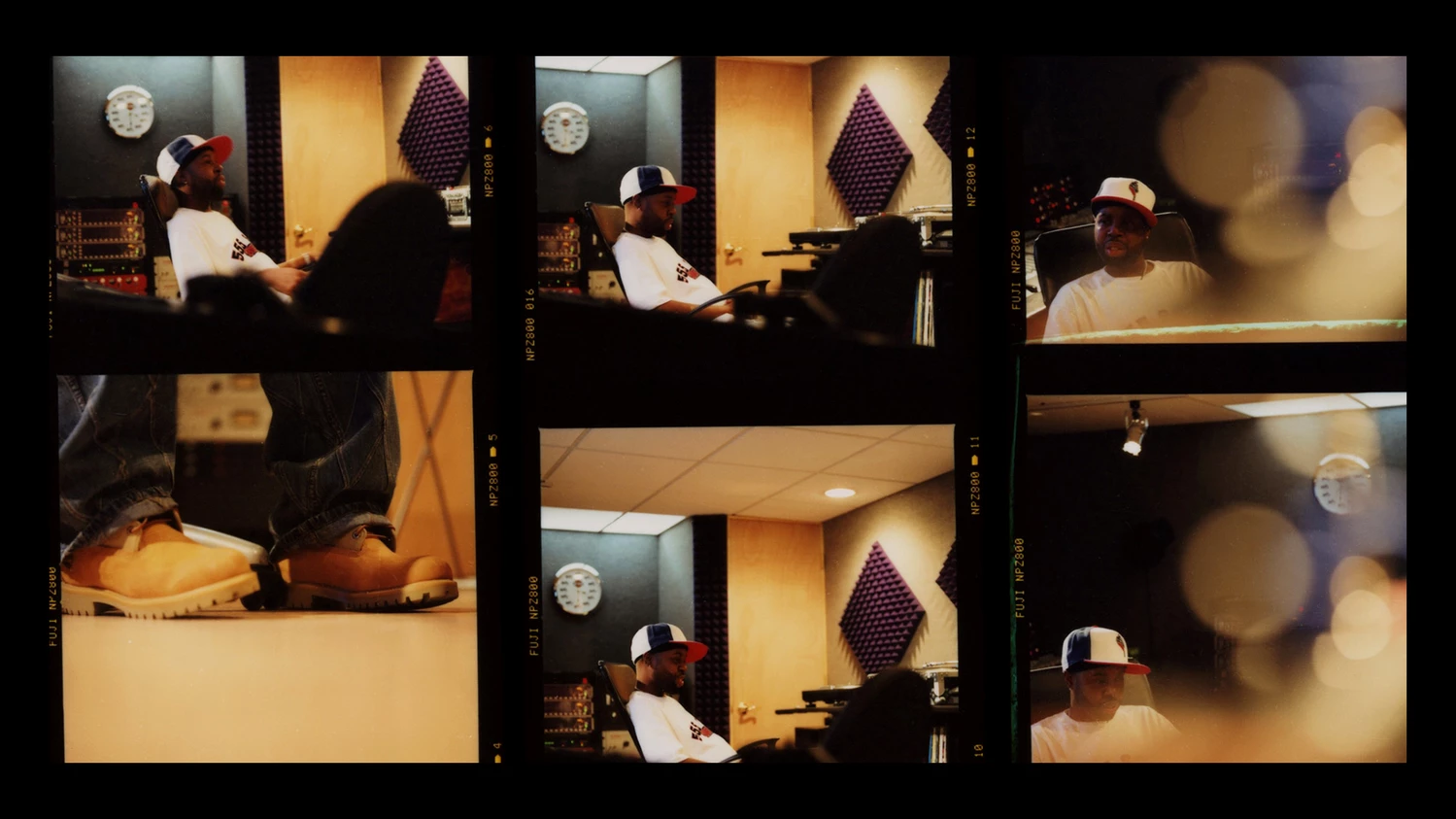
Today marks the 20th anniversary of James Yancy AKA J Dilla’s masterful, essential, and final album, Donuts. It’s a record that’s deservedly been written about ad nauseum due to its influence, its own sample-based work being re-sampled continuously, and its inspiration on generations of producers and rappers who’ve followed. The Detroit producer’s humanistic approach to the machines he used to create his extraordinary sounds have inspired countless musicians (more on that later). Since its release, the myths surrounding Donuts have had a tendency to overshadow the music itself. After all, it was released on his 32nd birthday, three days before the producer died – 20 years ago today – and at least partially recorded on his deathbed (which has likely been overstated: this was a part of the Stones Throw mythmaking; this album perhaps wasn’t all made in a hospital). Before he died of thrombotic thrombocytopenic purpura and lupus, Dilla toured Europe with the assistance of a wheelchair. All of this to say: the stories that bookended the making and release of the album are bittersweet, tragic, and compelling. But the music, off-kilter drums and all, would hold up as a classic no matter what preceded its release.
Donuts would already be remarkable due to the sheer number of samples used and for serving as the holy grail of instrumental hip-hop. But what makes it truly special is Dilla’s use and modification of those samples. “Don’t Cry,” the standout centerpiece (and message to his mother) near the midpoint, has only two samples, but the way in which Yancy manipulated the 1974 soul song, “I Can’t Stand (To See You Cry),” by The Escorts is astounding. Just watch for yourself. After first letting the original sample breathe on its own in the opening, Dilla gets to chopping before it becomes an equally good but nearly unrecognizable jaunty tune with a new melody created from seemingly disparate eighth notes of the original. Jay Dee was a master of morphing sounds and pitchshifting but he also recognized the power of individual notes chopped up, seemingly chaotically at first, to create something new altogether. “Don’t Cry” jams these elements in one 2-minute track. As AllMusic put it in their 5-star review, “Dilla’s just as likely to leave his samples barely touched as he is to render them unrecognizable.”
Dilla famously didn’t limit himself to the existing melodies of sampled tracks, but he created brand new ones seemingly out of thin air. He wasn’t the first to do this, of course, but the way in which he could pick out half a dozen (or more) disparate individual eighth notes and organize them with a fresh, tonally unique melody or rhythm. A lot of reviews of Donuts describe it as psychedelic and, while there are psych samples scattered throughout, the bulk of the samples come from mournful soul tracks. The way Dilla mashed these sounds in a new, inventive way created a psychedelic soundscape. As Mixdown put it, “the way that J Dilla used his MPC3000 is essentially the hip-hop equivalent of Jimi Hendrix’s relationship with his Fender Stratocaster: as soon as Dilla hooked up a turntable to his MPC3000 and began chopping up samples, the boundaries between man and machine were completely obliterated.” Even the founder of the MPC3000 recently said, “J Dilla was marvelous. He used swing and quantization – and lack of quantization – in ways that I never would’ve imagined.”
This work is often described as “instrumental” but there are plenty of vocal samples interspersed throughout that give it a living quality versus ever feeling like this was made by one man on an MPC who was close to dying. “Glazed” piles shouted and spoken word vocals on top of a frenetic, skittering beat. “Airworks” samples strings behind a repetitive but groovy song by L.V. Johnson before a commercial-sounding “Bendix: the Tomorrow People” abruptly cuts in to segue into “Lightworks,” one of the album’s many highlights. A woman’s voice sings in a jingle-like tone, “the name of the game is lightworks” over a woozy, spacy instrumental with “yeah, uh” vocal samples courtesy of Skillz and Ras Kass rhythmically scattered in the background. Some instrumental hip-hop has been derided as “background music” or the precursor to the lifeless “beats to study to” YouTube series, but Donuts is lively and rewards careful listening every bit as much as a luxurious Sister Sledge record or something guitar-heavy like Loveless.
“Stop” begins with a wink from the grave, a laugh and then a flipped sample of Jadakiss seemingly saying, “is death real?” while a smooth Dionne Warwick sings, “you’re gonna want me back in your arms / you’re gonna need me one day.” The rest of the track slips between Warwick singing over rap samples before it ends with another wink, “you’re gonna need me one day” before abruptly ending and transitioning to the next track. It’s easy to look for messages Dilla left before death but the next track, “People” includes sampled lines like, “people, the time has come… my people… hold on.” Questlove would say six years later, “[it] makes Donuts that much creepier for me to hear because all of those [samples], I’m now certain beyond a shadow of a doubt, were actual messages from him.”
“One for Ghost” was predictably made for Ghostface Killah who would go on to use it for the excellent, uncomfortable tearjerker, “Whip You With a Strap,” from his 2006 return to form, “Fishscale.” The commercial jingles on Donuts bring to mind Ghost’s classic Supreme Clientele. “Anti-American Graffiti” was used by MF Doom on “Sniper Elite” and Gobstopper was used by both Nas and J Electronica. Danny Brown and over a dozen Detroit emcees would rap over Dilla’s beats nearly a decade later. And perhaps most touchingly, The Roots would use “Time: The Donut of the Heart*”* on “Can’t Stop This” from Game Theory. The latter begins with a voicemail from Black Thought who sums up Dilla with:
“You know, my man Jay Dee was a true hip hop artist. I can’t explain the influence that his mind and ear have had on my band, myself, and the careers of so many other artists. The most humble, modest, worthy, and gifted beatmaker I’ve known. And definitely the best producer on the mic.”
“The Twister (Huh What)”contains 10 samples by itself. The Temptations, Stevie Wonder, Malcolm McLaren, A Tribe Called Quest, Steve Allen, Nairobi, and others are all chopped and jammed into the track’s 1:16 runtime. Then two tracks later, Two Can Win only uses one fairly straightforward sample (the chorus from the similarly titled “Only One Can Win” by The Sylvers from 1972). While the vocals are pitched up, Dilla knew when to tweak and when not to meddle with a sample that fit his vision.
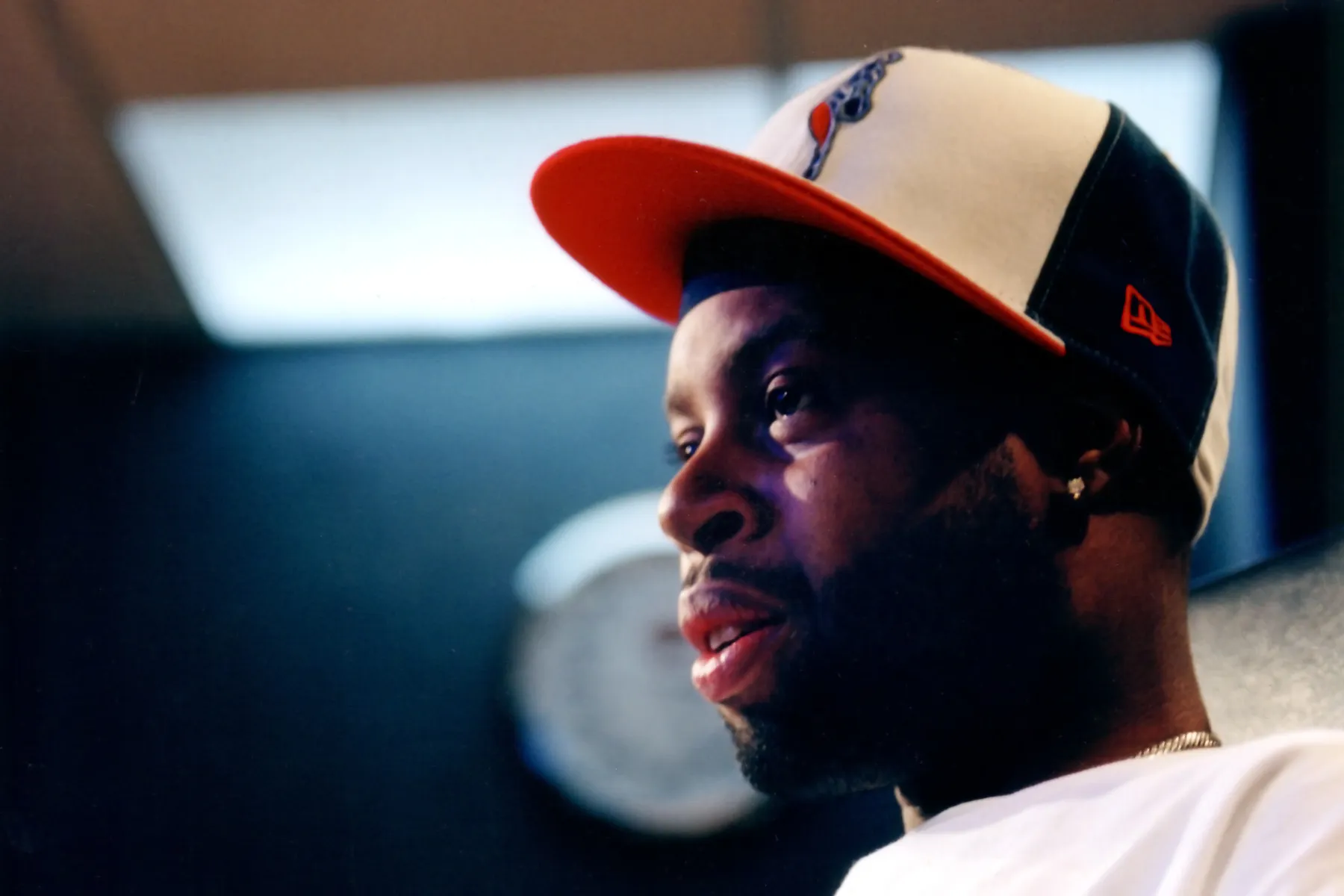
Though the sampled work varies wildly from guitar-based to funk and soul to electronic jingles the album feels cohesive, largely due to Dilla’s own style and his consistently mesmerizing and famously off-kilter beatwork. But he also scatters the same or similar samples throughout to give the 31 tracks a sense of connectivity. Pee-Wee’s Dance by Joeski Love appears on “Workinonit,” “The Twister (Huh What),” and “Anti-American Graffiti.” “Do Ya Thing” by B.R. Gunna ft. Dilla appears on two tracks. The aforementioned Bendix tune appears on three. An incredible resource, Sampling Donuts, visualizes how most of the samples came from the 70s and that the majority of them can be categorized as soul, funk, or disco.
By all accounts, Dilla’s playful personality is scattered throughout “Donuts.” The famed cover of the producer smiling widely was taken from a video still from the music video for “Push*”* by M.E.D., which was produced by Dilla. Illa J, Yancy’s younger brother, and fellow Slum Village member, said, “When I listen to Donuts, I can feel my brother’s personality, I’ll hear a sample and know it aligns with our sense of humor, like, ‘Oh, that voice is kind of funny.’” While it’s easy to focus on the mournful, tragic qualities of the record and its release context, there’s a sincere playfulness exuding from many of its tracks. It’s easy to imagine Yancy cracking a smile, similar to the one on the album cover, when pairing a sample of a strutting Jadakiss over a mournful Dionne Warwick. Or one of Steve Allen’s Funny Fone Calls next to “Funky Soul Makossa.” Or naming the opening track “Donuts (Outro).” Of course, the album also forms an infinite loop, a reference to donuts, segueing seamlessly from last track to first, a nod of levity in and of itself.
Pieces of “Donuts” have since been sampled by everyone from The Roots to Flying Lotus to Charles Hamilton to Dwele. Dave Chappelle used his music to soundtrack his specials. Dilla’s inspired some of the biggest names in hip-hop including Tyler the Creator, Kanye West, 9th Wonder (who also taught a course on Dilla), Knxwledge, Flying Lotus, Burial, and Four Tet. Dilla himself was inspired by artists as varied as Marley Marl, Pete Rock, Earth, Wind, & Fire, Radiohead, and Stereolab. Questlove, Common, and many others have called him the greatest hip-hop producer ever. There’s a reason any combination of words – psychedelic, soulful, jittery, danceable, melancholic, morose, playful – could be used to describe Donuts, an exhilarating record as fresh as ever, two decades later.
Born in Durham, NC and raised outside of Baltimore, MD, Chase has spent the last 18 years in Philadelphia, PA and Brooklyn, NY. He holds a Master of Advanced Studies in American Media & Popular Culture and currently works as a Content Manager with past experience in the film, food, and beverage spaces. Under the name Cult Posture, he has a monthly residency on CAMP RADIO, where his next show will be 2/24 at 8pm EST. You can also find him on Instagram or Letterboxd.