
On Peter Gabriel's "Melt" and Steve Biko
Published on Feb 21, 2026
Be Sure to Wear Flowers in Your Hair
Published on Jan 19, 2026
WALK OUT TO WINTER: falling in love with—and to—Aztec Camera's High Land, Hard Rain
Published on Dec 26, 2025
First Anniversary
Published on Dec 17, 2025
More Liner Notes…
Featured Essay: Like a Song I Have to Sing: 50 Years of U2 in 50 Songs and One Fan’s Musical Journey
by Bradley Morgan
“Drummer seeks musicians to form band.”
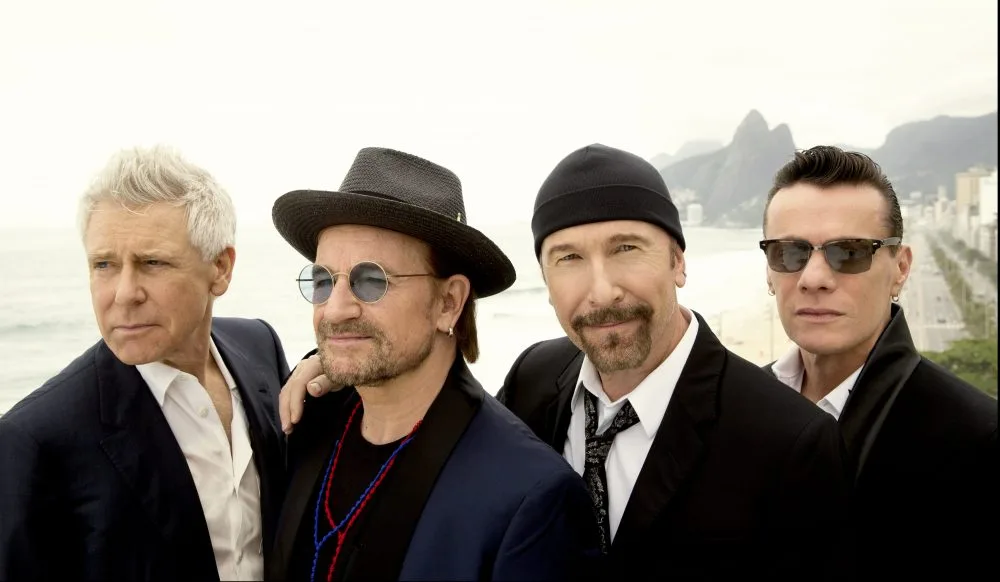
Fifty years ago, these six words brought together four boys who would embark together on one incredible musical journey. Posting that note on his school’s bulletin board, Larry Mullen, Jr. had unknowingly set himself down a path that would, joined by Adam Clayton, David Evans, and Paul Hewson, unite them all under a single letter and number. A modest beginning for a band that would become one of the biggest in the world, filling stadiums and history books alike. And the best part is, the story hasn’t ended.
For five decades, U2 has endured not just as a rock and roll band, but as a singular force that has shaped and defined popular culture through their unique and evolving styles, creating a musical blueprint in which countless artists have built the foundation of their sound and philosophy upon. As with any long and storied career, there have been praise and protest, contention and compromise, and as far as the charts are concerned, triumphs and trials Though through it all, U2 have remained together, proving that their brotherhood and their belief are as timeless as their music.
Some fans have been with U2 on this journey since the beginning, while others arrived at a time that was right for them, and there are more joining every day, creating a richly diverse and eclectic community. These fans represent all walks of life, sharing how U2 speaks to each of us, and finding the common threads that bind our humanity together. For me U2 entered my life a little more than twenty-five years ago, as a teenager growing up in Alaska at the turn of the millennium who appreciated how close their music resonated with a kid who felt so far removed from everything all the way up in the Last Frontier. U2 helped me feel like I wasn’t a world away from everything else, and that I wasn’t alone in wanting to dream bigger.
With U2’s golden anniversary milestone arriving this year on September 25th, like most fans who have owed so much for what their music has instilled in us, I wanted to do something to commemorate my own connection to the band. Having already explored their history in a biography, and even tackled their landmark album with a cultural analysis, I didn’t want to repeat myself. So, I thought why not write about U2 in a way that I haven’t yet? As a fan.
To celebrate fifty years of the band that changed my life, I decided I would borrow a page from Bono’s book and write about fifty songs myself. Not necessarily U2’s “best” fifty songs, or even my absolute favorites, but fifty songs that reveal the entire arc of their career, with all the highs and lows intact, as a way to document my journey with the band. Though I didn’t want to retread the biographical and analytical steps I had already taken before, one cannot talk about how much a band means to tehm without some of those things. However, you will also find more than that. Musings and memories, answers and anecdotes, stories and secrets. An exploration into everything and nothing about a band whose mark is still being made on me.
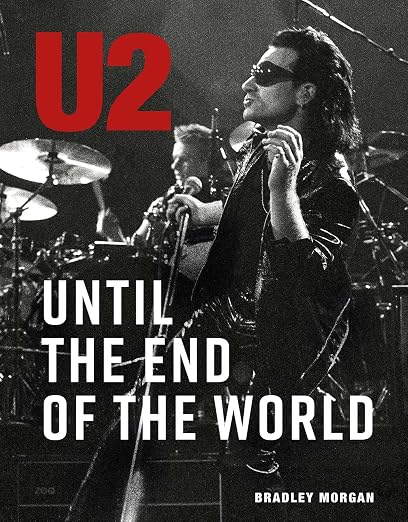
Choosing those fifty songs was the real challenge. I’m not used to writing pieces like this, so I needed to get out of comfort zone, but I also wanted to keep a structure that would help me frame a narrative as best I could, even if it was a loose one. Good guardrails can not only help you keep focused on what is important, but they are also useful in disrupting existing narratives that border on mythologizing. When writing U2: Until the End of the World, which documents U2’s five decades as a band, I didn’t want to fall into the same narrative tropes for the band but rather give equal attention to every phase of their career. And I did that by framing their story through album trilogies, bridging works that shared similar aesthetic and artistic impulses to illuminate U2’s history and development while making those records. Doing this allowed me to rein in the most well-known parts of their career while highlighting the periods that get overlooked, which softened some features of their story while sharpening others.
My approach to this tribute was similar. For my song selections, I broke down their entire discography by decade since their formation in 1976 and then selected ten songs within each of those decades. This resulted in an even representation of U2’s creative output, leading me to make tough choices about which songs would represent those years of U2’s career. And with this method, I also got to mix their different eras together which allowed me to view their timeline in a different way, and impacting which songs I would use to tell my story with the band. Some classic are missing while there are some picks that are sure to raise some eyebrows, but compiled together showcase the full, unfiltered range of U2 as artists.
While U2 began in 1976, the first recording on the list is from 1980. Initially when I began, I wanted to include material that predated U2’s first releases (such as their 1978 television debut performing “Street Mission”). However, in order to make the experience of engaging with this music more convenient for fans or those just discovering U2, I kept my selections limited to what was accessible on streaming platforms and have compiled a playlist so people can listen to them for effortless listening.
Listen to the U250 playlist here:
The path of my U2 fandom has taken me to some incredible places, and I feel so much gratitude for the people I have met and the experiences I have had during all that time. There is no right or wrong way for fans to connect with U2, and there are countless ways for new or curious fans to discover them. I am just a single fan among many, and what you will find below is the best way I can tell my story. However, it’s not the only one. Whether you have been listening for years or only recently for the first time, U2 is for everyone and every fan has a story to tell. Here’s a look into mine, and I can’t wait to hear yours because the best songs are the ones we can sing together.
1976 – 1985
“11 O’Clock Tick Tock” (non-album single, 1980)
There are moments throughout U2’s career that present interesting “what if?” scenarios, little glimpses into things that could have been and which would have changed the course of their direction as a band. One of those historical hypotheticals happened in the band’s early days, even before they began recording their debut album. Martin Hannett, who produced Joy Division’s Unknown Pleasures, was brought on to help U2 record “11 O’Clock Tick Tock” as a single before they would work together on a proper LP. It is one of the band’s earlier works that I really enjoy, and I especially love the extended version that appeared on the 25th anniversary box set for The Unforgettable Fire because of the longer guitar outro. However, this would be the only track that Hannett and U2 would complete together. As it turns out, as much as U2 loved the albums Hannett made, they didn’t necessarily like working with Hannett. When it finally came time to record their first album, U2 instead brought on Steve Lillywhite who would then go on to produce several of their albums. “11 O’Clock Tick Tock” is all we have and it is enough, but it does make me wonder how different U2 would have been had Hannett continued producing them. Though, decisions made at the eleventh hour are sometimes the right ones.
“Into the Heart” (Boy, 1980)
As I went through U2’s catalogue for the first time, I’m fairly certain Boy was the last album I listened to in order to complete that experience. Not for any reason that reflects negatively on the album, but rather it just happened to be the one I finished last until the next time they dropped a new one. It is a very compelling debut, and an auspicious one at that, and with several great songs. Though, while it may have been the last U2 album I had to catch up with, it was the one I had to begin with when I wrote my biography on the band U2: Until the End of the World. And it makes sense to start with the first album to tell a band’s history, but there is so much more to it than just profiling an album. It is about setting the scene and bringing readers into the environment U2 were in when they set out to record that debut album. There is a lot of darkness on Boy, and that is because there was a lot of darkness around those boys growing up. Before forming U2, Bono and the Edge were part of a performance art collective called Lypton Village, often referred to as a surrealist street gang, where they would stage impromptu theatrical skits around the city and on buses, and which also included their friends Gavin Friday and Guggi who would both later form the Virgin Prunes. As I wrote the opening chapter that explored the early days of U2 even before there was a U2 to begin with, I really appreciated the importance of Lypton Village as a form of escape. With sectarian violence waging in the north and a heroin epidemic exacerbating the effects of poverty as Dublin underwent sprawling urbanization during a time when it was among the poorest countries in Western Europe, there were certainly a lot of traps that could claim a vulnerable young man and set him on a path to his own self-destruction. Lypton Village was the salvation that allowed art to heal hurting boys before they became men who cause hurt. “Into the Heart” from Boy is that yearning for return to the innocence that was fading all around U2 as they faced adulthood and the unknown that lay beyond it, fearful of what might be.
“Gloria” (October, 1981)
Fandoms can be a tricky thing to navigate. U2 have been together for fifty years and have built an impressive intergenerational fanbase, so there are so many different ways to discover U2 and even more paths to take to navigate their discography. Whether you have been listening to them since the beginning, rode the wave of their popularity toward the end of the eighties, tuned into their comeback at the dawn of a new millennium, or only know them because of the iPhone controversy, all U2 fans are valid fans. I mention this because there can often be unwritten “truths” in fandoms, opinions that get oft-repeated that they almost become an accepted fact that fans should know through intuition. If you listened to the U2 fanbase broadly, October gets considered as one of the band’s worst albums, primarily because it was recorded so quickly after Bono lost a briefcase containing the album’s lyrics. It is an uneven and frenetic album, but it is also the sound of the band with their backs against the wall and that can lead to something unexpected and exciting. The opening track “Gloria” is among U2’s best tracks of the decade, and the “In te Domine” outro is just so uplifting. A little more polish and October would have been an absolute diamond, but there are still treasures to enjoy on it.
“Rejoice” (October, 1981)
On U2’s first several albums, Bono did not really consider lyrics all that important, instead referring to his process of finding the words to a song as “sketching.” Bono’s bona fides as a lyricist wouldn’t arrive until later, really only beginning to coalesce during the recording of The Joshua Tree, but there are some brilliant strokes in those sketches. The phrase in this song, “I can’t change the world but I can change the world in me,” I think it is one of Bono’s best lines, and an idea that has certainly helped me.
“Tomorrow” (October, 1981)
This might be U2’s saddest song, or perhaps I only think that because it is the one that makes me feel the saddest. Bono lost his mother when he was fourteen, after she collapsed from a brain hemorrhage while they were at her father’s funeral. A terrible nightmare for anyone to endure, especially a child. Bono has been open about how that experience had an effect on the rest of his family, poignantly captured in his memoir Surrender, detailing the trauma and struggle of living in a home where grief was bottled and left to fester into anger. “Tomorrow” though isn’t U2’s only song where Bono uses music to mourn his mother. There is also “I Will Follow” which was a single from their first album, and then “Mofo” over twenty years later when U2 were a much bigger band, but “Tomorrow” is a beautiful track on an underappreciated album and they haven’t performed it live in over forty years. It’s a song that reminds you of the suffering behind art.
“New Year’s Day” (War, 1983)
If I were asked to play one U2 song for someone who had never heard of them, and I were to provide no context about their work, “New Year’s Day” would be the song that I put on for them. “New Year’s Day” is the song that highlights all of the things that make U2 U2. Some fans think that U2’s music started to fall off after War as they headed toward superstardom by the end of the 1980s, but for as amazing as this song is, it is just the peak of one era. In their fifty years, U2 has undergone so many changes that to compare the greatest works from each of their creative periods is an exercise in futility. They each represent different ideas, and there are varying sensibilities and lenses in which to view those ideas, with the band getting older and that changing how they see things. “New Year’s Day” is just the first of many triumphs. Nothing may change on New Year’s Day, but U2’s career wasn’t built in just one.
“The Refugee” (War, 1983)
When fans discuss U2’s worst songs, “The Refugee” is one that comes up a lot for sounding too New Wave. And there is a reason for that, and it is because it is the one track on War not produced by Steve Lillywhite but rather by Bill Whelan. At the outset of recording the album, the idea was tossed around that a different producer would do each song. Ultimately, Lillywhite would be selected as the album’s sole producer, but Whelan’s contribution was the only other recording to emerge from this rotating producer experiment, resulting in something many fans feel breaks the flow of the album. However, I love this track because of that risk to experiment. It is certainly an outlier, but it captures a restlessness that make the track so daring.
“Sunday Bloody Sunday (Live)” (Under a Blood Red Sky, 1983)
I’m sure most music fans have entertained the thought of which concert they would see if they had the ability to travel through time. It is something I have often thought about and discussed with friends, and I could never really settle on just one. I would absolutely have loved to have seen Otis Redding at Monterey Pop, because his performance in that film is just so beautiful, and of course to see Dylan during the Rolling Thunder Revue would have been a treat. But then there’s U2 at Red Rocks, the show that cemented the band’s arrival in America. Bono’s white flag waving during “Sunday Bloody Sunday” is iconic, and the band just delivers everything they have which is why the video of this performance is such a cultural touchstone for U2. I have heard from friends who watched MTV when the Red Rocks version of “Sunday Bloody Sunday” was making the rounds on the airwaves, and it makes me happy to hear how exciting and impactful that moment was for them. To see something that you don’t know will become historic, there’s a magic to that.
“A Sort of Homecoming” (The Unforgettable Fire, 1984)
The title for “A Sort of Homecoming,” the opening track from The Unforgettable Fire, is borrowed from a quote by Romanian poet Paul Celan, in which he said, “Poetry is a sort of homecoming.” U2 recorded The Unforgettable Fire at Slane Castle, a gothic revival mansion an hour north of Dublin. Given this setting, this homecoming in U2’s song can read as their emotional connection to this land that raised them and which connects them to deeply personal historical and cultural roots. But perhaps it really isn’t about a physical place at all, but rather that this urge to find home everywhere is a reflection of a deeper intellectual and spiritual search. That yearning is the seeking for a state of grace. It is an elusive journey, but U2’s search for it through their music always has them guided toward home.
“Bad (Live)” (Live Aid, 1985)
Before I was born, my dad was stationed in London while serving in the U.S. Navy. From his stories, London in the mid-1980s sounded really vibrant and fun, and I have always enjoyed hearing him tell me about the concerts he saw, like Bruce Springsteen’s July 4th show at Wembley during the Born in the U.S.A. tour. However, it was Live Aid that got away, and my dad always regretted not going. It’s a shame, because I would’ve loved his firsthand account of seeing U2 perform “Bad” and his thoughts on what was happening when Bono jumped offstage. When my first U2 book was published, I gifted him a copy with the following inscription: “I hope this makes up for missing Live Aid.”
1986 – 1995
“Where the Streets Have No Name” (The Joshua Tree, 1987)
As the opening track on The Joshua Tree, “Where the Streets Have No Name” sets the tone for the rest of the album by establishing a cinematic landscape, with the synthesizer tone evoking a sun rising over the desert. The Edge was determined to craft the ultimate live song for the band’s concerts, and so U2 spent half of the sessions making the album on this one track, creating so many headaches along the way that Brian Eno even tried to surreptitiously destroy the tape. It is a wonderful thing that never happened because speeding along a desert highway with this song turned all the way up is one of the best ways to experience it, outside of a U2 concert of course where, as Bono says, it’s like God walked through the room.
“I Still Haven’t Found What I’m Looking For” (The Joshua Tree, 1987)
When I finished the first draft of my book on The Joshua Tree at the end of 2018, I celebrated a few months later by setting out to go see the almost mythical tree myself. I flew into Las Vegas, picked up my rental, and then drove four hours through the Nevada desert, into Death Valley National Park, and out on the other side to find the tree that graced the back of the album. Visiting the tree is a sacred site for U2 fans, with fan paraphernalia strewn around rocks arranged into band-related hieroglyphs in the sand. The tree fell a quarter of a century earlier, but still lies there preserved under the blazing desert sun. I had a lot of questions on my mind when I saw that tree, mainly whether the ideals U2 proclaimed through The Joshua Tree and elsewhere in their music were attainable or even realistic to begin with. By then, in early 2019, Trump had already inflicted so much needless damage, and even worse was yet to come. Though the tree no longer stands, in the spot where it once did is a small concrete block with a plaque featuring the tree and the caption “Have You Found What You’re Looking For?” I left thinking about that question, and came to conclude that the search never ends. This is a fundamental lesson in U2’s “I Still Haven’t Found What I’m Looking For,” where meaning comes not from the destination but rather from the journey.
“One Tree Hill” (The Joshua Tree, 1987)
Bono’s vocals on “One Tree Hill” are powerfully moving, especially when he is on the verge of breaking down by the end of it. That emotion coming through his performance was fueled by grief, having recently lost his friend Greg Carroll, a Māori man who joined up with U2’s roadcrew while the band was touring through New Zealand and would later become Bono’s assistant and then soon after a friend. Even The Joshua Tree is dedicated to Carroll. I’ve read that Bono could only sing the lyrics once while in the studio, becoming too grief stricken by the end of the take to do another. One Tree Hill is the common English name for Maungakiekie, a volcanic ancestral mountain in Auckland, where Carroll took Bono when they first met. Being on that hill was a profound moment for Bono, and I hope to visit it someday to pay my own respect to Greg Carroll.
“Even Better than the Real Thing” (Achtung Baby, 1991)
I really love “Even Better than the Real Thing,” and the music video is one of U2’s best. It still sounds fresh and exciting to me after all these years. When I first started getting into U2’s back catalogue, it was their nineties material that really pulled me in, thanks to their The Best of 1990-2000 compilation that dropped in 2002. Hearing this song, I would have loved being old enough to have been aware of U2 when Achtung Baby was released because that sonic and aesthetic transition must’ve been a really exciting time for a U2 fan. Although, I do have one minor issue with the song; the album mix is slightly different than the single mix, which I prefer. The single mix contains some guitar and vocal textures in the last minute that are buried on the studio version. Of course, this wouldn’t be something a casual listener would pick up on. For those who have listened obsessively to U2 over the years, one version is always even better than the other.
“One” (Achtung Baby, 1991)
Among their most well-known and recognizable songs, “One” is also U2’s most misunderstood. Often mistaken for a love song, I have heard about “One” being played at weddings or otherwise performed in an overtly romantic way. “One” is about relationships, but not those that elicit Hallmark card sentiments. Nearly on the verge of breaking up while recording Achtung Baby, “One” is the song that brought the band from the brink. When the melody formed out of a tense jam session, it helped begin to close that chasm that was forming within the group, and you can hear that in the lyrics. Yet, more so than being about how easily fractured our relationships with the people around us can become, it is also about our shared humanity and the complexities within it. I really like the way Bono has talked about the meaning of this song over the years. “We’re one but we’re not the same” is a key line that frames the song’s themes, but the line delivery of “We get to carry each other” isn’t some platitude about togetherness. Instead, it recognizes the responsibility that each of us has to find that shared humanity and help expand it. We get to carry each other, not as a burden but as a privilege.
“Until the End of the World” (Achtung Baby, 1991)
When I was commissioned to write a biography on U2 to celebrate their fiftieth anniversary, the publisher had a rule that the book had to be named after one of their songs. Reviewing that list of potential titles, I found there weren’t a lot of great options. Either the song conveyed too much a specific period of U2’s career or it didn’t sound great as a title, as would be the case for U2: Bad (which is probably a review somewhere from one of their critics). As I thought about it, I really liked “Until the End of the World” because it captured a feeling of what it must be like for band to reach fifty years together intact, asking “How long will U2’s music be around?” For me and many other fans, their music will be with us until the end of the world.
“Stay (Faraway, So Close!)” (Zooropa, 1993)
In recent years, Bono has identified “Stay” as his favorite U2 song. “Stay” was included in the Wim Wenders film Faraway, So Close!, the sequel to Wings of Desire. Wenders also directed the music video, which shares visual and thematic connections that make it feel like a short companion piece to both films. I always thought it was an unbelievably beautiful song, but it wasn’t one that I started to understand on a deeper level until well into adulthood. There’s an intimacy and vulnerability to it that makes it perhaps one of U2’s most relatable songs. For a band that loves to make a big noise, there is so much emotional power in such a beautifully understated composition. It is one that always stays close to my heart as a U2 fan.
“The Wanderer (featuring Johnny Cash)” (Zooropa, 1993)
“The Wanderer” is a song I find both compelling and frightening, standing out as being one of my favorite U2 deep cuts. As the closing track of 1993’s Zooropa, an album that touches upon the post-Cold War identity crisis of Europe amid electronic sensory musical overload, it curiously features Johnny Cash on lead vocals. Cash plays the role of a man disillusioned by modern society who sets out to commit a horrible act armed with a Bible and a gun. Despite the album’s European themes, having the closing track end with an American voice, especially one as iconic as Cash’s, makes the song’s theme and narrative profoundly more meaningful. For it suggests that the wanderer Cash embodies already roams throughout America, manifested in anyone committing an atrocity in the name of the false prophet in their mind.
“Hold Me, Thrill Me, Kiss Me, Kill Me” (Batman Forever soundtrack, 1995)
There are certainly bands I remember hearing for the first time, but U2 is not one of them. For a band that has been so impactful for me, I really wish I could remember that first time. Looking back, I think a big reason why is because they were already a hugely successful group before I was even born, with The Joshua Tree having dropped nine months before I did (a coincidentally perfect amount of time to be gestating to the sounds of “With or Without You” and “Where the Streets Have No Name” routinely playing on Top 40 radio). Instead, I think the earliest memory I have of hearing U2 is their soundtrack contribution of “Hold Me, Thrill Me, Kiss Me, Kill Me” to 1995’s Batman Forever, Joel Schumacher’s much-maligned entry in the Caped Crusader franchise. Though seven-year-old me obviously loved the movie for its campy comic book style rather than for its soundtrack, I couldn’t pass up a chance to see the film when it screened on 35mm at the Music Box Theatre, a gorgeous nearly century old cinema in Chicago. It was an opportunity to revisit it and hear this song in a proper theater, reliving a moment with fresh ears when back then I didn’t know what I was hearing but, babe, it must’ve been art.
“Miss Sarajevo (featuring Luciano Pavarotti)” (Original Soundtracks 1, 1995)
For all the criticism that U2 have received for Pop and its ensuing tour, that era does contain one of my favorite moments in the band’s history. In September 1997, U2 became the first major international act to bring a full-scale stadium production to war-torn Sarajevo when they brought their entire PopMart rig to give a full and proper concert to over 45,000 fans. It was an event that brought dignity to a people still devastated from the Bosnia War that ended two years prior, with local citizens quoted in newspapers proclaiming how U2’s concert brought them a sense of normalization as the show helped breach cultural and ethnic divides in the spirit of healing and hope. This story is shared in the great documentary Kiss the Future, which documents Sarajevo’s underground rock scene during the war and the impact U2’s concert had on people who used music as a form of defiance. Released in 1995, the same year the war ended, U2 collaborated with Brian Eno on a concept album under the pseudonym Passengers. Called Original Soundtracks 1, it was an album of disparate soundtrack scores for mostly imaginary films. “Miss Sarajevo,” featuring the operatic vocals of Luciano Pavarotti, was written about a group of women who put on a beauty pageant during the Siege of Sarajevo as an act of autonomy and defiance. Though it is from an album that does not bear U2’s name, “Miss Sarajevo” is one of their greatest musical triumphs.
1996 – 2005
“Gone” (Pop, 1997)
Pop celebrates its thirtieth anniversary next year, and I really hope U2 has something planned to commemorate that milestone. Many fans do. However, it is not an album that the band looks back on fondly. The issue U2 have with Pop is that they had to release the album before they were fully satisfied with it, forced to complete it because they booked their tour prematurely assuming that everything would be finished by the time they hit the road. PopMart, the tour supporting the album, got off to a rocky start, with the band under-rehearsed and underwhelmed by the album’s sales and critical reception. But that was thirty years ago, and Pop has recently been embraced and reevaluated for its place in the culture and the space U2 occupied at that time. While not the most experimental of Pop’s offerings, “Gone” is a fascinating U2 deep cut because the energy of it is nervous and unusual for the band. The strength of the song lies in the emotion behind it, unraveling right along with the music. The tension stays with you, building but never fully releasing. “Gone” bears the weight of striking a balance between Pop’s electronic textures and U2’s more straightforward approach to rock. I hope a box set drops next year before the chance is gone.
“I’m Not Your Baby (featuring Sinéad O’Connor)” (The End of Violence soundtrack, 1997)
For as big of a band as U2 was in the 1990s, they sure have a lot of hidden gems from that decade between the Passengers project and the material recorded for Pop. A collaboration with Sinéad O’Connor, “I’m Not Your Baby” was featured on the soundtrack for Wim Wenders’s 1997 film The End of Violence, the fourth Wenders film that U2 would contribute a song to. Filled with trip-hop beats and electronic dub textures, the track juxtaposes Bono’s detached delivery with O’Connor’s emotional intensity. “I’m Not Your Baby” remains a compelling, yet overlooked, entry from a maligned era of U2 and deserves far more attention than it got.
“Beautiful Day” (All That You Can’t Leave Behind, 2000)
This song will always be my U2. I was thirteen when All That You Can’t Leave Behind was released, and that album was my first real exposure to the band. I had heard them before, of course, but this was the first time their music connected with me on a deeper level. “Beautiful Day” became a defining track for me, instilling in me hope and an urge to break out into a world much larger than I knew, a feeling I still experience listening to it today as I did the first time I heard it on the radio. “What you don’t have, you don’t need it now…” a mantra for both the boy and the man he would become.
“Walk On” (All That You Can’t Leave Behind, 2000)
An artist’s relationship with their own work can be a really fascinating thing to follow, especially when that relationship changes or gets redefined. At its heart, “Walk On” is about resilience and the personal sacrifice that comes with standing up for one’s beliefs. More specifically, it was written to honor Aung San Suu Kyi, the Burmese democracy activist who won a Nobel Peace Prize for fighting for human rights in Myanmar while under house arrest for over a decade. After the September 11th attacks, U2 reframed the song, and others from All That You Can’t Leave Behind, to act as a salve for a nation in the midst of grieving and healing, and is what I most associate with the track. Sadly, the original subject of the song would go on to defend a military-led genocide against the Rohingya, Myanmar’s Muslim ethnic minority, and was later ousted from power following a coup d’état over claims of election fraud. In the twentieth anniversary rerelease of All That You Can’t Leave Behind, U2 updated the dedication in the liner notes for “Walk On” to reflect their support of the Rohingya people. It’s a song about leaving what doesn’t matter behind, but the message is one to keep with you.
“Kite” (All That You Can’t Leave Behind, 2000)
Around the turn of the millennium, Bono faced a severe health scare involving his vocal cords. Due to extensive touring, allergies, and improper singing technique, Bono’s voice had deteriorated throughout the PopMart tour, which left him anxious about his ability to perform and record U2’s next album. Bono felt that he had lost part of his range and that really affected his confidence as a singer. However, during the recording sessions, Bono unexpectedly hit a high note while singing the line “I’m a man, I’m not a child,”and it has since become one of those storied magic moments within the band. Adam later recalled that breakthrough, saying “I don’t think we had heard that voice for a long time.” That pivotal moment would become the song “Kite,” and it revealed the themes for the album that would become All That You Can’t Leave Behind, centering the idea about holding onto what truly matters when everything else falls away. It is a truly soaring song.
“Peace on Earth” (All That You Can’t Leave Behind, 2000)
The September 11th attacks were carried out when I was thirteen and were my first experience with collective trauma. I certainly remember atrocities that happened earlier when I was even younger, such as the Columbine shootings, but an awareness doesn’t necessarily lead to understanding. At that age I knew that what I saw on the news was an awful thing, but I couldn’t quite grasp how those events reverberate throughout our culture and touch all of us, connected by a shared grief and mourning that things will never be the same. The attacks on 9/11 were when I really understood that what happened would touch the lives of everyone in some way and things were going to be different because of that. It wasn’t a conscious thought, but rather a dull tension that filled my body. When the COVID-19 pandemic began, I thought a lot about how I felt after 9/11 because my younger brothers, who are roughly twenty years my junior, were enduring that as their first experience with collective trauma. They had so many feelings that I could relate to when I was their age, and helping them through that gave me a new lens to view how the world has changed since I had first felt that same way. Joined by Natalie Imbruglia, Morleigh Steinberg, and Dave Stewart formerly of Eurythmics, U2 performed a medley of “Peace on Earth” and “Walk On” for the America: A Tribute to Heroes telethon to raise funds to assist with the devastating aftermath of the attacks. Perhaps the most powerful rhetorical question posed in U2’s music comes from “Sunday Bloody Sunday” and the line “How long must we sing this song?”, but “Peace on Earth” also ends with a rhetorical question. I have thought of it as a spiritual successor to the one in “Sunday Bloody Sunday,” when Bono asks at the end of the song, “So what’s it worth, this peace on Earth?”I think “Peace on Earth” is a beautiful prayer, but how long must we keep repeating it?
“Elevation (Tomb Raider mix)” (Lara Croft: Tomb Raider soundtrack, 2001)
Of all their songs, “Elevation” might be U2’s biggest earworm for me. Not because it is one of the best tracks or even one of my personal favorites, but simply because it is just so damn catchy. The lyrics are short and punchy, and the rhymes are pure fun with their silly imagery of moles digging holes and souls. I was also thirteen when this track was a hit, so it left an impression on me. And the remixed version made for the Tomb Raider movie starring Angelina Jolie as Lara Croft also helped the track make its mark, a live-action videogame vixen being an effortless way to get teenage boys to buy a CD. The music video was also ridiculously fun as well, with the Edge kidnapped by evil U2 doppelgängers. It is a song that lifts you up and gets you moving.
“Electrical Storm (William Orbit mix)” (The Best of 1990-2000, 2002)
While I wouldn’t buy my first U2 CD until All That You Can’t Leave Behind, I vividly remember a few years earlier when U2 released a music video for their re-recording of “The Sweetest Thing” to promote the band’s first compilation, The Best of 1980-1990. I was in fifth grade and just really starting to pay attention to music videos on MTV at that time, and I always really enjoyed video for “The Sweetest Thing” featuring Bono being paraded through Dublin begging for forgiveness. This was during the peak era of Total Request Live. While I didn’t get to enjoy MTV during its music video heyday, with my entry to the channel being the non-music video programming such as Daria and Celebrity Deathmatch, watching Total Request Live became my introduction to appreciating music videos. However, at that age, I couldn’t afford to buy that first compilation. Though, by the time when The Best of 1990-2000 was released, I was now in high school and could freely purchase music. That second compilation cemented in me the period of U2 I most admire. “Electrical Storm” was a brand-new track for that compilation, and there were two versions available on the deluxe two-disc edition. While the original band version on the bonus disc was fine, I always preferred the lush William Orbit mix that served as the single. More than just a collection of songs, that compilation was my gateway to U2, leading me to dive into their studio albums and the beginning of me piecing together their history as a band, exploring even further one song and video at a time.
“City of Blinding Lights” (How to Dismantle an Atomic Bomb, 2004)
Barack Obama was the first president I was old enough to vote for, during his first historic campaign in 2008 while I was a college junior in Kentucky. When he first announced his candidacy, U2’s “City of Blinding Lights” kicked off the start of his campaign and set the tone for its soundtrack of his run going forward. I’ll never forget that experience of casting my vote nor how electrifying and inspirational that time felt thanks to Obama’s message of hope and change. That America doesn’t exist anymore, but it still can. Or at least that is the feeling I got while watching Bono and the Edge perform an acoustic version of “City of Blinding Lights” to commemorate the opening of the Obama Presidential Center. I’m no longer in Kentucky, now having lived in Chicago for fifteen years so far, and I’m eager to visit the Obama Center soon. Things are vastly different than they were in 2008, but this track brings back those feelings. A good message will always endure.
“Crumbs from Your Table” (How to Dismantle an Atomic Bomb, 2004)
In 2008, the ONE Campaign, which Bono co-founded, held a challenge where colleges and universities competed to raise the most awareness for global poverty carried out though assignments that centered on issues like hunger, access to clean water, and healthcare and disease prevention. My alma mater, Western Kentucky University, beat out schools with far bigger names and even deeper pockets, which was exciting because it proved the power of grassroots student advocacy and put my small university on the map. Bono even recorded a video congratulating my university, which was projected onto the side of one of the campus buildings. “Crumbs from Your Table” deals with those very same issues, serving as a reminder of the role we each must play in building a safer and more equitable world for all.
2006 – 2015
“Window in the Skies” (U218 Singles, 2006)
Earlier, I mentioned there were moments throughout U2’s career where things would have worked out differently had they made other choices, but which can leave you wondering what might have been. For a band like U2, these moments where decisiveness is needed are usually tied to the creative process and who to trust with bringing the songs to life. While Martin Hannett was dropped from consideration for producing U2’s debut, Rick Rubin actually recorded an entire album’s worth of material with the band that was ultimately shelved. Working on their follow-up to 2004’s How to Dismantle an Atomic Bomb, Rubin came in at a time when, even though U2 was still a commercially successful and critically acclaimed band, the music industry had changed and so had how people engaged with what they were listening to. This was U2 at a cultural crossroads, a place they had stood at several times before by this point, though it never gets any easier. U2 would leave the project behind due to creative differences and conflicting approaches to recording in the studio, where U2 finds the songs through improvisational jamming while Rubin wants ideas fully formed by the time he presses the big board button. Only two tracks have seen the light of day, both appearing on the 2006 compilation U218 Singles: a cover of the Skids’ “The Saints Are Coming” recorded with Green Day, and “Window in the Skies.” It is not a track I’m personally enamored by, but “Window in the Skies” is a fascinating artifact as the sound of U2 in mid-transition. Rubin is not the kind of producer who can bring out the best in U2, so this glimpse through the looking glass of their brief time together is all that was needed.
“I Believe in Father Christmas” (non-album single, 2008)
There’s a U2 song for every season. Even if, as in this case, the song isn’t actually theirs. While their energetic cover of Darlene Love’s “Christmas (Please Come Home)” remains their more well-known seasonal classic, I’ve always admired U2’s quiet take on Greg Lake’s “I Believe in Father Christmas.” The lyrics and the song’s themes seemed to be made for U2, especially with the religious imagery and poignancy of the lines of being sold a story with promises of a peace on Earth that will never come. It is a song that faces the complexities of our own humanness and the ambiguities we must wrestle with, whether they be moral or spiritual. I believe it could be a U2 song.
“Moment of Surrender” (No Line on the Horizon, 2009)
When I bought my first U2 CD in 2001, All That You Can’t Leave Behind, I was thirteen and living in Alaska, which is not a place many artists venture out to. So, I would have to wait a whole decade before I finally got the chance to see them play live in 2011, a journey that would take me halfway across the country. By then I had been living in Chicago for several months, having just finished working as a production assistant for a straight-to-DVD feature starring Jon Voight in Alaska. When the shows were announced, I was living in Alaska and unsure of what my next steps would be. The reason for my being back in Alaska was because I had recently graduated from college in southern Kentucky, and my freelance productions gigs that took me to Nashville had dried up because of historic floods that ravaged the area a few months earlier, so I bought a ticket to U2’s Nashville show thinking that I would return there after finishing this movie in Alaska. That didn’t happen, and so I drove from Chicago to Nashville to catch my very first U2 show. Though, that almost didn’t happen either. Stopping for gas just outside of the city, I locked my keys in my car. To make matters worse, I realized I had left my ticket at my friend’s place an hour north of Nashville, where I had stayed the night before. I was so stressed, thinking that I was going to get to the general admission line late and end up with a terrible spot for the show. I dialed roadside assistance to help with the locked car, and also frantically called my friend to bring me my ticket, and then waited while bargaining with whatever deity would listen to let me trade whatever karmic capital I had to make sure I made it to the show with a chance to get a decent spot by the stage. Fortunately, everybody was swift and I got back in my car and hightailed it to Music City. And despite the odds of buying the ticket in Alaska, driving from Chicago, and nearly arriving at the arena without a ticket, I found myself close to the stage and feeling U2’s music in a way I never had before. “Moment of Surrender” was typically the last song of the night, but for the show I went to in Nashville, we were treated to a special performance featuring a blind fan brought on stage to play “All I Want Is You” on Bono’s guitar. More than a moment, it was an evening worth surrendering to.
“Fez – Being Born” (No Line on the Horizon, 2009)
When U2 set out to record the album that would become 2009’s No Line on The Horizon, their original vision was to create something looser and more experimental than the more traditional contemporary rock albums they had released in recent years with All That You Can’t Leave Behind and How to Dismantle an Atomic Bomb. The band relocated to Fez, Morocco seeking inspiration from the location itself and allowing the environment to influence the sound and stylistic direction of the album including utilizing ambient textures, improvisational song structures, and African rhythmic influences. However, when U2 left Morocco to further refine the album in the studio in Dublin, they were becoming concerned that the material was too abstract. U2 can sometimes doubt their own creative impulses, and while they have let go of their creative inhibitions at times, the band’s own history left them wondering whether audiences could connect with this new vision. While they took a step back and shifted the balance of the album by recording new songs with more conventional structures and sonic aesthetics, that original drive for U2 to create something more ambitious and radical can still be heard through No Line on the Horizon. Initially composed as two separate tracks but eventually combined into one, “Fez – Being Born” is the track that best highlights the album’s original vision and the direction U2 could have taken. Daniel Lanois, the album’s producer along with Brian Eno, described the song as feeling like “something coming to life.” “Fez – Being Born” is the sound of a musical rebirth.
“White As Snow” (No Line on the Horizon, 2009)
As one of their quietest and most emotionally strained songs, “White As Snow” is an underrated gem of U2’s later catalogue. Typically more known for their rhythmic urgency and anthemic sound, U2 can and do come up with really interesting things when they take a step back and bring everything down from the soaring heights they typically try to reach. Written from the perspective of a dying soldier in Afghanistan, as part of Bono’s effort to write songs from outside his own experiences, the track’s beauty lies in how understated it is. It’s unfamiliar terrain, but the band navigates with grace.
“Cedars of Lebanon” (No Line on the Horizon, 2009)
You could take the final track from each of U2’s studio albums and it would make for an amazing playlist. With classics such as “40” and “All I Want Is You,” emotionally devastating finales like “Mothers of the Disappeared” and “Love is Blindness,” and even somber meditations like “MLK” and “Grace,” U2’s closing statements are often powerful and moving ones. No Line On the Horizon doesn’t get the credit it is due, and “Cedars of Lebanon” feels like U2’s most distinctive musical conclusion. The only other album closer that comes close to it is “The Wanderer” from Zooropa, but that is only because Johnny Cash’s lead vocals create that distance. With “Cedars of Lebanon,” what makes it so unique is that there is indeed a distance to it, but within the song’s narrative. As an album, No Line On the Horizon is unique because Bono explicitly sought to not write about himself, rather instead writing in character after being influenced by the French poet Arthur Rimbaud, and using archetypal characters to bring forth the emotional depth of each song. By stepping out of his spotlight and into the shoes of weary observers in these narratives, Bono’s songwriting reaches new levels of intimacy that his earlier, more personal work didn’t reach. “Cedars of Lebanon” is Bono watching the world rather than trying to save it.
“Invisible” (non-album single, 2014)
Leading up to Super Bowl XLVIII, rumors were circulating that U2 were going to announce a new album with a commercial during the game. While a new album would eventually drop directly onto everyone’s iPhones later that year, what fans got a taste of during the Big Game was an appetizer for what was to come. And it certainly left me wanting more. After all, U2 hadn’t released new music in five years, which was their longest gap between albums at the time. As part of a partnership with (RED) and Bank of America, the band released “Invisible” as a free iTunes download for just twenty-four hours, with $1 donated for every download which ultimately raised over $3 million. “Invisible” is one of U2’s best non-album singles, fusing the best of their anthemic and electronic qualities. I still remember when I heard it the first time and the surprise I felt by how much U2 sounded like Kraftwerk. It felt like them bringing modern textures to their influences in a way that sounded fresh for the band without losing their core essence. After five years in the shadows, U2 were ready to be seen again.
“Every Breaking Wave” (Songs of Innocence, 2014)
Some U2 songs find you at just the right time, almost as if the music discovered you. When Songs of Innocence was released, I was navigating a lot of change in my life and the future felt uncertain. It took time for me to realize that I didn’t need to worry about what lay beyond the horizon, but rather just focus on the present and what was in front of me. And on September 9th, 2014, when Songs of Innocence suddenly appeared onto everyone’s iPhones, it was a surprise new U2 album that was right in front of me. I’m not sure if I have ever felt “saved” by music, but I respect those who have had that experience. For me, “Every Breaking Wave” made me feel grounded, helping me to find my footing across sand shifted by the waves crashing ashore. It is a nice feeling to be standing on a beach and looking at the water toward the horizon, something I frequently did walking along Lake Michigan as I listened to Songs of Innocence on repeat in those first days. It is a good feeling because I know how dangerous those waves can be, but I was never helpless against the tide. Though I’m grateful for the power of a song.
“California (There Is No End to Love)” (Songs of Innocence, 2014)
Many bands don’t last much longer than a few years together. So, when you’ve been around as long as U2 have, there has been time to make a mistake or two. The release of Songs of Innocence, when U2 partnered with Apple to make their new album available to half a billion iTunes users, is one that has haunted the band for more than a decade. Even now, I still see band profiles or album reviews that reference that corporate miscalculation, even when it isn’t relevant, making it become the “Take my wife, please” of music journalism. Much of the criticism surrounding the album’s release centered on iTunes users being upset that changes were made to their music libraries without their consent, and I have never quite seen that issue in the same way. While a lot has happened in the broader culture since 2014, when Songs of Innocence was released, that has raised concerns about the role and impact technology companies have in our lives, it has always struck me as naive to me to think that you could have any claim over proprietary software (iTunes) that runs on proprietary hardware (iPhone) and is owned and manufactured by one of the biggest companies in the world. After all, you do have to click “Agree” on that 60-plus page terms of service to even begin making that music library. Regardless it is kind of a shame that Songs of Innocence has this reputation because the album is quite good, something even some critics came to realize when they saw U2 tour the album a year later and could appreciate the songs outside of the context in which they were released. “California (There Is No End to Love)” is one song of many on the album that explores the loss and longing for of innocence, but this track deals with that theme from the perspective of a first journey. Journeys require taking risks, and sometimes the risk can be worth more than the award, but we still take them anyway because it is better than wondering what could have been. Even with the controversies, there is no end to the love I have for U2, and this song is quite the gem from an underappreciated album.
“Cedarwood Road” (Songs of Innocence, 2014)
My family on my mother’s side is from Ireland, and although I hold dual citizenship there, it is not a country I have visited often. When I went to Ireland for a work trip in 2023, it was the first time I had visited since 2001, when I last saw my grandparents. My work was taking me to Cork, but I had a day or so in Dublin to walk around. Naturally, my itinerary was full of U2 sites including Windmill Lane Studios, the Bonavox hearing aid store, and other spots, such as the Little Museum of Dublin which has a whole room dedicated to U2. I knew I wanted to see Bono’s childhood home, but it was outside of Dublin proper. Although, it was only an hour and a half to walk there, and I enjoy taking long walks, so I figured why not hoof it there. So, on a Sunday morning before sunrise, I left the Clarence Hotel where I was staying (then still owned by Bono and the Edge before selling off) and walked all the way until I found 10 Cedarwood Road just as the sun came up over the horizon. I arrived so early not just because of my schedule, but also because I didn’t want to bother the people who now live there, who I’m sure have had to stand up to a difficult fan or two before. Bono captured the difficulty of living in his childhood home in “Cedarwood Road,” named after the street, but it was a gentle feeling seeing where it all began for him.
2016 – Now
“Get Out of Your Own Way” (Songs of Experience, 2017)
If I had to pick my least favorite U2 album, it would be 2017’s Songs of Experience. Promised as an immediate follow-up to 2014’s Songs of Innocence, the album experienced numerous delays. Much of this has to do with overthinking in the studio. The band has also talked about how the election of Donald Trump redirected the creative direction for the album. There are several themes on this album, and I’m not sure how well they work together, but there are some genuinely nice ideas that still manage to break through. Of all the political material on the album, I most appreciate “Get Out of Your Own Way” for the steadied message it delivered at the tumultuous time the album was released. It is a simple message about not becoming your own worst enemy and that what holds us back comes from within, written with a message of optimism to overcome those obstacles and push forward. It almost seems quaint looking back from now in 2026, but it is a truth that remains evergreen. As Bono sang all the way back on 1981’s “Rejoice,”“I can’t change the world, but I can change the world in me.”
“Desire (Songs of Surrender)” (Songs of Surrender, 2023)
It was a bit of a challenge to decide which fifty songs to write about. The limitation of the decade structure I used to frame those songs resulted in me having to make some really tough decisions about their ‘80s output, of which there simply are just so many classics and bangers. But that’s part of the fun, right? By the end of it, not including a song from Rattle and Hum seemed like such a glaring omission. So, in facing that challenge, I got to feed two birds with one scone by using that omission to profile another album I could have easily omitted, albeit for different reasons. Songs of Surrender saw U2 revisit forty track from the entirety of their career, stripping down the original arrangements and performing them with different tempos, new instrumentation, and even revised lyrics for a few tracks. I never complain when U2 are doing things because I want the artists I love to continue making art, but Songs of Surrender is something I appreciate less as a listening experience and more for the purpose it fulfills outside of the album itself. I think of Bob Dylan as another example of this. After his 2012 album Tempest, Dylan recorded and released three albums (across five discs total) of Frank Sinatra covers, before following them up with his incredible 2020 alum Rough and Rowdy Ways, which ended an eight years gap between albums of original material. U2 haven’t released an album of original material since 2017’s Songs of Experience, and with a new one is dropping toward the end of the year, Songs of Surrender serves as U2’s Sinatra phase: working out rearrangements (or as they put it, “reimaginings”) of older songs to replenish the creative well in order to do something truly great. So, why “Desire?” Because I love the original from Rattle and Hum, as well as its Hollywood Remix and Bono’s performance of it as the Mirror Ball Man during the Zoo TV tour. I think it’s a really fun song no matter what, and the version on Songs of Surrender just dials up that fun with its campiness. It is so ridiculous, but so is the idea of releasing an album with thirty-nine other tracks with a dozen plus vinyl variants. I hope the band worked through whatever they needed to, and I can’t wait to see what’s next. But I’ll still always buy any new U2 album with my money, money, money.
“Atomic City” (non-album single, 2023)
Las Vegas is just not much my kind of town. So much so that when U2 announced their residency at the Sphere to perform Achtung Baby in its entirety, I was talking myself out of going. Thankfully, though, my girlfriend convinced me it would be a great experience I would otherwise regret missing, and also pointed out that we could spend just one day in Las Vegas while hiking the rest of the time, which sounded like a really nice vacation. I’m thankful to her for how right she was because we had such an excellent time, and seeing a concert at the Sphere is truly a unique spectacle. Now, I tell everyone who is going to Las Vegas to just book a ticket to whatever is happening because the experience is so uniquely impressive. “Atomic City” was the single U2 released to support their residency at the Sphere. It is a song I generally overlook as a footnote, but it does pull me back to those happy memories of my desert trip with my love.
“American Obituary” (Days of Ash, 2026)
The damage that U.S. Immigration and Customs Enforcement has inflicted on the nation’s psyche is immeasurable, and the criminal behavior of many of its agents have aided and abetted has accelerated a decay of our social and cultural decorum. The worst kind of monster is the one inside of us, something I think U2 understood when they released their surprise EP Days of Ash on Ash Wednesday. Bono described Days of Ash as an urgent response to “the moment we wish we weren’t in…but are.” The opening track “American Obituary” immediately sets the tone, written as a reaction to the killing of Renée Good by ICE agents the month prior. Knowing that, there’s a distinct guilt I feel when listening to this track. Fans had been eagerly awaiting a new U2 album for years, and when Days of Ash dropped without warning earlier in the year, part of the surprise was how freshly inspired the songs were and that it felt like U2 were on their way to another comeback with material that sounded really interesting and captured the essence of the moment we are in. And U2 did that, but there is a price for everything. Much like how Bono said these songs are about the moment the band wishes they weren’t in, I too wish we lived in a world where this music did need to exist. But we do, and this music has a purpose. What is that purpose? Well, it’s in the lyrics: “America will rise against the people of the lie.” “American Obituary” is a rallying cry to fight not just for the people around us, but also for those who are no longer there to stand alongside us, heroes like Renée Good. Rise up against the lie, and fight it with good.
“Song of the Future” (Days of Ash, 2026)
Much more than dwelling on the tragedies and crises unfolding all around us, the songs on Days of Ash carry within them this theme that hope is essential if we are to preserve our human dignity while authoritarians sow division through violence and political unrest. “Song of the Future” is based on someone who was the victim of authoritarian wrath, with U2 dedicating it to Sarina Esmailzadeh, a 16-year-old Iranian girl who was killed in 2022 during protests over the death of Jina Mahsa Amini while in police custody. There are a lot of big ideas throughout U2’s music, but the individual matters more than the ideology. “Song of the Future” frames Sarina as a symbol of our societal potential through her ideals, and that those of us who are still living bear the privilege of carrying out those ideals as a refusal to accept repression in any form. As Bono sings, “The future is where we’re gonna be spending the rest of our life,” and we owe it to those who cannot be there with us to make it the best life possible for everyone. It reminds me of the Timothy Snyder’s concept of “positive freedom” in his book On Freedom, where he argues that our own sovereignty is not something we are inherently born with, but is something we actively develop by recognizing the autonomy of others. In doing that, we strip away the power of authoritarians. Ultimately, the song of the future is the one we sing together.
“One Life at a Time” (Days of Ash, 2026)
I am amazed that after fifty years together, U2 can still be so introspective and reflective in their music in ways that capture the frailty of our human condition and our shared responsibility within it. As part of the politically-charged EP Days of Ash, “One Life at a Time” thematically deals with the complexities of what “changing the world” means. Bono sings, “You wanna save the world / Well how you gonna get that right?” As a humanitarian himself who has worked alongside world leaders and activists all over the world, he has had to learn how that work changes and evolves, and those lines give me the impression he has had to wrestle with ideas he once held were correct or true. He continues, singing, “You say you wanna save the world / And perfect love drives out all fear / Well how’s that gonna happen here?” Here, he is referencing the biblical passage 1 John 4:18; “There is no fear in love, but perfect love drives out all fear.” Interestingly, this isn’t the first time U2 were lyrically inspired by this passage, with it appearing in “I’ll Fo Crazy If I Don’t Go Crazy Tonight” from their 2009 album No Line on the Horizon. By revisiting that line, in the modern context of the multitude of conflicts that Days of Ash addresses, that initial hope and optimism from an Obama era track seems to give way to an internal questioning, which is what makes the themes of “One Life at a Time” effective as a statement about humanity and its political divides. All of this raises overwhelming questions, but could it be that the answer is so simple? It is a song that explores a universal truth; that saving ourselves means saving others, one life at a time.
“Scars” (Easter Lily, 2026)
Following on the heels of Days of Ash, U2 released their second surprise EP of the year with Easter Lily. Shortly after it was released, my girlfriend and I visited Memphis for a long weekend. Much blues and barbecue were enjoyed each evening on Beale Street, but our days were spent visiting the museums and institutions that signified how central Memphis was in shaping this country, culturally and historically. Visiting the National Civil Rights Museum, which preserves the Lorraine Motel where Dr. King was assassinated, was both a devastating and profoundly moving experience. At the museum store, I purchased a copy of Dr. King’s book Strength to Love, a collection of sermons that use biblical principles to address racial segregation, poverty, and nuclear war, and which was the book he kept in his suitcase on that terrible day. Strength to Love is an incredible experience to read, even for those not so spiritually inclined, because so much of the inequality Dr. King addressed still exists today and has since evolved in order to sustain itself. “Scars” is not a song I thought much of at first, not until I understood the implications of what Bono was singing about, which is about that same exact persistence to sustain systemic injustices. The EP evokes religious themes, but the closing verse of “Scars” reveals a depth to those themes that mirrors the political introspection of their initial surprise EP, Days of Ash. This last verse conveys imagery of Christ’s crucifixion, an act perpetrated by the State and which has the effect of disillusioning the innocent with hate and seeking retribution against an other, often justified using the same biblical teachings that nailed Jesus to the cross. Over sixty years after Strength to Love was published, “Scars” is a song I have come to really appreciate for its spiritual and political resistance to the white Christian nationalism driving local and national politics today.
“Easter Parade” (Easter Lily, 2026)
Between the two surprise EPs released earlier this year, I much prefer Easter Lily. While I really appreciate the political urgency of Days of Ash, but the songs on Easter Lily reach me on a much deeper level. I am not a religious person, but I respect the passion of artists who are because, as a listener, I benefit from their relationship with a divine power through the music that they make and which I enjoy and uplifts me, such as Coltrane’s A Love Supreme for example. Easter Lily is the most exciting release I have heard from U2 in a long time, containing some of their finest songwriting in twenty-five years. “Easter Parade” is a highlight of the EP, and utilizes one of my favorite Bono signatures: his chanting. When he comes in at the end chanting “Kyrie eleison,” the ancient Greek prayer for “Lord, have mercy,” I feel everything he is putting out there and I let the spirit that carries through in his voice also carry me too. When the track ends, I’m back on the ground as the music quiets down to offer a moment for an exhale, a letting go of something. There are so many terrible things happening in the world right now, and it seems we are all asking for some form of mercy. Find the song that relieves you of those burdens and let it carry you, if only for a few moments.
“COEXIST (I Will Bless the Lord at All Times?)” (Easter Lily, 2026)
There is an oft-repeated complaint from some U2 fans about how the band has played it musically safe for nearly thirty years. They get accused of naively chasing relevancy by making music purely for radio airplay and the charts, usually as some sort of sardonic attitude that the band playing it too safe or aping contemporary pop trends.. I don’t really agree with that viewpoint, but there have been times when I’ve said to myself or friends that I wish they would take more risks. They certainly don’t have to prove anything to anyone. So, when U2 closed their second EP of 2026 with one of the most unusual songs of their entire catalogue, I was surprised by how I felt about it. “COEXIST (I Will Bless the Lord at All Times?)” wasn’t a track I particularly enjoyed at first. It wasn’t bad, but it just didn’t move me as much as the others. Fans like me wanted something different, and we certainly got it. Some liked it, others didn’t. Thought, that’s the thing with risks. Sometimes they don’t work out, unless they do. Some musical risks in the studio are going to pay off better than others. “COEXIST (I Will Bless the Lord at All Times?)” is less of a song and more of spoken word meditation, or a psalm, set to a soundscape made by Brian Eno. The result is something I think was completely unexpected from U2, especially given the direction of their several previous albums. However, the key is to just keep on taking those risks, which I think U2 is doing. Over the last several months since its release, I have come to appreciate “COEXIST (I Will Bless the Lord at All Times?)” for more than the music itself. I have come to love the ideas it represents. The idea expressed in the track is about holding onto faith during when it is most difficult to do so, which is when the suffering all around you starts to make you numb. The importance of keeping that faith is to keep our pain from becoming meaningless, with Bono affirming that he will bless the Lord at all times, even when things are at their darkest. U2’s lack of cynicism in their music, and even within them as people, is a quality I truly respect in them and tracks like “COEXIST (I Will Bless the Lord at All Times?)” reinforce why for me. It is because I appreciate the foundational value of that outlook, and one does not need to be religious or spiritual for it to apply to them. When darkness begins to settle, and it becomes difficult to keep moving forward, it is essential to exist in the moment and take stock of what brings us peace, whether it be family, our pets, or a quiet moment free of distraction. We must in those moments reach for anything at all that brings us to a place of gratitude, even as challenging as that can be. For people of faith, that means not letting it go in the face of spiritual adversity. For those who don’t share those beliefs, it can come from taking in the splendor of life around them. Whatever it may be for that person, I want peace and dignity for all of them. Of course, these are only words, and some journey back into the light can be harder for some than others. Even the song’s title ends with a question mark, addressing the reality that faith is hard to hold onto and leaves us wondering whether all the effort is really worth it. It is during these tests of our faith, in whatever form that may exist or be expressed in, that we find the strength to keep believing at all times.
“Street of Dreams” (Carnaval de Luz. 2026)
On September 25th, 1976, several kids gathered to play music together in a kitchen, and the rest is history. I don’t know what those young men were thinking about while making a big noise in a suburban Irish home, but I doubt any of them thought they would still be doing the same thing fifty years on and in much bigger spaces. U2 have given us a lot over the years, and for all the good and bad among that, we are truly fortunate to see a band learn and all this time, precisely because most bands don’t get to have that kind of longevity. As the longest running band with no line-up changes, tracing U2’s creative path has been like watching an organism evolve and adapt, with the band going through so many phases throughout their journey. Now, U2 are about to embark on a new one with their forthcoming album, and I am very eager to see what they come up with. “Street of Dreams” is a preview of that, a declaration of hope and joy as an act of resistance. With all the societal divisions being created due to repression and injustice, it is critical that we have a place to aspire to. It’s the same place U2 showed us the path to with songs like “Where the Streets Have No Name” or “Beautiful Day.” Not a physical location, but rather a shared destination free of those divisions. Without a goal for a unified vision, we are left to wander aimlessly, subjected to the pitfalls that claim all those who are lost, whether they fall through the cracks of our society or allow for rights and freedoms to be systematically dismantled. A lot of lofty ideas on paper, but music can sometimes instill meaning and motivation better than mere words can. “Street of Dreams” reminds us of the idea that our dreams need us, just as long as we don’t give up on them. That’s what I love about U2. Fifty years on, and they still inspire us to be the best versions of ourselves. All the doors are open on the street of dreams, and you too can take that first step.
Thank you, Larry, Adam, Edge, and Bono, for all the music and memories over the years! Happy fifty years, and here’s to many more!
Bradley Morgan is a media arts professional in Chicago and author of U2’s The Joshua Tree: Planting Roots in Mythic America (Backbeat Books, 2021), Frank Zappa’s America (LSU Press, 2025), and U2: Until the End of the World (Gemini Books, 2025). He interviews authors of pop culture and music book for the New Books Network,He and manages partnerships on behalf of CHIRP Radio 107.1 FM and is also the director of its music film festival. He enjoys listening to records with his ginger cat Rusty.