
On Peter Gabriel's "Melt" and Steve Biko
Published on Feb 21, 2026
Be Sure to Wear Flowers in Your Hair
Published on Jan 19, 2026
WALK OUT TO WINTER: falling in love with—and to—Aztec Camera's High Land, Hard Rain
Published on Dec 26, 2025
First Anniversary
Published on Dec 17, 2025
More Liner Notes…
Featured Essay: Low’s Things We Lost in the Fire Turns 25
by Chase Harrison
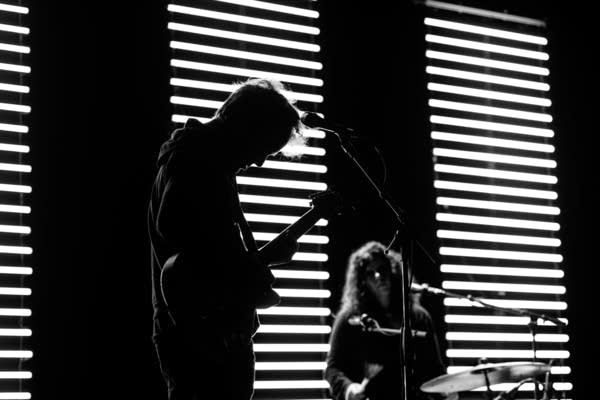
One of my hottest music takes is that Low – the notoriously quiet, understated, slowcore pioneers from Duluth, Minnesota, who happen to be Mormon – may be one of the five greatest American bands. Between 1994 and 2022, they released 13 mostly excellent albums that explored the beauty of minimalism with two-part vocal harmonies; the fractured, noisy, electronic, and the space in between those two sonic extremes. Things We Lost in the Fire, released on January 22, 2001, represented a turning point for the band, led by husband and wife Alan Sparhawk and the late Mimi Parker.
When I was less than a year old, my family’s house in Durham, North Carolina burned down. I was far too young for this to be consciously traumatic, but growing up, the clear demarcation became before and after the fire because so much was lost and we lived in a hotel for months as it was rebuilt. It was never clear how the fire started – there were whispers of arson by shadowy, nebulous “neighborhood kids” – and I have no recollection of it, but it loomed substantially over my childhood nonetheless. While Low reinvented themselves numerous times, in many ways, one could segment their career in a pre and post-Things We Lost in the Fire. The album title comes from “Closer” with the lyrics, “Things we lost in the fire / how’d we ever get by?” and my parents seemed to ask this question to themselves and each other daily in the 90s.
I first encountered Low opening for Wilco at Merriweather Post Pavilion in 2007, the summer after I graduated high school. In hindsight, it’s hilarious and surreal to imagine this band playing a June show at an outdoor theatre full of 15,000 people (two years before Animal Collective would canonize the name of the venue forever). At the time, it was stunningly quiet and awkwardly uncomfortable in that summer amphitheater environment. A Grantland article referred to them as “seasonal affective-disorder music,” after all. But the discussion amongst my friends and I about how unusual the opener was led me to look into them. They’d released Drums & Guns earlier that year, another subtle reinvention of their sound that incorporated electronic elements, and I listened to it a lot over the next few years. It’s still probably my favorite Low album, but no one’s ever called it their best.
However, after Drums & Guns, I became acclimated with Things We Lost in the Fire, the one many do call their best. Their debut, I Could Live in Hope, established the band as a foundational pillar of the slowcore scene, along with Codeine and Bedhead (who I’ll be writing about in a few weeks), and there were plenty of remnants of those influences on this fifth album, but there were new post-rock swells, strings, and brass here. Even the increased instrumentation never overshadowed the stunning, harmonious vocals of Sparhawk and Parker. While it’s true that Low transformed their sound numerous times over their three-decade career, they always managed to sound like the same band, no matter how many synths, bursts of static, or drum loops were added or removed, largely due to the complementary vocals of the husband-and-wife duo. Parker also sings lead or co-lead on seven of these 13 tracks, which was by far the most on an album until this point. Their three-album Kranky era, which began with the 1999 release Secret Name, was arguably their most dramatic shift prior to their late-career electronic noise experimentation, as they added instrumentation and samples to their already impactful sound.
While no one would mistake Fire for extravagance, there are flourishes of strings and horns, and the sounds are louder here across the board. Later in 2001, Mimi Parker’s voice would be one of the many on the maximalist Spiritualized opus, “Lord Can You Hear Me” (for what it’s worth, both the Low and Spiritualized records appeared on NME’s 50 darkest albums ever at #36 and #2, respectively). For all the talk of loudness, Low still exhibits a great deal of restraint throughout the record. The second track, “Whitetail,” is the first example of this. Not many bands have the gall to pull off five minutes of strumming a single chord, building tension, and teasing the listener, anticipating a shift at any moment. It ends up being worth the wait as the next song, “Dinosaur Act,” was one of the band’s poppiest to date, and exhibits a more traditional structure. The chorus almost rocks as Parker’s soft drumming swells into loud (for Low) guitars, vocal harmonies, and even hints of brass, low in the mix, during the chorus.
Following that is another excellent number, “Medicine Magazines,” which cleverly opens with, “They’ll never cure this thing with medicine and magazines / I know you play your part, you cover up your ever-breaking heart,” and is a fresh take on the “no cure for a broken heart” trope. Parker sounds especially outstanding on this one, her soaring vocal harmonies bringing a winter sorrow to the twinkly track. Sparhawk has described Low as “slow, quiet, sometimes melancholy, and, we hope, sometimes pretty,” and “Medicine Magazines”is all of these things and more.
The band’s minimalist nature bubbles up again during “Laser Beams*”* with Parker’s haunting whispery vocals at the forefront overtop a single guitar. While they had a song called “Lullabye” on their debut, “Laser Beams,” “Kind of Girl,” and “In Metal” all sound like gentle lullabies. Given their first child Hollis had been born the year prior, this makes a lot of sense. The droning “In Metal Intro” also foreshadows their dive into noise experimentation 17 years and seven albums later. “In Metal” is all Parker as she again takes lead on vocals, her sparse brushes and padded mallets, and baby Hollis cooing the only thing behind a strummed acoustic guitar for the first three minutes.
Steve Albini engineered this record, which was released by Kranky. The label has long been known for ambient (Stars of the Lid, Windy & Carl, Ana Roxane, Loscil, Grouper) and post-rock (Godspeed You! Black Emperor, Bowery Electric, Deerhunter). While Albini is perhaps best known for his loud, noisy, confrontational post-hardcore with Big Black and Shellac (and engineering records by Slint, Mclusky, and hundreds of others), he was also an underrated master at recording and engineering some of the prettiest and quietest music of the ‘90s and ‘00s alongside Bedhead, Songs: Ohia, and Palace Music. With Low, he split the difference as they move between quiet and loud with deftness.
A retrospective review of this album from Crack Magazine describes it as “a bittersweet reminder that love is all we have” and Sparhawk would coincidentally echo this when his longtime wife and bandmate Parker died by ending his remembrance with, “Love is indeed the most important thing.” After Parker’s death, Pitchfork wrote, “Their body of work is more concerned with sitting in emotions rather than trying to mend them, question them, or escape them entirely.” Because sometimes there’s no fixing heartbreak, grief, or tragedy, you just have to live with it and soak it in. There’s a saying that goes, “grief is the cost of love” and if there was a single sentence to sum up Low’s work, that may be it. While Low spent a career grappling with love, grief, and all the feelings in between – they ended when the grief caused by Parker’s death was too much – Things We Lost in the Fire may be the most heartwrenching album in a discography full of them.
Born in Durham, NC and raised outside of Baltimore, MD, Chase has spent the last 18 years in Philadelphia, PA and Brooklyn, NY. He holds a Master of Advanced Studies in American Media & Popular Culture and currently works as a Content Manager with past experience in the film, food, and beverage spaces. Under the name Cult Posture, he has a monthly residency on CAMP RADIO, where he’ll have an hour dedicated to slowcore on 1/27 at 8pm EST. You can also find him on Instagram or Letterboxd.