

On Peter Gabriel's "Melt" and Steve Biko
Published on Feb 21, 2026
Be Sure to Wear Flowers in Your Hair
Published on Jan 19, 2026
WALK OUT TO WINTER: falling in love with—and to—Aztec Camera's High Land, Hard Rain
Published on Dec 26, 2025
First Anniversary
Published on Dec 17, 2025
More Liner Notes…
Featured Essay: Miracles Take Longer
by Davide Rossi
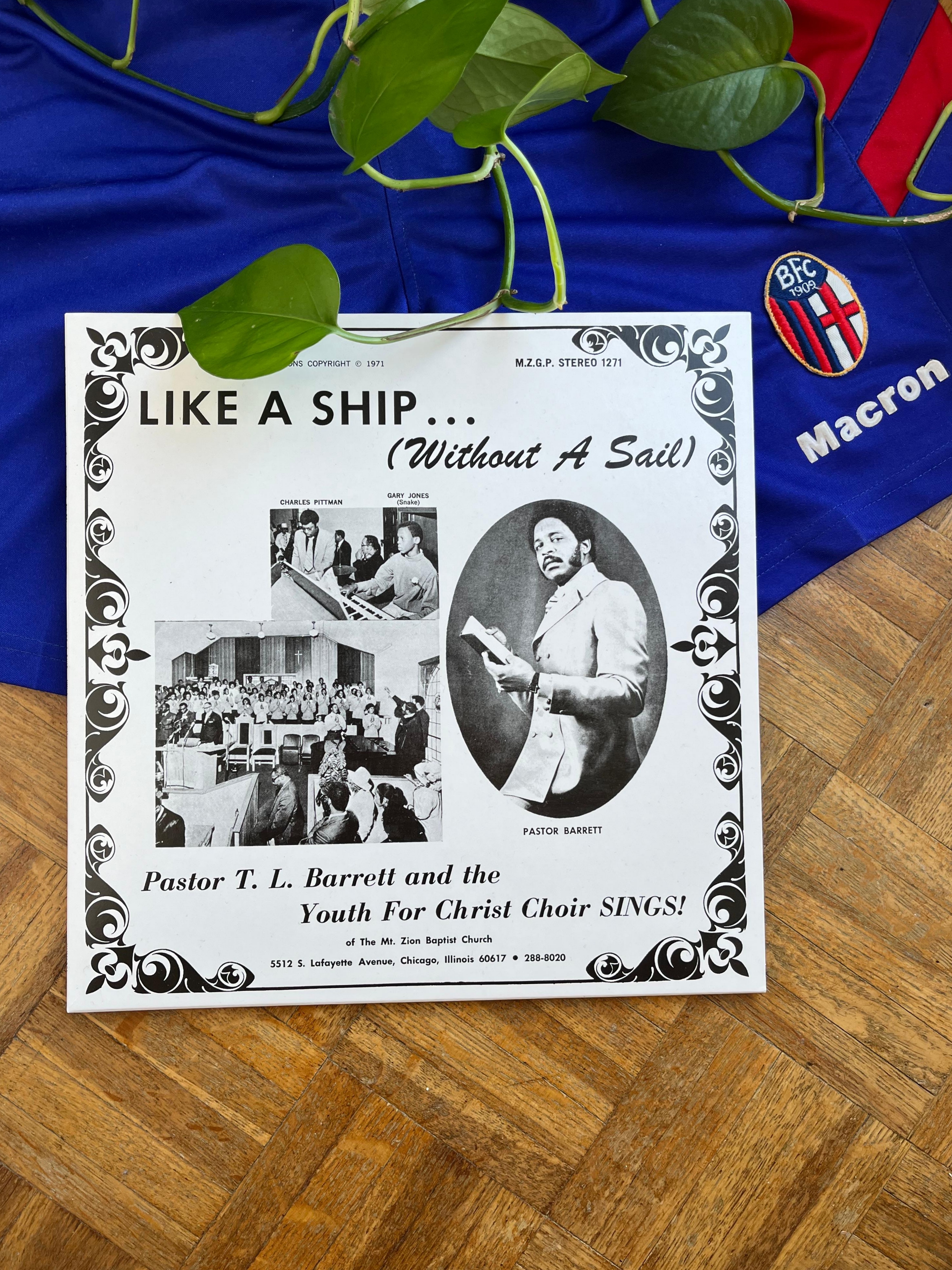
Recently I got my hands on a Numero Group re-issue of “Like a Ship…(Without A Sail)” by Pastor T.L. Barrett and the Youth For Christ Choir, recorded in 1971. The history behind the album is quite simple: a Protestant pastor sings alone over some funk-soul lines, a drum set, an organ, and a bass played by amateurs, all the while supported by a gospel choir of youngsters. Nothing too “pro”. Just ordinary people, probably enjoying a Sunday Service at their local church in Chicago, while a sound engineer records the whole thing (with a cheap multitrack audio recorder, I would love to think). Nothing but pure, authentic bliss. Where to start? Imagine you’re a kid growing up at the end of the 90s in the northern Italian countryside, the last of four brothers playing weird punk in the basement and skating during their free time. Rodney Mullen with his board tricks is a semi-living-god, and your favorite PlayStation game is Tony Hawk Pro Skater 2, OST with a feat between Anthrax and Public Enemy, Bring the noise. Metal and Rap, something you forget over the years, but not that easily.
Time starts to pass by in the meantime, and the countryside is a place that becomes more and more cramped, culturally flat, and otherwise unappealing. So, after having grown up, helped by your brother’s Suicidal Tendencies records, the only option left you is to take his things and go search for something new somewhere else. Maybe a city, maybe somewhere else to find a different vibe and new inputs, refine ideas and tastes, search for and come across real meaning. The same old mixture of good illusions, dreams, and once you find it, just an average or even harsh reality. If initially a city can resemble the perfect imaginary of your future life, afterwards it can hit you back, making you feel as if a lot has changed indeed, but still you need something more. Perhaps a long run toward (possibly finding yourself) and back to your Coney Island, away from any possible danger, like the Warriors of Walter Hill. But even the people pure at heart have to start somewhere, you cannot become sophisticated from one day to another. You can’t turn your world upside down and pretend to change everything just because you’re running away from your little bubble. It takes time, an apparently slow but radical change of approach. Absurdly, it takes time to clean your ears and purify your tastes, music in particular. To get to Fugazi, you have to remember Minor Threat and One Last Wish well. Despite what remains etched in your mind, perhaps one of the most interesting memories is indeed a photo of Public Enemy wearing Minor Threat’s Out of Step T-shirt.
And then, not so completely out of the blue, almost twenty years later, Pastor T.L. Barrett and his Choir take your kid version by hand, again somehow. Definitely a miracle, the type of event which becomes the most unexpected, when you are the most unprepared to receive the whole amount of grace, illumination, soul, and rhythm. An average Saturday afternoon at home, binge-watching reels about the latest tv series, killing time in its purest form, yet something catches my ear. The protagonist, a youngster from the Bronx in the 70s, is caught in the act of discovering his unconventional abilities in fighting old Nazi scums, still alive and kicking, during their attempts to create a 4th Reich in the United States. And what better
soundtrack to define the inner struggles of an adolescent grappling with New York’s suburbs and tail shots from WW2, than a bouncing-wagon gospel like Nobody Knows? Or the need to hope for better days, that warm sermon of the title track? “I know we can shake it, ‘cause we are proud people, we did our work today, just like a ship without a sail”.
Again, the irresistible rhythm of Joyful Noise, “Clap your hands, all you people, and let your joy be known!”, a fire not so easy to extinguish. The nearly perfect recipe is ready. Hip Hop before Hip Hop? Rap before Rap? Boom Bap ante litteram, with that typical drum line, batum-tu-tu-ta, in the background, helping the entire solo voice-choir-band machine - it is no coincidence that an endless string of renowned artists will draw inspiration from this album, thanks to a wide variety of samples, Kanye West above all. Eight tracks, an endless prayer straight from the 70s, vintage, joyful, happy, tireless. Unstoppable yet clearly wounded, as if the meaning itself of how to overcome any possible life struggle could be just wrapped up in a bunch of songs. To do your damndest and survive, to pray and feel free. And the choir, a living being, sometimes distant, other times omnipresent, more vivid and biting than ever. Something that makes you want to jump out from your sofa, dance, gather in prayer, and be a part of. Somewhere else in the same town of Chicago, John Belushi would have said, before an embarrassing number of somersaults and cartwheels: “I have seen the light!” right in front of James Brown. Not bad for an amateur choir, eh?
Davide Rossi, enthusiastic old-timer-punk listener. In recent years, he has been part of several post-punk Bologna-based bands like Qlowski and Les Belmondo as the bass player, while occasionally collaborating with the record label Maple Death, an institution for the contemporary Italian underground scene. Today, he runs the project Davidoshka, shared with siblings and friends, and still pretty much 80s, Husker Du-oriented. He currently lives in Lyon, after spending months mapping cool venues all over Eastern Europe. As well as music, rugby is the other counterweight to the balance.