
On Peter Gabriel's "Melt" and Steve Biko
Published on Feb 21, 2026
Be Sure to Wear Flowers in Your Hair
Published on Jan 19, 2026
WALK OUT TO WINTER: falling in love with—and to—Aztec Camera's High Land, Hard Rain
Published on Dec 26, 2025
First Anniversary
Published on Dec 17, 2025
More Liner Notes…
Featured Essay: People!
by Jody Amable
July 25, 2014. It was a hot as hell summer day in San Jose, California. I didn’t know it then, but I was hours away from a nurse telling me that, after a three-decade battle with multiple sclerosis, my mother’s organs were shutting down. She’d be dead less than a day later.
And something—some cosmic force with a messed-up sense of humor—told me to go to my family’s storage unit and pick up my mom’s record collection.
I felt guilty doing it—the doctors at the nursing home had told us she would never be well enough to go home, and it felt slimy and opportunistic of me to raid her stuff in light of such devastating news. But I didn’t think she’d mind if I appointed myself their guardian rather than let them sit in the dark by a freeway for decades more.
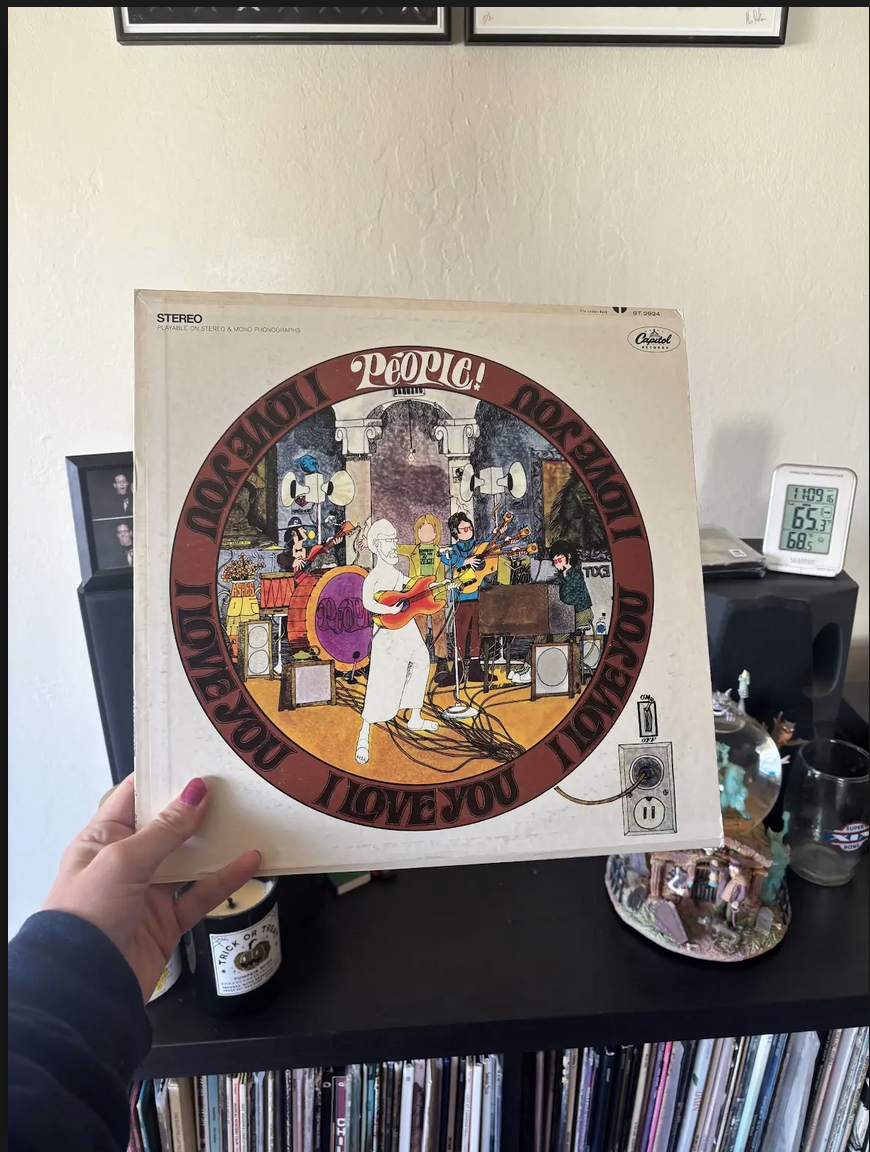
It wasn’t until about a month later I finally felt well enough to flip through them. Most of it was junk – one-hit wonders, poor-selling third and fourth albums, forgotten sensitive white-boy singer songwriters. But there was one in there that instantly intrigued me. A band I’d never heard of, ever…
People! (Yes, with the exclamation point.). They were from, of all places, right there in San Jose.
–
It always feels like a surprise to find out a band is from San Jose, but it really shouldn’t be. Especially if we are talking about the late ‘60s, which we are.
San Jose has always been an overshadowed, but important, place: it put itself on the proverbial map as an agricultural powerhouse in the early 20th century, populated by farmers and fruit packers who came from across the globe to get in on the harvest. When my mom was born, her neighborhood was mostly orchards. But by the ‘60s San Jose was starting to take on the trappings of a city: New subdivisions were seeping outwards towards the hills; fruit trees replaced with shopping malls. And the locals, inspired by nearby San Francisco’s new status as a national nexus of rock and roll, organized their own musical microcosm, a sort of satellite of the San Francisco scene. Ken Kesey staged an early acid test here, soundtracked by the Grateful Dead in their first live gig. San Jose Civic Auditorium, now a kind of fuddy-duddy theater that features mostly orchestral ensembles and one hit wonders from the ‘80s, was a regular tour stop for up-and-coming acts: my mom saw the Animals there with her best friend in 1966, my dad came down from San Mateo County to see the Who in ‘68. Count Five, now seen as progenitors of garage rock, had a hit in 1966 with the gritty, messy “Psychotic Reaction.” Syndicate of Sound charted that year, too, and the Chocolate Watch Band had a massive local following.
And from that milieu, apparently, came People! All I know about them has been gleaned from a few scattered blog posts across the internet: Formed by brothers Geoff and Robert Levin in 1966, People!’s star started rising in San Jose when a local DJ known as Captain Mikey began to champion them, eventually becoming their manager and turning them into a beloved act in the Bay Area. Then came “I Love You,” their 1968 song that landed them on charts the world over. “I Love You” had been a single for English psych-pop auteurs the Zombies in 1965, but it didn’t do all that well. In People!’s hands, “I Love You” took off. It hit 14 in the US, but also charted in places like Japan, Italy, and Israel. For a moment, they were an internationally-known name—famous enough to make three appearances on American Bandstand. Their debut album, I Love You, was released on Capitol Records that same year.
But some time during People!’s rise, Geoff and Robert converted to Scientology, converting the drummer and keyboardist too. Vocalists Larry Norman and Gene Mason refused to join, and after some bitter feuding, Larry was ousted. The remaining members pressed on with a few more albums, but just couldn’t recapture the magic of “I Love You.” The last studio album of that iteration of People! came and went in 1970.
A lot more happened in the following decades: Larry Norman struck out on his own and became a founding figure in Christian rock, and Geoff and Robert denounced Scientology, producing a documentary about their experiences (keyboardist Al Ribisi is the father of actors Giovanni and Marisa Ribisi). It’s all a fascinating story, in its culty, could-have-been intrigue. But it’s also an ordinary one: People! Is one of so many bands in the 1960s Bay Area that got started, stumbled, and never got back up again. Because for every Jefferson Airplane and Janis Joplin, there were scores of other strivers looking to cash in on the local music gold rush. Just look at old Fillmore posters of the era: surrounding those legendary names, in smaller letters, are countless local support acts that have dissolved into the mists of time. The Family Tree. The New Tweedy Brothers. Johnny Talbot And De Thangs. Loading Zone. All local kids who never dreamt Berkeley or Palo Alto or Oakland would foster stardom, but now that all eyes were fixed on the Bay Area, scanning for the next big thing, damn if they weren’t gonna take their shot. One of those was People!, and somehow, in some mysterious move, my mom ended up with their debut album.
–
My mom was a sophomore at Lincoln High School in 1968. 13 years later she’d get the MS diagnosis. Five years after that, she had me.
The thing is, I don’t remember her being all that into music. She had favorite artists: Neil Young, Willie Nelson, Dolly Parton, and a literal life highlight was seeing the Beatles on their 1965 tour. She’d keep KFOX and KFOG on in the car, and a few times a case of cassettes slid out from under the driver’s seat when she made a tight turn. But other than that, I don’t remember her ever, in the 27 years I had with her, listening to music in a deliberate way. The only concerts she ever went to were ones my dad suggested. I never once witnessed her put on a record.
But the paper trail she left behind suggests she was more involved in Bay Area music than we ever knew. We discovered a whole bunch of local music related paraphernalia after she died. Concert programs from the ‘70s and early ‘80s. A mysterious list of phone numbers that seem to be for various now-towering figures: Creedence Clearwater Revival, Steve Miller Band, Santana. A Jefferson Airplane poster that nearly got thrown out, saved by my wondering, ‘Hm, what’s in that cardboard tube my dad has resting against the recycling bin?’ It now hangs in my home office. The list of phone numbers is somewhere in the closet.
To a lot of other people this stuff looks like trash. But I cling to the tangible minutiae of her life; scraps of evidence she once existed. Because sometimes it doesn’t feel like she was ever really here. Like…she was here, and now she isn’t. How can it be that simple? That can’t be right. I must have imagined the whole thing.
Except that I have her records, some of which have her name written in the corner of the sleeve and on the center label. So she wouldn’t lose them at parties, she always said. She was, at some point, here and listening to music.
–
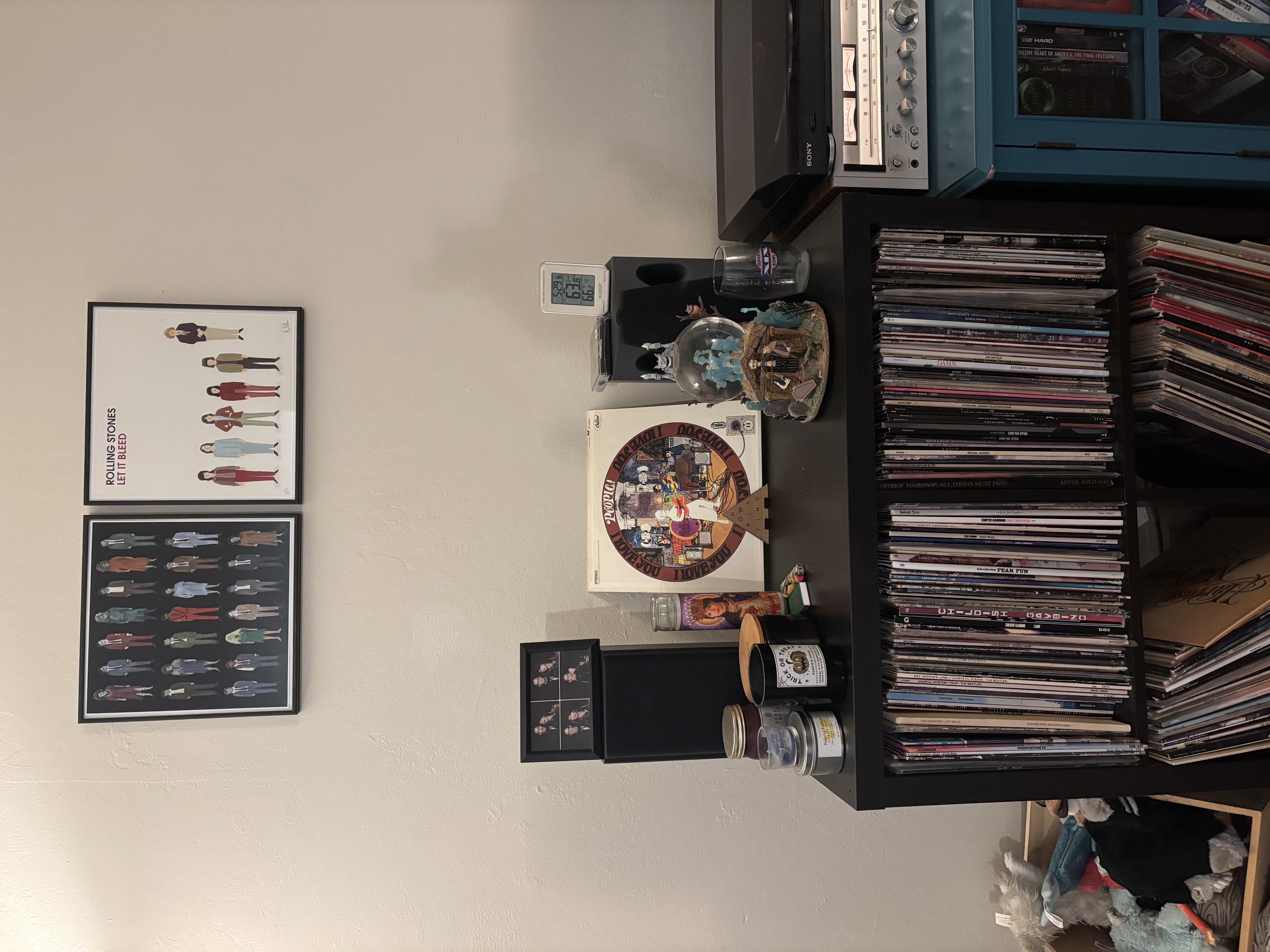
A few days from turning this in, I realized I had never actually listened to I Love You. It was simply a thing I carried from apartment to apartment, comforted by the knowledge I owned this odd little artifact. So one Friday night, apartment to myself, I poured myself a little $5 Grocery Outlet Chardonnay and popped it on.
It is…fine.
The front is a few tracks of off-kilter, half-shouted psychedelia with a lot of groovy organ work, almost proto-prog in its sudden time changes and whimsical lyrical themes (“nothing can stop the elephaaaaants…”). Side 2 is a suite of songs merged into one single track—a move seen on numerous other records of the period and even of the same year, with Iron Butterfly’s In a Gadda Da Vida and Small Faces’ Ogdens’ Nut Gone Flake—weaving a a medieval tale of valiant knights and maidens in towers. It’s a good album, and very much up my alley stylistically, but nothing about it moves me all that much.
The most moving thing about it is knowing I’m listening to exactly what she heard: not just the same songs, but the same pops and crackles.
She’s been dead 11 years now. I’ll likely never have any answers as to how she came across this record and what her connection to it is. It’s likely nothing spectacular—a friend saying, “Hey, do you want this?”, or maybe she knew one of them. Maybe she was a secret Scientologist. But that doesn’t seem likely. She didn’t even seem to really like being Catholic.
But by owning this record, I at least know a little bit more about my mom’s world and what a sliver of it sounded like. And I’m always looking to know more. So, any remaining members of People!, if this reaches you, let me know if you remember a Joanne D’Ambrosia from Lincoln High School. I know where she is—not to be too grim, but she’s in an urn in my dad’s house. But I will still never stop searching for her.
Jody Amable is a feature journalist and editor from the Bay Area. Specializing in music, history, and cultural quirks, her work has been seen in No Depression, Consequence of Sound, Atlas Obscura and KQED Arts, and she spent several years as the editor of Bay Area music blog The Bay Bridged. She’s currently writing a book about the Mellotron and lives in Alameda with her vintage vinyl and elderly pug.