
On Peter Gabriel's "Melt" and Steve Biko
Published on Feb 21, 2026
Be Sure to Wear Flowers in Your Hair
Published on Jan 19, 2026
WALK OUT TO WINTER: falling in love with—and to—Aztec Camera's High Land, Hard Rain
Published on Dec 26, 2025
First Anniversary
Published on Dec 17, 2025
More Liner Notes…
Featured Essay: Pete Yorn: Music For the Morning After
by Jake Baskin
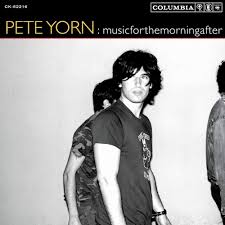
The first time I heard a song from Pete Yorn’s debut album musicforthemorningafter, it was almost a decade old. For the life of me, I still can’t remember exactly how it came across my radar, or which song it was that initially captured my attention. But over the last 16 years, it’s been in regular rotation for me, always there when I need it.
Discovering music is something I’ve viewed for most of my life as not just a thrill, but also a little bit of a necessity. My parents, born of different generations, have wildly different music tastes, but I didn’t feel either of theirs really aligned with mine growing up. Nor did I have older siblings or music-playing friends to show me the way. So when I realized early on that I was drawn to guitar-based music, I made a concerted effort to expand my palette on my own.
Of course, when I was in middle school, I had a limited number of avenues to find music, and I was regrettably less willing to seek out stuff that had come out before I was born. iTunes gift cards were my regular holiday presents from extended family, so I took advantage of that. If I liked a song I heard on TV or in a video game or out in public, I’d put it on my iPod. If I really liked it, I might buy the whole album. Some of those albums I purchased in those years I still listen to, such as Rilo Kiley’s More Adventurous or Tori Amos’s Scarlet’s Walk. Others, like Matchbox Twenty’s Mad Season, maybe not.
I can’t speak to what the musical landscape was at the time of musicforthemorningafter’s release, or to how big a dent it made beyond a segment of music critics. RateYourMusic lists it in the “folk rock”, “power pop”, and “jangle pop” genres. Sonically, it wasn’t too dissimilar from the 1990s and 2000s male singer-songwriters I was familiar with at the time. But it was a little bit grittier, a little more mature-sounding, more firmly in the alternative rock category than his peers who got significant radio play. That certainly appealed to 13-year-old me, as did learning that Yorn had played most of the instruments on the record.
I spent nearly the entire summer of 2010 at a sleepaway camp. This album got a lot of play on my iPod in those eight weeks, primarily when the lights went out for the night and I wasn’t ready to sleep just yet. It’s funny how all the other distractions go away when any sudden movements could wake one of your bunkmates up, and then it would be the entire cabin’s problem. This was the time I focused on the lyrics, or whatever I could pick out of the instrumentation. Sometimes I reached a moment, such as the oohs in the outro on “Black”, that I really enjoyed and would start the whole song over so I could hear the buildup to it again.
When I returned home after camp ended, I didn’t have as much time to listen to the album in full anymore. But I’d still play individual songs on the school bus or during my lunch period. “Just Another” and “Sense” were regular listens during and after crushes that never went anywhere, alongside my usual diet of emo and sad pop. And I swear I put “I am on your side, dear / I just want to tell you off” in that bar that Facebook used to have right below the profile picture. Or maybe it was my Skype mood message.
In high school and college, as YouTube became my music discovery platform of choice, I used MFTMA and Yorn’s influences more broadly (heartland rock, ‘80s British acts, ‘90s indie) to finally break free from the spell of only wanting to listen to stuff I was alive for. I had an alt-country phase that lasted a long time because Google searches for similar artists usually turned up artists in that world. I’m probably one of the few Americans my age to get into the Canadian band Sloan, because Yorn said once that they were so good they nearly intimidated him out of making music entirely.
Now, at 29, I still will drop everything and listen to this album in full three or four times a year. I’ve recently started a long-overdue journey of learning guitar, and sometimes I fantasize about playing “Black” or “For Nancy” at an open mic night.
I don’t know if the mark of a great album is if your favorite song changes on almost every listen, but at least nine of the fourteen have been my favorite at one point. Even revisiting it while writing this piece, I find it difficult to decide. Is it the opener, “Life on a Chain”, the greatest hint that this was originally supposed to be an alt-country record? Or is it “Closet”, the repeating power pop earworm that was the first track I’d memorized? How about a slower, more direct song like “On Your Side” or “EZ”? At this very moment it’s probably “Sleep Better”, but if you ask me next week the answer might be different.
I do have two regrets. One is that despite all these years of regularly playing this and the two albums that followed, the upcoming 25th anniversary tour for musicforthemorningafter will be the first time I ever see Yorn perform live. The other is that as a teenager I was always scared to share music with others, and the only time I actually showed it to someone it didn’t go over like I hoped. But if you’ve never heard the album before and you want to check it out, allow this to serve as a recommendation.
Many of the retrospectives that I’ve read speak with some measure of dismay that Pete Yorn never topped his debut or that he never became the biggest singer-songwriter of his generation. I’ve come to find that counterproductive. Our favorite albums are our favorite albums because of the time that we discovered them and the stories we’ve associated with them. For me, though I’ve had periods of trying-too-hard-to-fit-in and too-punk-for-school, this album has remained a constant. And one of these nights when I’m staying up too late, you can be sure I’ll put my AirPods in and press play on MFTMA yet again.
Jake Baskin is a Connecticut-based freelance play-by-play announcer and former sports blogger. This is his first written piece about music. You can follow him on Bluesky at jakemorgendorffer.bsky.social.