

On Peter Gabriel's "Melt" and Steve Biko
Published on Feb 21, 2026
Be Sure to Wear Flowers in Your Hair
Published on Jan 19, 2026
WALK OUT TO WINTER: falling in love with—and to—Aztec Camera's High Land, Hard Rain
Published on Dec 26, 2025
First Anniversary
Published on Dec 17, 2025
More Liner Notes…
Featured Essay: Slint's Accidental Masterpiece, "Spiderland" at 35
by Chase Harrison
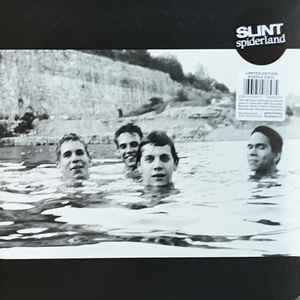
Frankly, I’m not sure I have much to say about Slint’s Spiderland that hasn’t already been discussed, but I’m going to try anyway. The seminal 1991 album that was ignored at the time but eventually helped create multiple genres in the span of only six songs has long been viewed as a north star for fans of any guitar-based music that could remotely be considered “underground” since the mid-90s. It was released 35 years ago in March.
I was fortunate enough to see Slint during their 2014 reunion tour. While middle-aged reunions are often sad cash grabs, the band notably didn’t tour behind Spiderland because they broke up before they could. The songs that had sat dormant for decades sounded cathartic live and it was surreal to see them performed 24 years after they were recorded, but ultimately this is true headphone music. While the lack of an original tour behind the album led to a slower initial word-of-mouth, it also added to the mystique. Pre-internet, all anyone had to go on was the album art: a black and white photo (taken by friend of the band, a pre-fame Will Oldham) of four teens, heads floating above the water in a Kentucky quarry, a tracklist, and an open call for a female vocalist for the next recording, which, of course, never happened.
If you want to sound like an irritating prick, trying to describe Spiderland to someone who’s unfamiliar is a good way to do it. “It’s kind of math rock-y, helped create post-rock, has mostly spoken word vocals, and the band broke up before it was released, but only after at least one person checked themselves into a hospital. The cinematic kind of album you wish you could log on Letterboxd.” It sounds obnoxious to describe and it’d be easy to be contrarian and hate on this album, if that’s all you heard. In other words, it has all the hallmarks of an overrated, pretentious mess on paper. But it’s not any of those things and it still holds up as something unlike even any of the hundreds of albums it inspired (or was inspired by). Spiderland is the ultimate “atmosphere” record. Four teenage goofs from Louisville somehow managed to create a haunting, ominous mood from scratch. It’s patient and mature, loud and soft, tender and venomous, dark and moody.
And mood is essential to Spiderland, from the packaging to the final screams of Brian McMahan on “Good Morning, Captain.” But what gives it longevity and replayability is the music. There are many incredible musical moments on this album and it wouldn’t have the legacy it does if this weren’t the case. I’ve listened hundreds of times and still get chills when the loud, crunchy guitar riffs on “Nosferatu Man” take a split second pause at 3:13 before Britt Walford taps his drum sticks together and the band shifts into a down-driving outro with McMahan whispering in the listener’s ear. When, after four minutes of nervy acoustic strumming on “Don, Aman,” the electric guitar finally cuts through, only to dissipate again. Or five minutes into “Washer” when the angular guitar riff returns except with an electric guitar and slowly builds to the noisy outro. There’s the point two minutes into “Good Morning, Captain” where the explosion of noise transitions to a slightly off kilter version of the main riff. The songs slither and shift in ways that simultaneously make sense and surprise you, even after dozens of listens.
This is mature and Serious-with-a-capital-S music yet the band doesn’t fall victim to self-seriousness or pretension that befell many acts of the time. This may be due to their age and relative aforementioned immaturity. They seem both self-aware and naive but having sharpened their chops in half a dozen other Louisville bands prior to the formation of Slint gives this record a finished sheen, even considering the ugliness of some of the subject matter and the fact that the recording sessions were emotional and chaotic. It’s also unlike their only other album in many ways but some of the hallmarks were there on the Steve Albini-engineered debut, Tweez. Still, while Tweez seemed to offer fragments of good ideas, Spiderland’s longer songs arrive fully formed and come alive over their significantly longer runtimes.
Spiderland’s one of the rare albums that’s possible to “click” multiple times, decades apart. It doesn’t immediately reveal itself and it can be inaccessible but if something captures you right away, you’re likely to continually revisit it. And there’s plenty that’s likely to capture you right away. As Simon Kirk for Sun-13 put it, “Despite not falling in love with Spiderland at the first engagement, it still possessed a strange quality that made you want to discover similar esoteric music.” While it can be a difficult album to know, once familiar, it’s like reconnecting with someone where tangles of multiple conversations flow easily and effortlessly. Once you put in the work it becomes an easy listen, just like those interweaving conversations.
The album opens with “Breadcrumb Trail,” David Pajo’s guitar sounding like a screeching car, blaring its high beams in the rain, and McMahan’s soft, spoken word opening lines, “I stepped out onto the midway. I was looking for the pirate ship,” subtly foreshadowing the subject matter of the closing track. The famed loud/soft dynamic is arguably most evident on this opener. It’s hard to imagine many of these songs without their trademark vocals. But the wonderfully charming 2014 Lance Bangs documentary – also called Breadcrumb Trail – portrays a band that worked tirelessly for years on hypnotic, repetitive instrumentals only for McMahan to record his voice – often in one take – for the first time the week they cut the record.
Next up, “Nosferatu Man” is the most menacing on the tracklist, with an eerie screeching guitar line that cuts in every few bars until the band explodes altogether on the chorus. It’s also the most straightforward rock song on the album but still winds in unusual ways. The extended guitar-driven outro features vocals before it fades out. More on the loud/soft sonics: Slint really hits their stride when the guitars are loud but the contrasting vocals are an ominous whisper and they play with varying combinations of yells and murmurs to great effect on the second track. It turns out the rollercoaster discussed on the first track could also be a metaphor for the dynamics the band would experiment with on the remainder of the album.
Much of Spiderland is loud and abrasive but the band’s use of space is just as impressive. “Don, Aman” is sparse and there are no electric guitars or drums for its first 4:24. It takes even longer for “Washer” to lift off, an astonishing 6:50. On first listen, it’s very different from slowcore of the time or Talk Talk’s Laughing Stock, which was released the same year. But its use of silence and meticulous note placement bring to mind both. According to Britt Walford in an interview with FACT Magazine, “Don, Aman” is a song about social anxiety; about someone at a party who goes outside to “get back in touch with himself” due to the discomfort he feels in the room. As Pigeon Press put it, the opening line, “Don stepped outside,” is a spine chiller.
The closer, “Good Morning, Captain,” begins with a strumming guitar that sounds like wind chimes before a dissonant, rolling bassline begins. “‘Let me in,’ the voice cried softly / from outside the wooden door,” McMahan whispers, “scattered remnants of the ship could be seen in the distance / blood stained the icy wall of the shore.” There’s a literary quality to many of McMahan’s lyrics and like many of the other tracks, this one doesn’t have a traditional structure. The listener is led to believe the chorus arrives at 1:45 when the familiar crescendo arrives before the instrumental twists in another direction and the shipwreck narrative continues. The band again experiments with sound levels but this time it’s to differentiate the narrator of the story from the story’s subject. Once the closing whispered lines of, “And I’m sorry… I miss you,” morph into screams, it’s easy to believe that McMahan was widely reported to have checked himself into a hospital right after recording.
Reddit is littered with “bands that sound like Slint” threads and, while there are some (mostly also from Louisville showing a direct lineage: Shipping News, Rodan, June of 44) there’s still, all these years later, something distinct about Slint and Spiderland in particular. Black Country, New Road have a jokey line where they claim to be the second best Slint tribute act. The band has also had an online resurgence due to the popularity of Slint memes and the growing recognition that they’ve birthed some of the most important bands of the decades to follow the release of Spiderland. Stuart Braithwaite of Mogwai once said, “when I heard it, it was unlike anything I’d heard before. I still don’t know if I have heard anything else like it, now.” He continued, “In the late 1990s, they seemed like our generation’s Velvet Underground, this mythical band that everybody loved.” And it’s been a common refrain, like Brian Eno’s famous VU quote about only 5,000 people buying Velvet Underground & Nico but that all of them started a band. Slint’s sound is evident in a lot of post-rock but, given that much of that is instrumental music, McMahan and Walford’s vocals set Spiderland apart. There’s also a clearer throughline between the abrasive post-hardcore roots of the band than with what followed in bands like Godspeed! You Black Emperor, Explosions in the Sky, or Mogwai. Still, their influence is clear from canonized artists like Fugazi, PJ Harvey, and Don Caballero to more recent bands like Black Midi, Battles, and Elephant Gym, and upon repeated listens, it becomes obvious there’s a lot more here than the packaging and mythos surrounding the album.
Born in Durham, NC and raised outside of Baltimore, MD, Chase has spent the last 18 years in Philadelphia, PA and Brooklyn, NY. He holds a Master of Advanced Studies in American Media & Popular Culture and currently works as a Content Manager with past experience in the film, food, and beverage spaces. Under the name Cult Posture, he has a monthly residency on CAMP RADIO, where his next show will be 2/24 at 8pm EST. You can also find him on Instagram or Letterboxd.