
On Peter Gabriel's "Melt" and Steve Biko
Published on Feb 21, 2026
Be Sure to Wear Flowers in Your Hair
Published on Jan 19, 2026
WALK OUT TO WINTER: falling in love with—and to—Aztec Camera's High Land, Hard Rain
Published on Dec 26, 2025
First Anniversary
Published on Dec 17, 2025
More Liner Notes…
Featured Essay: Tables Turned
by KImberly Nichols
I don’t really harbor resentments. Well, I don’t admit to harboring resentments, but today I’m making an exception.
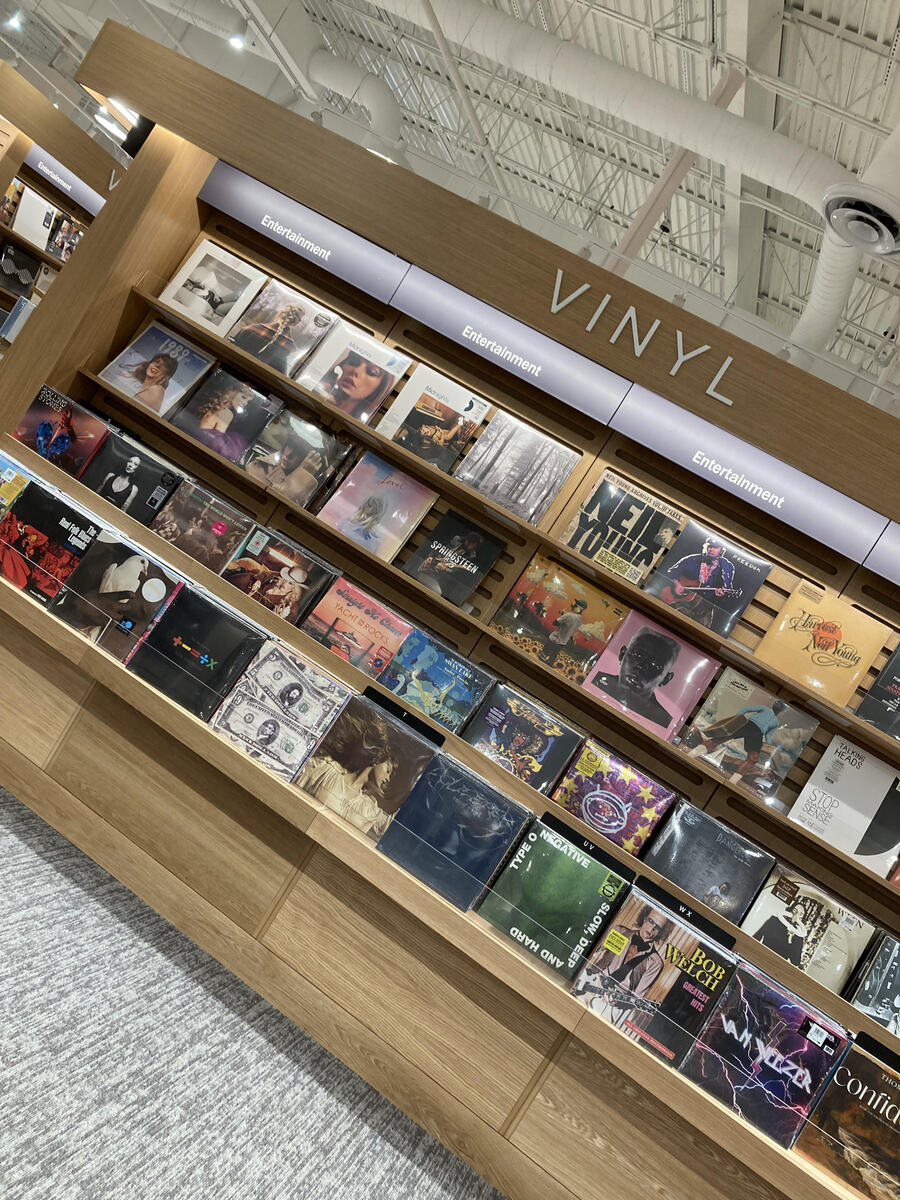
When I went to the brand new Barnes & Noble in town, I was shocked when I walked through the music section. Three-quarters of the space was devoted to vinyl records. Vinyl. In 2025.
How and when did this happen?
I was taught that vinyl was dead. And I resent it.
We had two stereos in our house when I was growing up, one in the family room and one in my room. Dad was an audiophile, but on Mom’s tight budget.
Two square white plastic tables, side by side, held the turntable, the stereo receiver, with tall speakers on either side. A tall bookcase held my parents’ album collection on the bottom two shelves, low so I could reach them. Also on the shelf were two black plastic cases with handles that held our collection of 45’s.
After choosing an album, at first placing the needle on the vinyl, later having the needle place itself, I’d sit on the carpet in the middle of the sound coming out of the speakers, like Dad taught me, and read every word of the liner notes. Sometimes, the albums opened up like a book, which was my favorite. More to read!
I always knew which albums were whose. Dad had Herb Alpert and the Tijuana Brass, the Moody Blues, Roy Orbison, and the Beach Boys. Mom had Diana Ross and the Supremes, Barbra Streisand, and Helen Reddy.
Upstairs in my room, I had an all-in-one stereo with a tape deck and a turntable. I had my own albums up there with me as time went by: the soundtrack to Grease, She’s So Unusual, Sports.
Dad subscribed to Stereo Review and Video Review. He wanted to know about the latest and greatest techniques and equipment, as well as the future of audio and video. By the time I was in high school, compact discs were outselling LPs. Dad was trying to convince Mom to buy a laser disc player, the future of home video viewing. He wanted to buy more speakers to upgrade the family room into the Surround Sound era.
Analog was dead. We became a family with a Discman, padded CD cases in all of our cars for our personal driving music, once we’d traded in old cars for newer ones. By the time my parents divorced in the mid-nineties, the vinyl albums had collected a lot of dust. Well, they would’ve if Mom wasn’t a clean freak.
My parents didn’t care about the albums. They didn’t want them. Dad had one of those old consoles you’d see at your grandparents’ that housed a turntable, but he didn’t use it. (The console didn’t work properly either. I feel like whenever someone still had a console, it never worked, but no one got rid of them).
I became the keeper of the vinyl. I couldn’t toss those albums. I boxed them up and stored them in the back of a closet in my apartment.
I moved a few times and realized I was still lugging around these boxes of LPs that no one could listen to anymore, that hadn’t been opened once since I’d taped them shut in 1996. I hadn’t been near a turntable in years.
By that time, I’d become a frequent visitor of used CD stores. Lurking in the back in a dark corner of the store was vinyl, so small a section to be laughable. But I think I finally let go of the family albums at one of these stores. I spent hours on Saturday afternoons flipping through the CDs, rock, pop, jazz, country, soundtracks, my fingers becoming filmy and dirty from all the other fingerprints left behind on the jewel cases. If hand sanitizer had existed then, I’d have needed an entire bottle after the excursion. |
Years passed and I had no doubt that Dad was right, digital was the future. I consumed my music via iPods, bluetooth speakers, and apps on my phone.
I did notice that some artists were releasing albums on vinyl again and I just looked at that as a stunt. Look, we’re old school! We’re hip to be square!
Then I came face-to-face with the music section at my local Barnes & Noble. Album covers faced me from every direction. Shelves of boxed turntables for sale. I furiously took photos and texted them to my husband.
“Look at this! It’s all vinyl in here! Say what? I gave away those albums for nothing?!” I may have thought I was following my dad’s lead, the high tech future, but maybe, as usual, Mom was more influential. Downloading all my CD’s meant no clutter, nothing to dust. No packing countless boxes each time I moved. The Cloud was where it’s at. That damn Cloud.
When I started writing this essay, I struck up a conversation with Austin, the coffee drinker beside me. He used to be a musician in the hardcore punk scene in Florida and told me stories of pop-up venues when “pop-up” wasn’t a trendy word. He mourned that music scenes
like he knew can’t be captured again. He recommended I get a turntable, that it didn’t need to be top-end, and buy a few favorite albums that fed my soul. He left me with these words. “Art is meant to be used. Every time you play a record, you degrade it, damage it, the groove is different. It’s the imperfections that make the experience.”
Ohio-born only child Kimberly Nichols is a writer currently based in Southwest Florida. A reformed picky eater turned culinary grad, she has worked at record labels in Cleveland and Nashville, studied French, and lost her parents by the time she was 43. She writes about food, family, grief, and being a writer. When not writing, you can find her in an arthouse movie theater with a bucket of popcorn. Read her work on Substack.