

On Peter Gabriel's "Melt" and Steve Biko
Published on Feb 21, 2026
Be Sure to Wear Flowers in Your Hair
Published on Jan 19, 2026
WALK OUT TO WINTER: falling in love with—and to—Aztec Camera's High Land, Hard Rain
Published on Dec 26, 2025
First Anniversary
Published on Dec 17, 2025
More Liner Notes…
Featured Essay: The Joy of Promo Albums in the ‘80s
by Joseph Corey III
My original plan was to become a DJ at WKNC-FM when I arrived at N.C. State in the Fall of 1984. I thought there’d be nothing cooler than to play my kind of music on the turntables and give away prizes to the fifth caller. I hung out with Dean Sessions who ran the Nightwave shows that disrupted the stations’ Chainsaw Rock format that dominated the day. Dean even gave me the application so I could get my FCC license. His show picked through a collection of fresh punk and new wave vinyl that lurked in the record vault above the pile of metal bands. What I didn’t count on was that Dean was the only person who didn’t feel obligated to play the format. I did get to be a guest host on Nightwave once. But when I substituted for normal shifts, bad things happened. During an overnight shift, the exciter on top of D.H. Library blew out (not my fault) and the station was off the air for a few days. A month later, I filled in for the afternoon guy. I diligently followed the rules and played the lame records in the rotation bin. When the “Oldie” slot came up, I chose Pink Floyd’s “Several Species of Small Furry Animals Gathered Together in a Cave and Grooving with a Pict.” This led to the student who was station manager calling me into his office and declaring that I would never have another shift at WKNC as long as he was enrolled in the school.
This was crushing news that I’d no longer get to shut the studio door and drop the needle into the groove. Although by that point I realized the life of the DJ was not nearly as glamorous as depicted on WKRP. Instead of going back to my dorm room and crying, I merely went next door to The Technician office. I had already been working at the Student Newspaper by submitting cartoons. I wanted to get serious as a writer. I found myself immediately attracted to the Entertainment Section. Why? On the editor’s desk was a small wood cabinet with cubby hole slots for his mail and a large vertical space that held records to review. When I started, the slot contained a couple Elvis Presley albums from the 50th anniversary of his birth and the oversized booklet for the release of Paul McCartney’s Give My Regards To Broad Street movie. I eagerly asked the section editor if I could write for the section with the desire to review records and take them back to my dorm room.
While you (and myself) might imagine the newspaper would be flooded with tons of albums for review; the reality wasn’t so bountiful. WKNC would have dozens of records arrive each day in hopes of getting on the airwaves. The Technician seemed to mainly receive a shipment a few times a month. Most of these came from the fine folks at RCA (before it became BMG in the late ‘80s). Now and then we’d get albums from bands that were going to be playing The Brewery which was a few blocks from campus or Cat’s Cradle in Chapel Hill. The record reviews were plugged into the page whenever we needed to fill in a few inches of space. It was a bit more creative than a house ad.
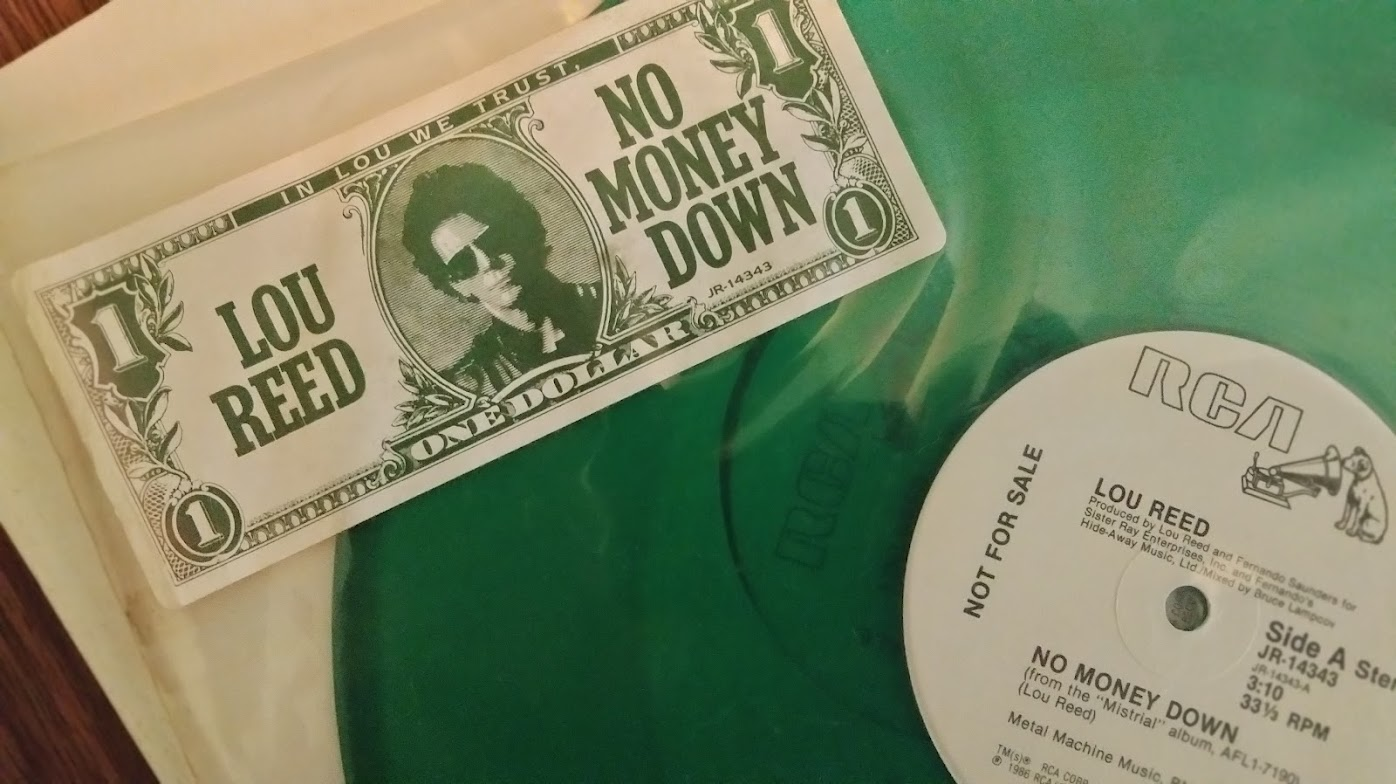
Since RCA just mailed us random records; it was a bit exciting when I’d show up at the office and find a square cardboard box on the entertainment desk. I’d open it up like a Christmas gift. Most of the albums weren’t the massive hits of the ‘80s that currently play on your favorite retro station. They did send us Lou Reed records and The Cowboy Junkies’ Trinity Sessions that I raved about.
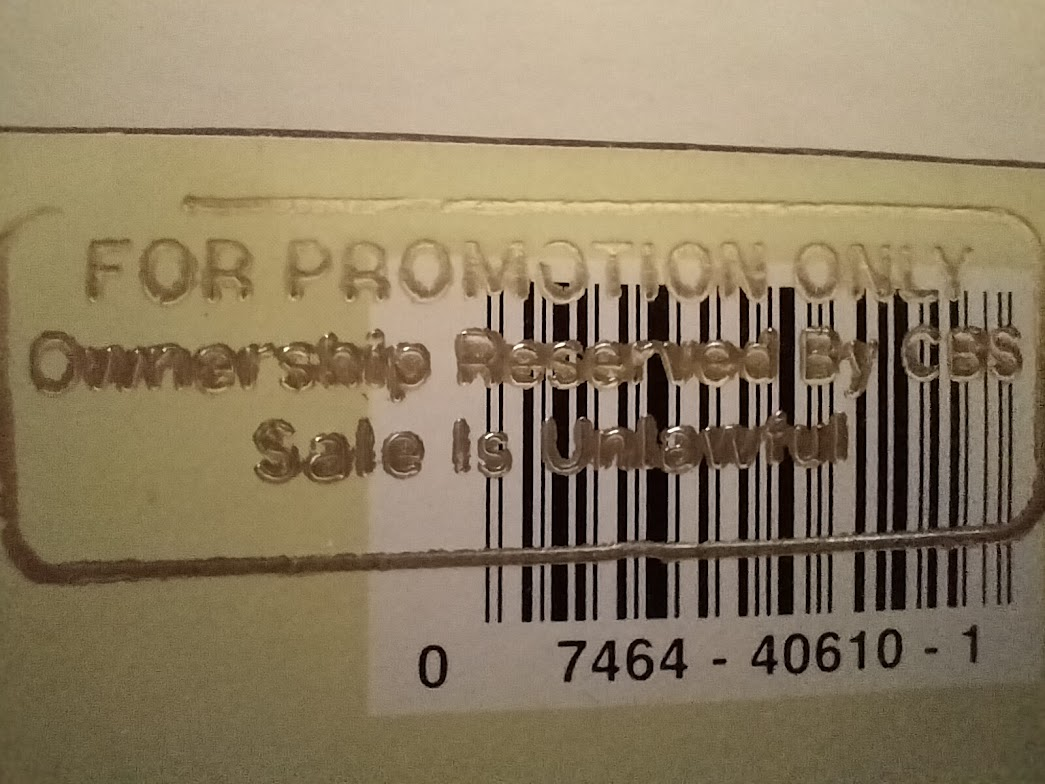
The promo records were shipped without cellophane and marked so they couldn’t be mistaken as straight from the rack at the Record Bar. Some album covers arrived with a notch in the corner. Others had an interesting warning stamp that read, “Lent for Promotional Use Only. Any Sale or Unauthorized Transfer is Prohibited and Void. Subject to return upon demand by Owner. Acceptance of This Record Construes Agreement of the Above.” This seemed like a strange legal nightmare. How did the label know who had this copy? Was the Technician supposed to set up a database of what student took which record so the label could contact them directly? There wasn’t a phone number to call to see if I could get a transfer authorized. How long did I have to keep the album in my possession? What happened if someone swiped the record from my dorm room? Am I going to get charged for stolen property? Things were simpler when the album just had a notch. I once asked Tim Sommer (from Hugo Largo, VH1 personality, former-A&R rep at Atlantic Records and rock journalist) if a label ever called up a writer to demand the return of all their promo records. He never never heard about it happening. I still fear the knock from an RCA rep ordering me to turn over Bruce Hornsby and the Range’s The Way It Is. I unauthorized transferred it.
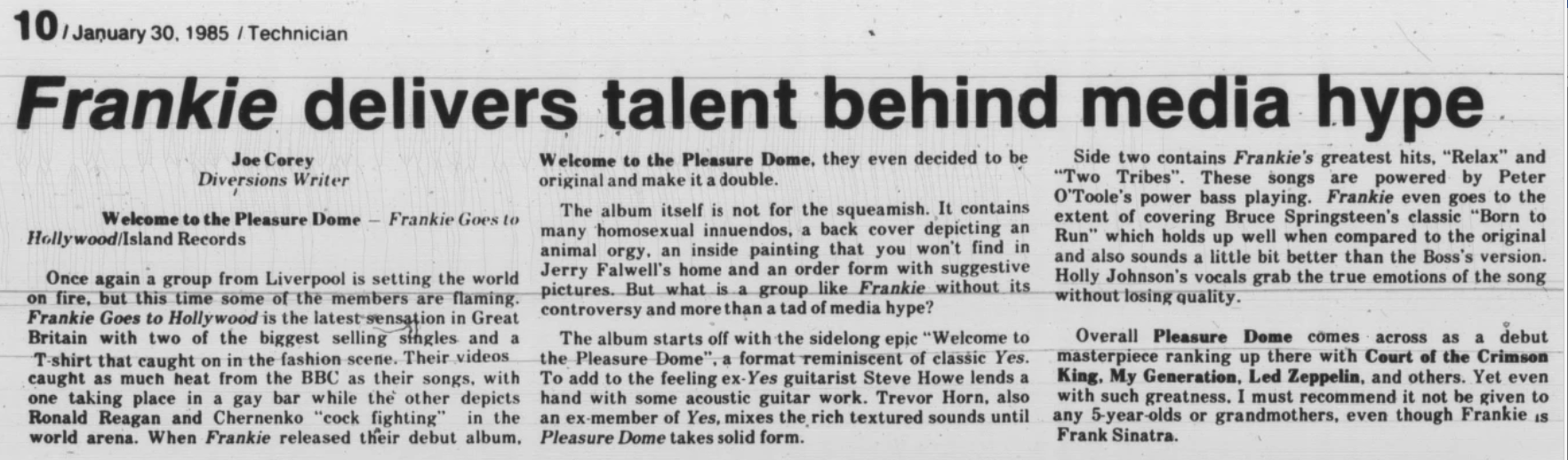
I learned very quickly that the “legitimate” record stores that sold used records in addition to new titles wanted nothing to do with marked promo copies. School Kids Records refused to touch them even though I offered the original press release and the 8X10 of the band. They couldn’t afford to have a label rep catch them selling anything marked “not for resale.” The good news was John Swain at the Record Hole had no issue with promos. In fact several local promoters for the labels would drop by with their extra stock for John to buy. As John once explained to me, “You can’t eat vinyl.” John only paid a few bucks per album which wasn’t bad since I could trade him 2 unwanted albums for a promo of a much better album. This was how I was able to write reviews of U2’s The Joshua Tree and Frankie Goes To Hollywood’s Welcome to the Pleasuredome without touching my beer money. As long as I remembered to mail out clip sheets of the reviews, the labels sent me more promo records. It was a fun time
One afternoon around 1988, the weaselly editor-in-chief called me into his corner office. He let me know that other staffers (whose names were withheld from me) felt that it was unfair that the entertainment section kept the promo albums that came in the mail addressed to the newspaper. He felt that they should be considered property of The Technician. He had a dream of setting up a lending library so that everyone could listen to the albums. Why did entertainment writers deserve to take them home? This was a shock to discover that there were so many jealous classmates in the office. It wasn’t even that they wanted a chance to review the records.There was zero chance I was going to give up my promo albums to their non-contributing greasy hands. I calmly explained to him that a majority of the albums we received weren’t records students in the office craved. Did anyone besides myself want a copy of The Jazz Butcher Conspiracy’s Distressed Gentlefolk? (Which I still have.) How exactly was this library supposed to work? Whose job was going to include being the librarian? Would there be required office hours? And would the librarian have to check the returned record for scratches? Would a staffer have to buy a new copy for the collection if they damage the vinyl? What was going to prevent staffers from just grabbing records and taking them home without checking them out? The editor-in-chief had no answers. Far as it being unfair that the entertainment department gets free records; other people got perks for their reporting beats. The sports reporters covering football and basketball games were treated to free dinners and drinks in the press room. Did we demand that they smuggle back pizzas and sodas for the rest of the staff? Was that fair? The editor-in-chief wanted us to discuss this topic later. We never did revisit it. Although from that point forward, I made sure that if a publicist was sending me a record for a band coming into town, the mailing address was my dorm mailbox.
Toward the end of the ‘80s, I’d heard a rumor that the labels were going to send out compact discs except they were going to charge “cost” for the privilege. I wasn’t going to pay record companies to review their albums. This scheme never happened. However the labels shipped cassettes instead of CDs for a few years as vinyl was being phased out. A box of tapes never felt as good as vinyl. Nobody wanted to buy review cassettes including John Swain. At least I could tape over an album that didn’t need to be heard a second time. After my time at The Technician came to an end, the promo albums stopped. It felt annoying that any cardboard box of records arriving in the mail contained a bill inside.
Switching from the radio to newspaper proved very eventful for the future. The broadcasts of my old substitute DJ shifts have vanished into the ether. However my record reviews remain available for the world to enjoy and not just on yellowing newsprint. A decade ago, NC State’s library scanned all of The Technicians from the vault and put them online. After all these years, my overly praising review of Frankie Goes To Hollywood’s Welcome To the Pleasuredome remains.
Joseph Corey III has recently released ‘80s Teen Flick Festival Deep Cuts, a guidebook to an ongoing fictional film festival. The book is also a memoir of his time as the Feedback guitarist in The Beatless, how Patti Smith was responsible for a relationship and his encounters with Kurt Vonnegut, Jim Valvano, Dexter Romweber and R.E.M.