
On Peter Gabriel's "Melt" and Steve Biko
Published on Feb 21, 2026
Be Sure to Wear Flowers in Your Hair
Published on Jan 19, 2026
WALK OUT TO WINTER: falling in love with—and to—Aztec Camera's High Land, Hard Rain
Published on Dec 26, 2025
First Anniversary
Published on Dec 17, 2025
More Liner Notes…
Featured Essay: The Understated Brilliance of Bedhead's "Transaction de Novo"
by Chase Harrison
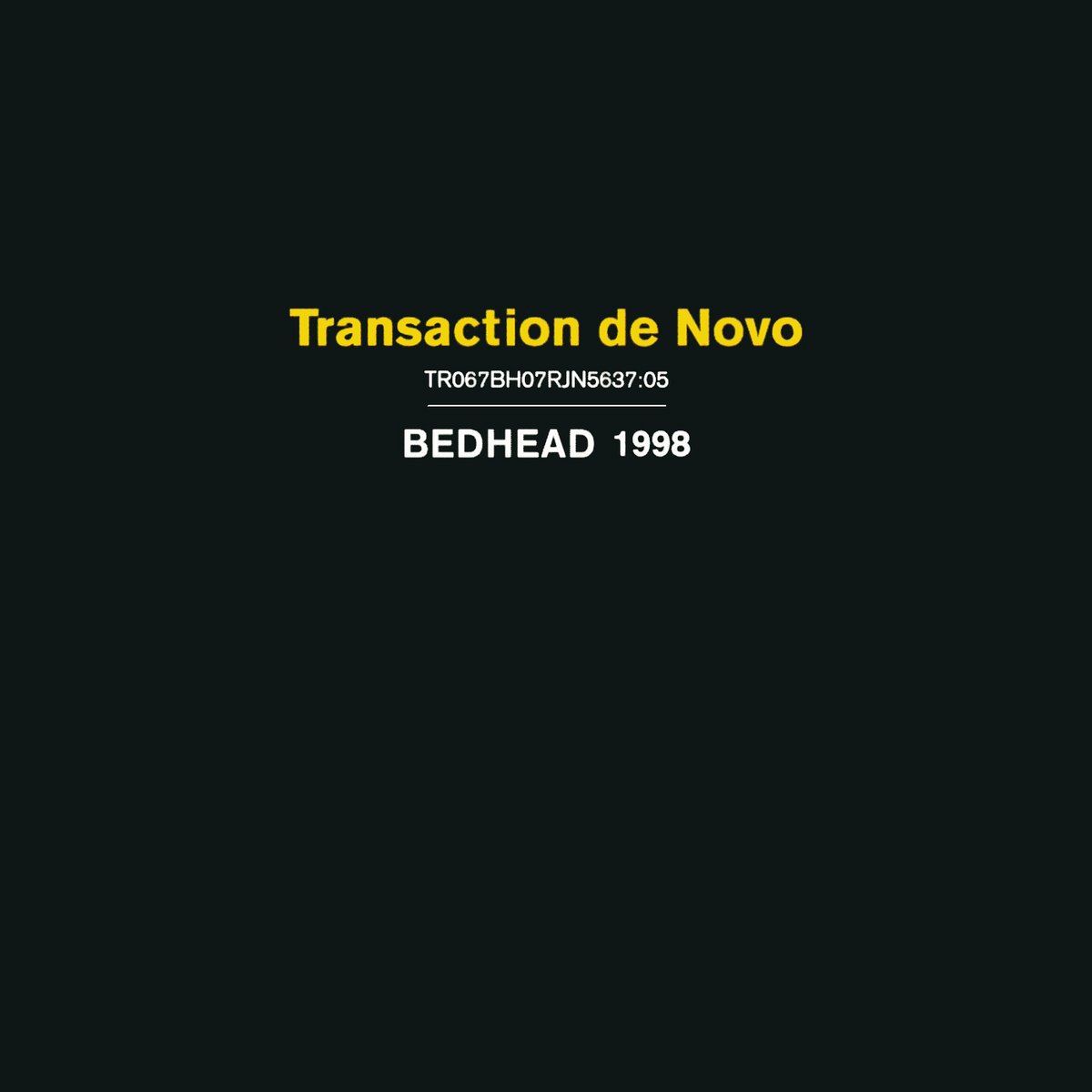
In recent years, there has been a swell of slowcore revival and neo-slowcore bands springing up, thanks in part to TikTok and burgeoning interest in the formerly niche genre by Zoomers. One band that’s inspired many of them, yet still seems to float under the radar, is Bedhead, a 90s group from Wichita Falls, Texas. Understated, like their name and minimalist album art indicate, the quintet was fronted by brothers Matt and Bubba Kadane and released three gorgeous, totally (and tonally) clean, and impeccably constructed albums before calling it quits. This will focus on their last and arguably best album, Transaction de Novo, recorded and engineered by the legendary Steve Albini and released February 10, 1998 through Trance Syndicate.
In an email interview with me, Kadane discussed working with Albini:
“Bubba and I thought of him as the third kind of dick but super smart and funny older brother we never had but always wanted. And watching him work — doing lightning fast edits with the 2 inch tape, using what he had in his arsenal to approximate any random sound or complicated transition we dreamed up — was like nothing else. He was completely adapted to the analog environment he created. He was like John Henry versus the steam engine, except Electrical Audio was also kind of like a steam engine.”
A Pitchfork review of the reissue of all three albums 1992-1998, said, “Transaction is also more judicious with its massive crescendos; there are fewer, but when they come, they hit with much greater force. The album is a tapestry of interlocking single-note parts, a celebration of the emotional possibility of guitar tone.” One thing that separates Bedhead from many of their contemporaries is their strong sense of groove and rhythm. Kadane told me, “Trini [Martinez] was and is an incredible drummer. And whenever we came up with songs with lots of changing time signatures, he played them effortlessly and could make them groove.” Slowcore and similarly guitar-based genres tend to, predictably, focus on the guitars, and Bedhead is no different – the band wields three, after all. But the pulsing jazz-like rhythms of the bass and drums are just as key. While slowcore contemporary Codeine (with whom Bedhead released a split single, both covering Joy Division) was once described as “two glaciers colliding,” you’re likely to catch your leg bouncing to the beat while listening to Bedhead, especially during a driving motorik-inspired number like “Parade” or closer, “The Present.” The band, like many in the scene, hated the term slowcore. “It was an insult,” said Kadane. “We never saw slowness as the essence of what we were doing.”
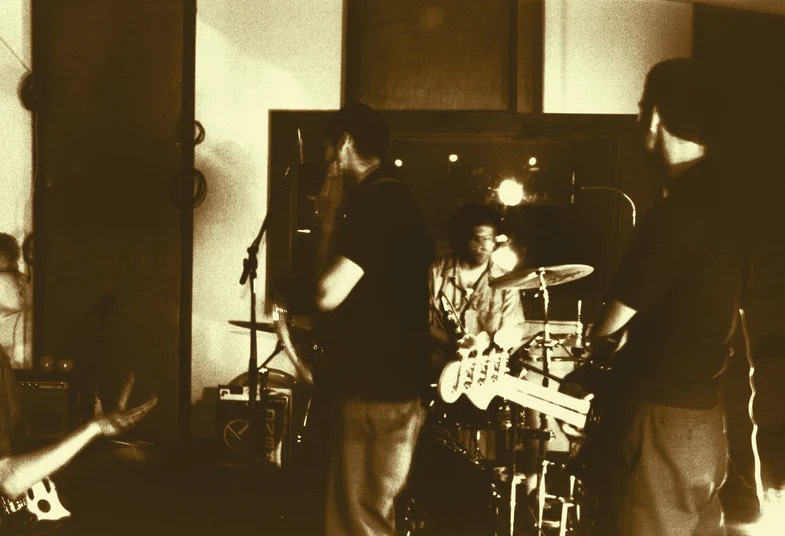
The opening track “Exhume” begins with dissonant, barely there bass and guitar for over two minutes before the other instruments, including a prominent glockenspiel, begin to build around one another. There’s a sense of satisfaction when the other guitars appear, one over the other, after minutes of quiet desolation. Matt Kadane’s hushed vocals don’t arrive until the 3-minute mark and despite an album runtime of only 37 minutes, it’s clear from the opener that this is a patient band that demands patience from its listeners.
The first half of the second track “More Than Ever” presents the vocals as clearly and loudly as Bedhead ever did. An Ambien-esque, slow, plodding but driving drum, guitar, and bass number, it finally hits its steam after an arpeggio and riff near the 2:20 mark. The drums and a shaker introduce a slow guitar solo with rhythmic strumming layered beneath. The end of this song is about as noisy as the band would get. You’d be unsurprised to learn that Matt Kadane, having written lyrics like these, has a PhD in History, teaches Enlightenment Studies at Hobart & William Smith Colleges, and has written a book on the Enlightenment:
More than ever it seems true to say /
Things won’t always be this way /
The ways we’ve thought to get this far /
Are as outdated as we are /
But I won’t change it and neither will you /
When what seemed the appropriate are now the wrong things to do
Regarding his lyrics, Matt Kadane told the blog You Don’t Matter:
“When the band was around, I had a need to express myself and an aversion to embarrassment in equal measure, so maybe those things offset each other and created some kind of balance. I also learned a lot from a college teacher of mine who I took a ton of classes with, a poet named Jack Myers. He was a master of pulling back before being schmaltzy, and he helped me to tune in to the dangers of sentimentality.”
“Parade” is one of the harder, most straightforward, rocking songs in the Bedhead discography (at least until “Psychosomatica” later on), and also one of their best. The three layered, call-and-response guitars are played to great effect, building to crescendo (and, yeah, it feels a bit like a parade). For as often as Bedhead is and was described as “quiet” and “methodical,” what made them special was their ability to transition from those sleepy minimalist segments of a song into a loud, but never chaotic, meticulously organized swell, and “Parade” does this so well.
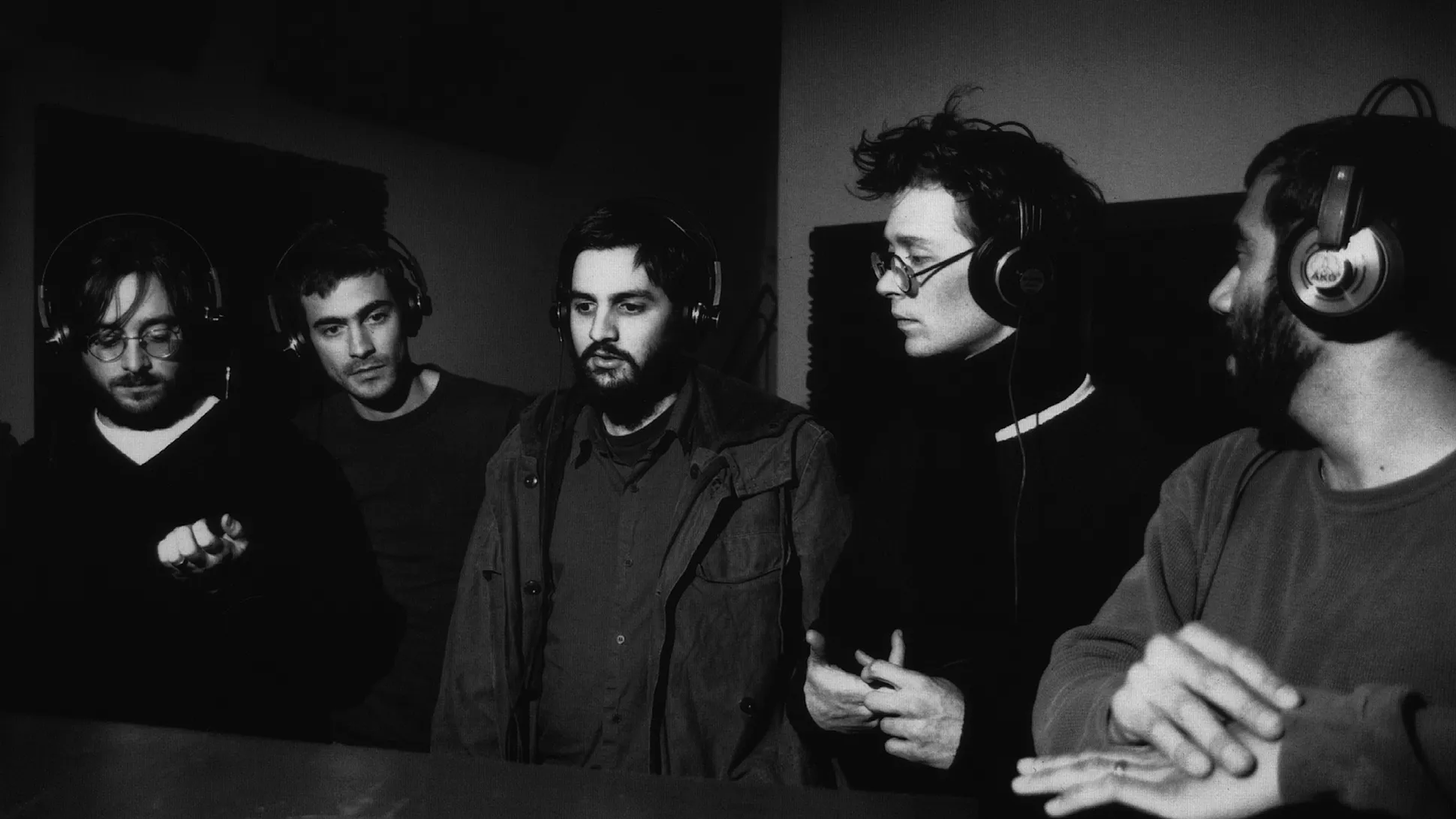
The playful “Half-Thought” somehow sounds like its title. (I won’t be expounding upon that, just listen for yourself.) After living on the cymbals, midway through the song, Trini Martinez’s drumming – particularly on the snares – shines and propels the song forward into a shimmery guitar riff that’ll have you nodding and bouncing your head. There’s a good reason it’s one of only two from the album that was faithfully recreated, note-for-note, on their only live record. The four-track run to start the album is a stunning study in pacing and restraint and sets the tone for the five that follow. While it’s tempting to categorize the band, these songs are uniquely Bedhead. When I asked who Kadane and the band listened to for inspiration, he told me, “I think with that record I was trying to shut the world out and follow through with the logic of our previous records.” They had created such a distinct sound and, while Transaction had its differences, it sounded like a natural extension.
“Extramundane” serves as the halfway point and is a breakneck rocker, by the band’s standards. The lead guitar shadows and mimics Kadane’s vocal melodies before an extended instrumental bridge that features a guitar solo (a rarity in the Bedhead canon). The most consistently fast-paced track serves as a lead-in to “Forgetting,” which is the most plodding track since the intro. A new wrinkle is added here in the form of a narcoticized-sounding slide guitar. In terms of the pacing of the album, Kadane told me that growing up listening to records he thought, “people who took the long form seriously wanted the record to be justified from start to finish.”
Next is “Lepidoptera,” which serves as a prime example of Bedhead’s acclaimed and aforementioned guitar tone. There’s no wasted note and no added distortion or effect; just a cleanness with everything in its right place. This cleanness, to be clear, isn’t to suggest sterility. There’s a human, lived-in quality to Bedhead’s music that, while exacting and precise, is far from clinical. It’s an impressive line to balance and one reason I’m hesitant to lazily and reductively lump them in with every other slowcore act of the 90s, aside from the fact that they loathed the term itself. In response to this description, Kadane told me, “We always tried to be exacting, and we were never quite skilled enough as musicians to pull off what we were after. So maybe the technical inadequacy was the human part.” Expounding further, regarding “Lepidoptera,” the frontman said, “[That song] is labored over… it took years for [it] to come together. Not years of nonstop work. But years for us to figure out what we thought needed to happen in the songs and to come up with the right notes.”
The album closes with “Psychosomatica” and “The Present.” As alluded to, “Psychosomatica” is another guitar-heavy song with marching drums. It’s one of the few Bedhead songs that’d sound in place next to frenetic 80s post-punk. Kadane told me that Albini hilariously erupted during an argument with the two brothers, “I just built this fucking million dollar studio and I can’t fucking change the shape of the room to make the drums sound less like cannons!” and it’s easy to imagine this being said during “Psychosomatica,” which features some of the heaviest drumming on the record. The final track is now considered a quintessential Bedhead song. At 7 minutes, it’s the longest on the album and saunters along at a leisurely pace for over two minutes before the third guitar begins to play another call-and-response melody on top of the established one. Then, all three unite to play an interlocking melody and Kadane’s vocals enter, nearly four minutes in. The first lines, “It’s always this year’s gift / Is it ever what I wanted?” perhaps foreshadowing the also excellent band, The New Year, the Kadanes would start in 1999, after disbanding Bedhead.
Bedhead was only active between 1988 and 1998, and recorded between ‘92 and ‘98. For comparison, fellow Numero Group signees, Duster (originally active 1996-2000) has over 3 million monthly Spotify listeners, while Bedhead has just over 40,000. Of course, Spotify listenership is a notoriously dubious metric and Duster reunited in 2018 so they benefit from recent tours and three post-revival album releases, which is one more than they released during their original run. Still, there’s also been a recent slowcore comeback including bands such as fellow Texans Teethe (who add a Wednesday-esque pedal steel guitar to their sound), Philadelphia’s 22° Halo, and Boston’s Horse Jumper of Love. Even much larger acts Lana del Rey, Ethel Caine, Snail Mail, Alex G, and Cigarettes After Sex clearly take cues from slowcore.
When discussing the resurgence of this sound, Kadane told me, “Maybe there’s a longing on a part of these new fans for some of what we were going for — deliberateness, emotional connection, music that justified itself by being more than accompaniment to lyrics, intricacy, subtlety.” He humbly continued, “I don’t know if we achieved any of these things. But I do get the sense that some younger people long for them, so maybe renewed interest is a kind of affirmation.” To me, Bedhead undoubtedly achieved all of these things, making deeply patient but emotional, well-constructed but understated music. A band and genre that weren’t terribly well known at their original peak have more influence and staying power than anyone in the 90s likely imagined.
Born in Durham, NC and raised outside of Baltimore, MD, Chase has spent the last 18 years in Philadelphia, PA and Brooklyn, NY. He holds a Master of Advanced Studies in American Media & Popular Culture and currently works as a Content Manager with past experience in the film, food, and beverage spaces. Under the name Cult Posture, he has a monthly residency on CAMP RADIO, where his next show will be 2/24 at 8pm EST. You can also find him on Instagram or Letterboxd.