
On Peter Gabriel's "Melt" and Steve Biko
Published on Feb 21, 2026
Be Sure to Wear Flowers in Your Hair
Published on Jan 19, 2026
WALK OUT TO WINTER: falling in love with—and to—Aztec Camera's High Land, Hard Rain
Published on Dec 26, 2025
First Anniversary
Published on Dec 17, 2025
More Liner Notes…
Featured Essay: The Value of Staying Unfinished
by Gary Ingalls
“Today’s music sucks.”
A statement that I used to proclaim loudly and passionately for anyone within earshot.
One I now regret buying into.
In high school, during my prime obsessive music nerd years, I should have been diving headfirst into Joe Jackson, Elvis Costello, The Clash, The Specials, Talking Heads, all that late ’70s magic. Instead, I had my heels dug in like a stubborn mule. Punk? New Wave? Short hair and suits? Absolutely not. As anyone with a functioning brain knew, today’s music sucked.
By the mid-’80s, I realized I’d been wrong and started buying those records. But I missed the moment. And there’s something about discovering music in its own time that you can’t recreate later. This rule applies to all bands and music, but especially to The Clash. They were THE band that defined the times they were in. Everything about them, from their name to their look and sound, reflected the world they lived in. Discovering them while they were bursting onto the scene must have felt electric.
I didn’t get that electricity. I got the replay.
Because I thought being a “serious” music fan meant defending your ground and loudly hating anything you didn’t immediately understand.
What an asshole.
The Birth of a(n Obnoxious) Music Fan
It started in 1974 when my sister introduced me to her record collection. The Beatles. The Who. Deep Purple. Yes. Aerosmith. I was nine years old and had just found my religion.
By eighteen, I was fully obsessed with the music that surrounded me in the New Hampshire suburbs of the early ’80s. Classic rock wasn’t just my favorite music. It was objectively the greatest music ever made. Period. End of discussion.
How could you listen to The Yes Album and not walk away convinced it was a masterpiece? You’re really going to put the Bee Gees up against that? A Flock of Seagulls? Please.
If someone told me they loved a band I disapproved of, I didn’t nod politely. I would crap all over the thing that gave them joy and then accuse THEM of being close-minded.
Yeah, such an asshole.
Enter Frank (And My First Crack in the Wall)
At a high school keg party, I wandered into an empty room and heard Frank Zappa’s Joe’s Garage album blasting. The song was “Stick It Out.” The lyrics were obscene and hilarious. I loved them. The music, on the other hand, made no sense to me.
I didn’t know if I liked it. I didn’t know what it was doing. But I felt like I should like it.
Up to that point, music had been binary. It either hit instantly and therefore was awesome, or it didn’t and it sucked. Zappa didn’t hit. He hovered. He confused me.
And instead of running away, I decided to pursue it.
My first move could have been better. I spent the $25 my godmother sent me for my eighteenth birthday on Shut Up ’n Play Yer Guitar. Three albums of live guitar solos. No context. No hand-holding. Just relentless, complicated noodling. With the exception of one track, “Pink Napkins,” it was completely over my head. It sounded like random notes thrown in a blender and crammed into my ears.
I still don’t know why, but I bought another Zappa record, this time the more accessible Bongo Fury. This one gave me a few more moments to latch onto. Then I just started buying more and more. The pieces started clicking.
That was new.
For the first time, I found something that made no sense to me and, based solely on a gut feeling, I plowed right into it. I came out the other end with what has been the most rewarding musical relationship I’ve ever experienced. Zappa didn’t just expand my taste; he rewired how I listened. He taught me that confusion isn’t always a red flag. Sometimes it’s the doorway.
Unfortunately, this didn’t immediately make me enlightened. It mostly made me a different flavor of insufferable. Now I was a snob armed with weirder ammo.
Progress is strange like that.
Necessity Is the Mother of Enlightenment
By twenty, I was running out of “undiscovered” classic rock to conquer. The rush of finding the next Zeppelin- or Who-level obsession was fading. I needed new fuel.
First crack: the Talking Heads concert film Stop Making Sense. I only agreed to see it because my roommate offered to buy my ticket and all the beer I could drink during its showing at the local brew house theater. While watching that movie, I experienced something new that I couldn’t explain at the time but definitely felt: the pure joy of a solid, undeniable groove. I walked in skeptical. I walked out a lifelong Talking Heads fan. My first New Wave band. That was big.
Second crack: my brother came back from a year in California with Fishbone’s EP and first album under his arm. This wasn’t classic rock. It wasn’t retro worship. It was chaotic, alive, and didn’t ask for my approval. The energy and attitude were undeniable, and for the first time in my life, I was enjoying music of right now. I loved it immediately.
Then I became a full-time DJ.
I started playing oldies at a club called Ricky Lee’s Non-Stop Bop. I was still of the mindset that oldies were lame, old people’s music, but the idea of playing records and partying for a living gave me the motivation to give it an honest try. It didn’t take much to turn me into an oldies fan.
When you stand in a booth and watch a room explode because of a Chuck Berry riff or feel the slow build of energy from a sweet soul groove, something shifts. When a James Brown track hits and people lose their minds, you stop debating decades.
For the next ten years or so, I had huge success mostly playing music I loved, a combination of oldies and classic rock, while blowing the roof off a beach bar called Shuckers in a blur of sweat and alcohol. Life was indeed very good.
After that ran its course, if I wanted to keep getting paid, I came to the realization that I had to play contemporary pop, club music, and hip-hop. The last music on my hate list. I figured it would be easy. I’d just toss on the hits and collect a check.
Turns out, that’s not how it works.
To move a room, you have to understand why people love what they love. You have to pay attention to when they scream, when they drift, when the energy spikes. You can’t fake that.
I thought I was just studying the crowd, but I was also studying the music. I didn’t fall in love with all of it. But I slowly developed respect. As I got better at it, I could feel songs I used to dismiss as garbage lifting the crowd, energizing the room, creating joy, and earning me repeat business in the process. Anything that can make that many people feel that good at the same time can’t be as bad as I thought it was.
After decades of watching every generation swear theirs was the last “real” one, the pattern became obvious: every generation’s music feels like the best because it’s welded to their memories. It soundtracked their first loves, their first rebellions, their first real taste of freedom.
Once I saw that clearly, it became almost impossible to dismiss entire genres without feeling like an idiot.
Rebirth of a Music Fan
After nearly thirty years of DJing, I stepped away. As a result, I finally stopped digging after decades of doing nothing but. For a few years, I would just hit shuffle on my 160-gig iPod loaded with 25,000 handpicked songs and call it a day. I was tired of choosing.
Eventually, my wife and I moved to Houston. I signed up for Spotify. Within weeks, my iPod died. The universe apparently doesn’t do subtlety.
So I started digging again, this time with no dance floor to impress. Just me.
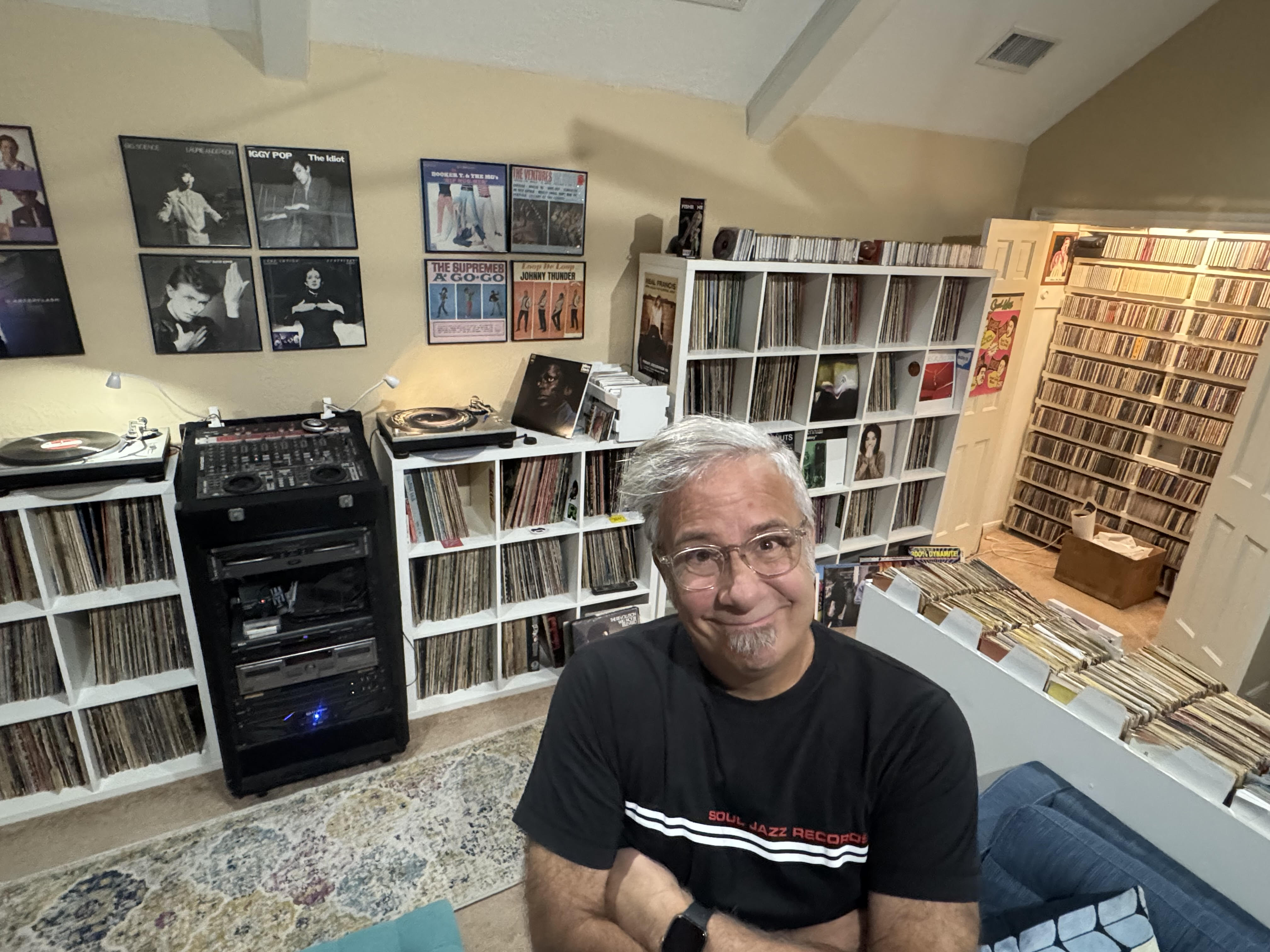
I spend hours every week looking for new obsessions on Spotify. Simply looking for anything that scratches an itch, sparks something inside me or sounds like it might be a doorway to something new and rewarding. I resurrected my gargantuan vinyl collection. I started haunting record stores, rediscovering the joys of crate digging. Eventually, I started working at one just a few miles from my house. Music Town became my happy place.
One thing that occurred to me when I started working at Music Town was that the only thing I truly missed about my old DJ job was the countless conversations about music. Now I had that back. The only downside was hearing other people throw my old mantra in my face: “Today’s music sucks!”
At that point, I’m reminded to be grateful for the journey I’ve been on and where it took me. I could have stuck with that attitude, all while still listening to the same batch of records for the last fifty plus years and missed out on so much greatness, with only the bonus tracks on anniversary reissues to look forward to.
These days, my favorite part of being a music fan is the honeymoon phase, that rush when a new band or genre blindsides me and I’m not totally sure why yet. That slightly confused excitement? That’s the good stuff. I ride it out, buying a stack of records in the process, until I start figuring out exactly what it is I love about it. At that point, I may drift a bit, but it’s now part of my ever-expanding list of favorites, another line on the map of my journey.
Now, in my early sixties, I don’t chase new music to feel young. I chase it to experience the living heartbeat of the music of now. I chase it because I don’t want my ears or my brain to fossilize at eighteen.
I want to remain unfinished.
Now I’m off to play the new Little Simz record for the umpteenth time.
Gary Ingalls is a lifelong music fan and avid vinyl collector. He currently lives in Houston, Texas, with his wife Victoria, two Boston terriers, approximately 3,500 LPs (including three copies of the J Geils Band’s Blow Your Face Out*), 1,000 CDs, 800 45s, and 175,000 MP3s. This is his first time writing for* I Have That on Vinyl.