

On Peter Gabriel's "Melt" and Steve Biko
Published on Feb 21, 2026
Be Sure to Wear Flowers in Your Hair
Published on Jan 19, 2026
WALK OUT TO WINTER: falling in love with—and to—Aztec Camera's High Land, Hard Rain
Published on Dec 26, 2025
First Anniversary
Published on Dec 17, 2025
More Liner Notes…
Featured Essay: This is Happening
by Ebonee Rice-Nguyen
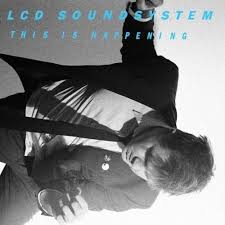
I spent most of my first year in Korea listening to LCD Soundsystem’s This Is Happening and wishing I was in New York City. I’d walk through the streets of the small town I was placed in, the night pitch black and silent and I would imagine skyscrapers and noise crowding in around me. I’d listen to This Is Happening, trying to lose myself in the rhythm and pretending that I was anywhere else. Sometimes, I’d imagine I was home, This Is Happening spinning lazily on the record player. I felt my mind reel backwards, sifting through old memories of late nights spent in the city, of nights spent shifting around to thumping music or late evenings with friends on a stranger’s rooftop. I imagined myself on a lot of rooftops for some reason, at some housewarming or birthday party. There was always some type of crowd around me. But instead, I was across the world and alone. I was supposed to be experiencing something new, something different but I was lonely and this loneliness made my whole body ache for something familiar, something old.
And perhaps there is no other album that could have captured that time in my life more than This Is Happening. This Is Happening is about aging out. There’s no way around it. The album came out in 2010, a noisy, wistful conclusion to seemingly the last decade of real partying before cell phones and the Internet. The album was created to be a good-bye, a way for James Murphy, the band’s infamous front-man, to finally hang up the hat. And that’s what the album reads as– a long goodbye– one that doesn’t pull any of its punches. The tracks cycle around distance— between home, between lovers, between desires, dreams, and years. Yes, like all of LCD’s work, the album is about movement, the back and forth of bodies on a dance floor, but it’s also about the reality of things unraveling when the music finally stops.
The album starts off on a sparse note, just the bare rumble of the drums. The synth enters, slow, loose, unassuming and meandering. Murphy comes in, mumbling and vaguely paranoid in that confessional tone of his. We get the sense that we are listening to the anxious thoughts after a night out: “Talking like a jerk/ Except you are an actual jerk/And living proof/That sometimes friends are mean.” Eventually, a new synth patch enters, a far-off whining drone; we are reminded of an ambulance siren tearing through the night. It builds and builds and then the song collapses in on itself; we get lost in the heavy layers of synth and drums. Almost violently, we are taken out of Murphy’s mind and placed in the middle of a swirling crowd.
No more mumbling or percolating thoughts, instead, we are finally privy to Murphy’s wailing. On a drawn out howl, Murphy cries out: “Don’t you want for me to wake up/ Then give me just a bit of your time.” For a few minutes we are suspended. And then it all dies out as quickly as it started. We are placed back into that quiet mumbling: “Wish you’d try a little harder/ In the tedious march of the few/Every day’s a different warning/ There’s a part of me hoping it’s true.”
The opening track seems to set the tone for the rest of the album. The songs oscillate between punchy dance anthems about nightlife and lacerating manifestos on human connection which, as Murphy has shown us from his career, go hand in hand. “Drunk Girls,” “One Touch”, and “Pow Pow” are all filled with the push and pull of a rough night out. “Drunk Girls” pays homage to the embarrassing and excruciating moments of nightlife culture, the repetitive drone of the chorus motioning to the seemingly endless cycle of the NYC club scene. In “One Touch” we witness the fraught game of navigating a dance floor, of wanting connection but being overwhelmed by too much: ‘One touch is never enough/ People who need people, to the back of the bus.’” There’s the urge to get closer, then the hesitation, then ultimately, the withdrawal.
Hidden underneath all these tracks’ whirling tempos is a sharp loneliness. It is most obvious in “All I Want.” Murphy burrows into the sounds of Bowie and Eno and comes out with a haunting ode on a failed relationship. There is loss, fatigue, and regret: “So you pack, up your things/ And then head in /To the lame unknown/ You never had needed anything for so long” We get the sense that Murphy isn’t just talking to himself but a long past version of himself, one whose actions have continued to haunt him well past the relationship’s life span. At the end, he wails out “Take me home,” on repeat but we all know that home is a thing long gone, a ghost. The mournful synth carries us out.
“I Can Change” offers us the flipside of this, not the ghosts of a relationship but the beginnings. The synth is a bright, thin thing, the silver linings of reaching for love. As the beat bounces onward both hopefulness and hopelessness comes through; the desperation of early desire: “Oh this is the time, the very best time/ So give me a line and take me home, take me over/ …I can change, I can change, I can change/ If it helps you fall in love” Again and again, the speaker promises “I Can Change.” In the next moment, in what we assume is a conversation directed to a lover, Murphy chants “Never change, never change, never change
/That’s just who I fell in love with (in love).” A hope to never change and a promise for it; the knowledge it won’t work out but the refusal to admit it just yet.
Behind all of this is resignation. Murphy had admitted that he didn’t want to be making music past 40; This Is Happening released the year he hit the big 4 O. The group performed at Madison Square Garden, their supposed and infamous last show together. Of course, we now know that statement was false, but at the time Murphy didn’t. “You Wanted A Hit” reads as a sign-off from an artist tired of the industry. He sneers into the mic: “You wanted a hit/ But tell me what’s the point in it?” The whole track is taunting the new music industry. After multiple decades of watching the NYC music scene’s rapid turnover, Murphy was washing his hands of its falsities. “Somebody’s Calling Me,” the second to last track on the album, is the walking away. A clear emulation of Iggy Pop’s “Nightclubbing,” the track is a hazy, nocturnal narration of leaving the party with somebody. As much as “Nightclubbing” was a monument to alienation and numbness, Murphy seems to be trying to craft his own version, this one an invitation for somebody to join him in his loneliness and leave the crowd behind.
In Korea, the track I listened to the most was “Home,” the conclusion to This Is Happening. “Home” is a returning, an accumulation, and a coming to terms. Perhaps more than any other track of the album, we witness Murphy’s ability to conceal those heavy, solemn lyrics inside an irresistible tempo. In it, Murphy’s voice is a breathy whisper, a sigh of relief; the years seem to be coming together and shaking off. The bass and percussion aren’t peeling back the decades so much as widening them. “Home” feels spacious; it feels new: “Forget your past/ This is your last chance now/ And we can break the rules/ Like nothing will last.” A few beats later: “You might forget/ Forget the sound of a voice/ Still, you should not forget/ Yeah, don’t forget/ The things that we laughed about.” There is a lightness here, a call back to good times with that constant use of “we.” We’re with Murphy, in some friend’s kitchen at a house party or finally closing out our tab at our usual table.
But, in Murphy’s signature move, he pulls a switch and the same bright tempo now seems laden with nostalgia and alienation. The last few lines are sung almost frantically: “Yeah, no one ever knows what you’re talking about/So I guess you’re already there/ No one opens up when you scream and shout.” The “we” circles back as a “you,” Murphy talking to himself, at us. Again, there’s distance. The song ends with: “Look around you, you’re surrounded/ It won’t get any better/ And so, goodnight.” It’s that moment at a party where you’ve overstayed your welcome. Lonely but surrounded, you take your leave for the night. The door shuts firmly behind you.
I could only listen to This Is Happening at night, that’s the only way to get the album’s full effects. Whereas LCD’s previous album, Sound of Silver carries with it echoes of early sunrises, This Is Happening has no place in the daylight. It is a confessional album. In the same way the dark can conceal the movements of an awkward dancer or an uncertain lover, the night is also needed to hide Murphy’s self-doubt for what he’s leaving behind. We get the sense that he knows he is saying good-bye but he isn’t quite sure where he’s going next.
There is a loneliness in This Is Happening, one that can only be talked about when one has spent a few years apart from it. It’s true that oftentimes you see the cracks of things only after everything’s already fallen apart. Listening to the album taught me how alienation can come at any time, in the middle of a foreign country or in the middle of a club; it can slip in no matter how packed a room is. Murphy reveals to us those spaces in-between our swaying bodies, those spaces and years spent searching for connection. Sometimes we manage to get it right, to close those distances, but more often than not they are left open, unfinished. Perhaps, it’s better to say goodbye after all before the music finally stops.
Ebonee Rice-Nguyen is a writer currently based in South Korea. She writes about music, art, and film. She is at work on a collection of essays about her time in Korea. You can contact her at ejrice1314@gmail.com