

On Peter Gabriel's "Melt" and Steve Biko
Published on Feb 21, 2026
Be Sure to Wear Flowers in Your Hair
Published on Jan 19, 2026
WALK OUT TO WINTER: falling in love with—and to—Aztec Camera's High Land, Hard Rain
Published on Dec 26, 2025
First Anniversary
Published on Dec 17, 2025
More Liner Notes…
Featured Essay: WU LYF’s Cryptic, Prescient “Go Tell Fire to the Mountain” Turns 15
by Chase Harrison
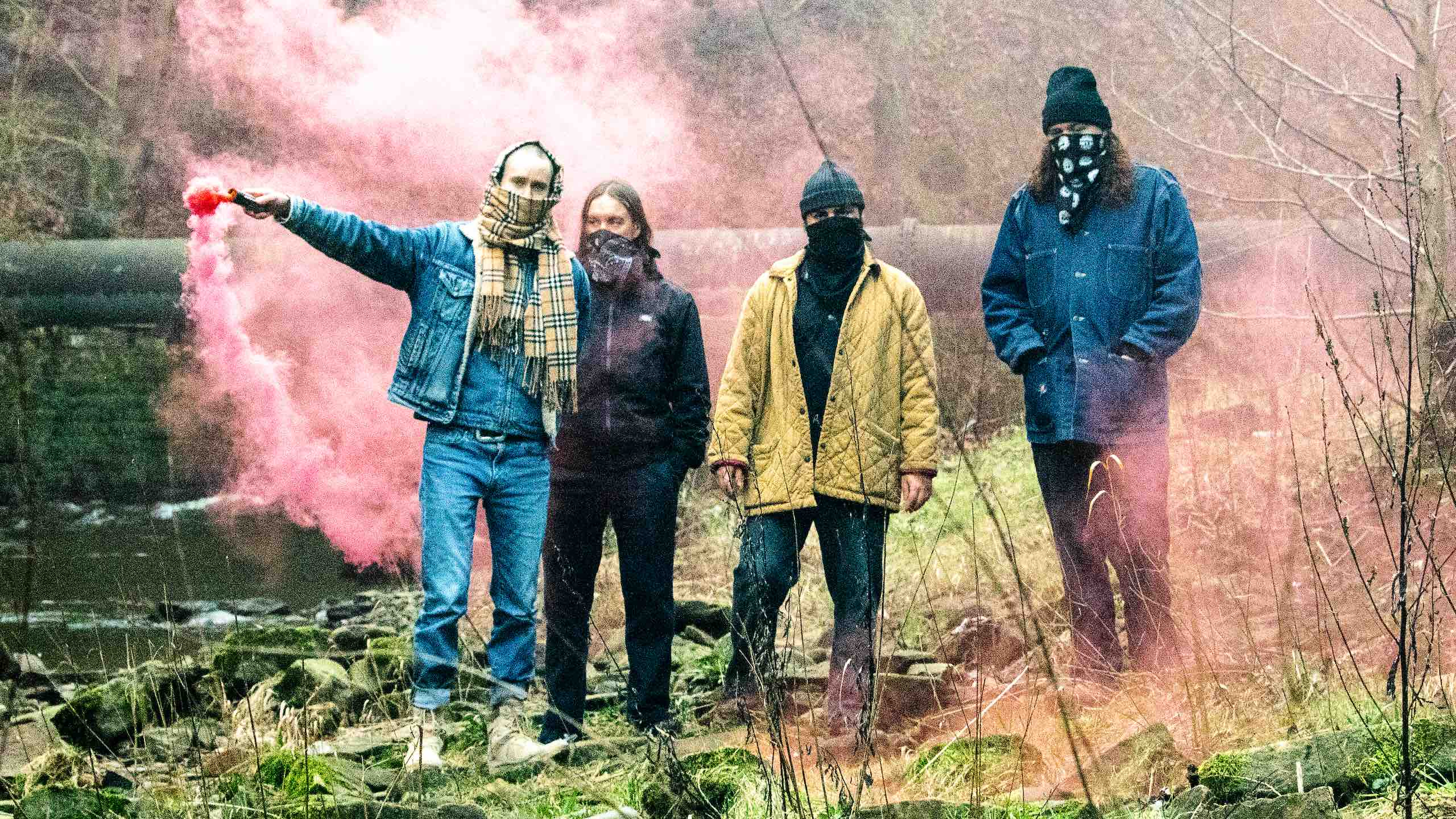
For as long as music’s been recorded, there have been hyped records that have failed to meet listener expectations. I generally have an automatic cynicism toward artists or albums that I perceive to be overhyped. Contrarianism has always been a quality of mine and I’m not proud to admit that, it’s not an admirable trait. For example, James Murphy has been the bane of my existence since the release of his debut. It’s understandable then, that I took some time to come around on WU LYF’s debut – and until recently, their only album – Go Tell Fire on the Mountain.
While their newest LP, A Wave That Will Never Break, is produced by Sonic Boom AKA Peter Kember, WU LYF’s music has more in common with the maximalist, outsized sounds and swells of fellow Spacemen 3 alum Jason Pierce’s space rock institution, Spiritualized. As I described Spiritualized on this site, this is gospel music for atheists. Similarly, there are many hallmarks shared with the shoegazey, god-obsessed Texans Lift to Experience. It’s not music that takes half measures or cuts corners and it’s full-throated, intense, and cathartic. In other words, it’s not something to passively throw on in the background. There’s an inherent risk in operating this way but WU LYF isn’t concerned with taking half measures.
When Ellery Roberts wails, “I love you forever and ever and ever” on the aptly named opening track, “L Y F,” you have no choice but to believe him. You feel it in your chest the same way you do after telling someone you love them for the first time. For all the pomp and circumstance around the mysterious release of the album and purposely vague information about the band, they make sincere, emotional music without a hint of irony. This is a momentous, earnest (for some, to a fault) life-affirming album. Critics described the music as overwrought but the band has legitimate chops, the sound is inspiring, and the songwriting mostly holds up. It may come down to whether you find Roberts’ vocals endearing or irritating. As Drowned In Sound wrote in 2011, “while one man’s overwrought is always another’s passionate, the efforts of the front man to shout himself hoarse do eventually irritate, no matter how sincere his intentions.” This is the inherent risk alluded to earlier. The backlash to this kind of record was predictable and inevitable and, yes, it’s irritating and cringe that WU LYF stands for “World Unite! Lucifer Youth Foundation” but the music holds up and has aged well.
Songs like “Such a Sad Puppy Dog” could soundtrack an emotional montage in a critically acclaimed historical drama. For two minutes, Roberts yelps over a spacious-sounding organ before the taut, marching drums kick in around the 2-minute mark. Roberts’ chant becomes a harmonious group chant as the lead guitar speeds up during a gorgeous arpeggiated melody. The song builds further until it explodes into a triumphant peak worthy of chills. The third act begins with a jangly guitar playing alongside a simple but sturdy bassline while the remaining instruments build once more before fading out. While recording in an old church may have sounded like a gimmicky bit of A&R speak at the time, you can hear the acoustics of the St. Peter’s Church. It gives the music space and depth while the reverb is an invaluable component of the atmosphere WU LYF created, every bit as important as the sparkly guitars, distinct organs, or polarizing vocals. Arguably the biggest difference between this album and the new one is the lack of a church as a sort of additional instrument.
And while the shimmering guitar tones, momentous organs and Roberts’ chants received most of the attention (music-wise at least), “We Bros” is a prime example of how important the driving percussion and rhythm section is to these songs. Riding cymbal crashes play alongside a jittery bassline. Here and elsewhere, each snare hit sounds like a gunshot. The cymbal crashes sound like shattering glass. Nearly four minutes in, the guitars dissipate while Roberts chants continue repeatedly. Slowly, the instruments all reappear, overlapping and building into yet another densely layered climax.
Tonally, this music is different from a band like Animal Collective but the builds, chants, and tribal rhythms call to mind Merriweather Post Pavilion as well as their fellow Baltimore contemporaries, the sadly largely forgotten art rock band Wilderness. The excellent, also mostly forgotten, British band MONEY (who also may’ve been described as “overwrought” or “melodramatic” on occasion) is another appropriate comparison. Currently, there are even remnants of what WU LYF was doing in Geese’s dramatic earnestness, Black Country, New Road’s cinematic builds, and YHWH Nailgun’s chant-shouted vocals. And there are plenty of elements of post-rock in the instrumentals, particularly the tone of the guitars, but the self-described genre used by the band, “heavy pop” is the most fitting descriptor and the song titled as such is as good an entry point to the band as any.

WU LYF, originally only briefly active between 2008 and 2012, released just this album until the aforementioned surprise return this year. They’re touring behind a comeback album, A Wave That Will Never Break, produced by Sonic Boom. They’re resurfacing at a time when guitar-based music is back but, as always, it’s on their own terms rather than chasing trends. Their new album is only available on Bandcamp (Roberts is quoted as rightly saying, “Spotify is not made for musicians – it’s for a corporation to make money”) or through their website and it was released independently. Anyone who’s turned off by their bombastic, melodramatic music likely won’t be won over by their cryptic messaging and guerilla marketing but, in spite of the above comparisons, they still sound like one of one.

A 2011 Sputnikmusic review foretold their breakup:
“It’s been remarked that it feels as though WU LYF will flame out quickly, which makes sense. They sound like they’re flaming out anyway, massive and brilliant before they disappear, like a comet passing by for a glorious yet tantalizingly brief moment. I can’t fathom another album like this from them, nor imagine any young band brave enough to imitate WU LYF’s aggressively insulated demeanor. Not to wish ill on this band, it simply feels as though they cannot make another record.”
They were correct for fifteen years. It turns out, all it took was a post-ironic culture and a world brimming with nihilism for a long-awaited return. Here’s hoping for a longer run this time around.
Born in Durham, NC and raised outside of Baltimore, MD, Chase has spent the last 18 years in Philadelphia, PA and Brooklyn, NY. He holds a Master of Advanced Studies in American Media & Popular Culture and currently works as a Content Manager with past experience in the film, food, and beverage spaces. He has also performed as a DJ and occasionally makes electronic music under the name Cult Posture. You can find him on Instagram or Letterboxd.