

On Peter Gabriel's "Melt" and Steve Biko
Published on Feb 21, 2026
Be Sure to Wear Flowers in Your Hair
Published on Jan 19, 2026
WALK OUT TO WINTER: falling in love with—and to—Aztec Camera's High Land, Hard Rain
Published on Dec 26, 2025
First Anniversary
Published on Dec 17, 2025
More Liner Notes…
On Peter Gabriel's "Melt" and Steve Biko
by editor Michele Catalano
I’m sitting in the kitchen, reading the morning paper. The small radio that sits on a high shelf against the wall covered with kitschy wallpaper is playing the local station, WLIR. It is May 1980, and I am a week or two away from graduating high school. I am seventeen years old, and think I know everything there is to know about life and the world.
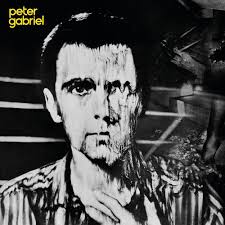
The deejay-–it could have been Dennis McNamara or Larry “The Duck” Dunn—announces a new Peter Gabriel album. My ears perk up. I’ve long been a fan of Genesis and Gabriel’s solo work. The station is debuting a new song from the album Peter Gabriel, commonly referred to as III but also known as Melt, due to the cover picture of his face melting.
The song they are playing is called “Games Without Frontiers.” I like it immediately. There’s really never been anything Gabriel I didn’t like, so this would prove to be no exception. The song features Kate Bush singing a refrain that left me, and everyone else, perplexed. We have no idea what she’s saying and the deejay is no help. In fact, he wants us to interpret what she is singing and call into the station with our answers. All I heard was “She’s so funky, yeah,” while others heard different versions of my absurd answer. “She’s so funky, yeah” does not fit into the lyrics on the rest of the song, which has a very dystopian feel to it.
Eventually, the deejay let on that Kate is singing “Games without frontiers” in French (eux sans frontières), which left me feeling very silly.
The song itself left a lot to interpretation and my friends and I—the prog rock crew of our high school—spent a lot of time going over the lyrics, which we transcribed by hand after taping the song off of WLIR.
I had been listening to Gabriel since his Genesis days. I didn’t get to see Genesis live until after he left, but when I did see them, in July 1978, Gabriel showed up for the encore of “I Know What I Like (In Your Wardrobe)” and my life was complete. I was barely sixteen.
When Melt finally came out on May 30, we took a bus to the mall and entered the hallowed walls of Record World (where I would later work). The four of us each bought our own copy. We went back to my house, gathered together in my room, and dropped the needle on what would be a profound experience.
From the opening drumbeats of “Intruder” to the stirring ending of “Biko,” we were mesmerized. This was a dark album, foreboding in nature. War. Assassination. A brutal murder of a political activist. We wrote down lyrics, we discussed them, we sang along after the third listen. “And Through the Wire” became my favorite. At some point “Games Without Frontiers” became my least favorite song on the album, even though I love it, a testament to the strength of this record. “Family Snapshot” and “I Don’t Remember” caught my undivided attention.
But it was “Biko” that really captured me. The song starts off with South African lyrics, then a percussive moment whose sound foretells the darkness of this song. It tells the story of Steve Biko, a South African anti-apartheid activist who was beaten to death after he was captured by police.
From Wiki: The security services took Biko to the Walmer police station in Port Elizabeth, where he was held naked in a cell with his legs in shackles. On 6 September, he was transferred from Walmer to room 619 of the security police headquarters in the Sanlam Building in central Port Elizabeth, where he was interrogated for 22 hours, handcuffed and in shackles, and chained to a grille. Exactly what happened has never been ascertained, but during the interrogation he was severely beaten by at least one of the ten security police officers.He suffered three brain lesions that resulted in a massive brain haemorrhage on 6 September. Following this incident, Biko’s captors forced him to remain standing and shackled to the wall.
The song is devastating, emotional, depressing. As soon as the album ended for the third time, we got a ride to the library and looked up as much information as we could find on Steve Biko, information which left me crying and in distress.
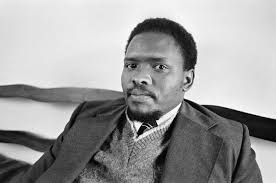
I thought I was aware of the world around me. I thought I knew everything at seventeen. But I didn’t really know what was going on in the world that did not involve my own country. I was ignorant of the anti-apartheid movement. The full knowledge of apartheid wouldn’t reach mainstream America until 1985, when “Sun City” came out. When that happened, I could only think of Steve Biko, beaten merciless, shackled in a hospital cell, dying alone. I eschewed the Steven Van Zandt led effort for a while, choosing instead to listen over and over to “Biko.”
When asked why he wrote a song about Biko, Gabriel said:
I believe Steve Biko was very important. He could have been a very positive force in Africa and a leader young people all over the world could have identified with.
When I heard of Steve Biko’s detention on the radio, I was sure that publicity would protect him. World attention had been attracted to the large number of prison suicides, slipping in showers jumping from windows and hanging… I was shocked one breakfast time to hear of his death and wrote down some thoughts in my diary which were to be the start of the lyrics two years later.
I later learned that the African song at the beginning of “Biko” is one that was sung by mourners in the Xhoha language at his funeralThe refrain is translated as “On the day we return, blood will be shed!”
There were other songs on “Melt” that touched me or made me think, but none as much as “Biko.” I have Peter Gabriel to thank for that awareness.
“Melt” remains my favorite Gabriel album. I recently bought it again on vinyl, my original copy lost in my 1996 divorce. The record still holds power over me. I imagine it always will.
RIP Steve Biko, 1946-1977.